Removing oil stains – the complete guide
Paving stones, concrete, garage, basement – why pressure washers fail and how surfactants and enzymes dissolve oil from the pore space.
Ölflecken entfernen auf Pflaster oder Beton gehört zu den hartnäckigsten Reinigungsaufgaben überhaupt. Ob Motoröl, Benzin, Schmieröl oder Heizöl – wer Ölflecken gründlich entfernen will, braucht mehr als einen Hochdruckreiniger und Spülmittel.
Most home remedies fail because they only move the oil around the surface instead of breaking it down deep within the material. This guide shows you why this happens – and how to deal with it. Removing oil stains wirklich Erfolg hast.
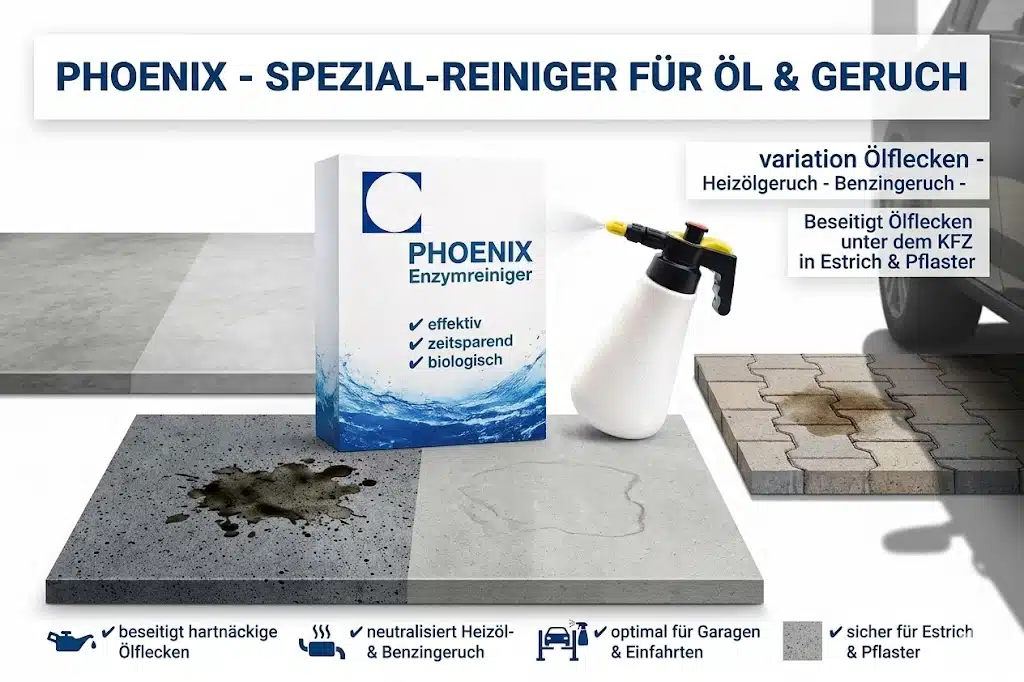
Why are oil stains so stubborn?
Oil is hydrophob It does not mix with water and binds deep into the pores of paving stones, concrete, and screed. The low-volatility components do not evaporate but migrate deeper and deeper into the material over time.
Rain reactivates residues – the stain shimmers again, the smell returns. Dried oil stains have already bonded with the pores of the surface. Mechanical scrubbing cannot reach this depth.
The real problem:
What's needed is a cleaner that can remove the oil from the subsurface. follows – and solves it there, instead of just postponing it.
Why pressure washers and dish soap fail
❌ This doesn't work permanently
- High-pressure cleaner: It spreads oil over a larger area – it doesn't remove it.
- Dish soap: It only emulsifies the surface, it has no deep-penetrating effect.
- Solvent: They dissolve oil, but leave their own residues.
- Cola / Baking powder: Attacks the surface, does not dissolve deep-seated residues
- Cat litter: It absorbs fresh oil; it has no effect on dried-out oil.
✅ What really helps
- Surfactants: They dissolve fats and oils from the substrate.
- Deep penetration: Enzymes follow the oil underground.
- Thoroughly solved: Oil is dissolved and absorbed, not displaced.
- Freshly mixed: Full enzyme activity exactly when you need it
- Residue-free: No solvents, no etching, no bleaching
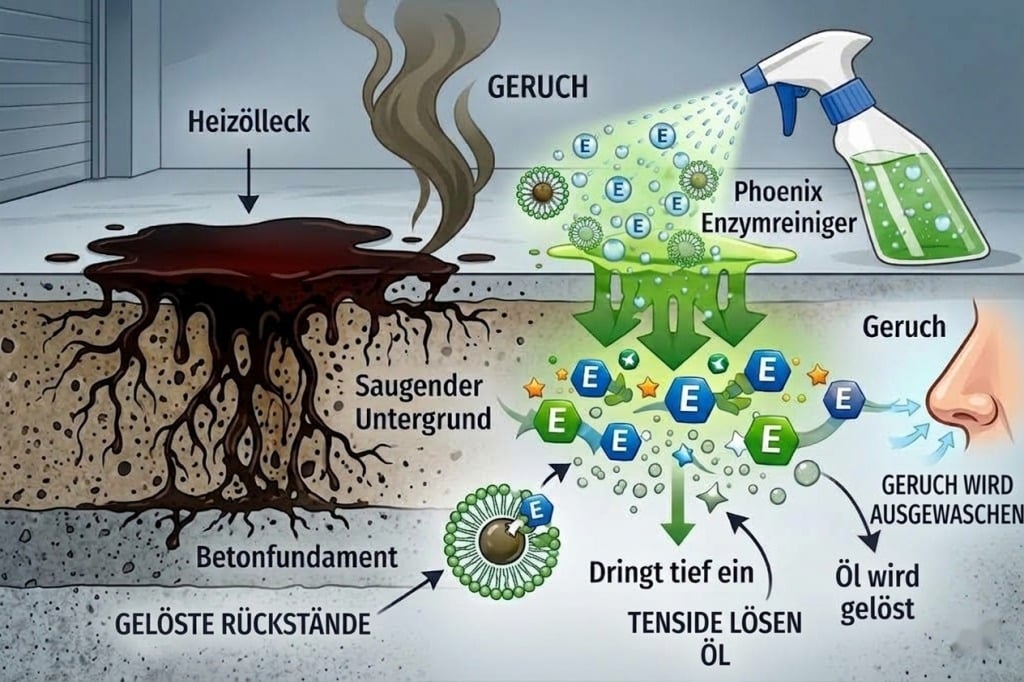
Removing oil stains – the enzymatic method
Phoenix Enzymreiniger uses specific surfactants, The solution dissolves fats and oils from the pores, along with enzymes for organic residues. The oil is dissolved and absorbed, not just smeared. The solution penetrates the pores of the material and dissolves the oil where it is located.
🧬
surfactants
Dissolves oil and grease – even deep within the pores
⬇️
Deep penetration
Enzymes follow the oil underground – not just on the surface.
♻️
Depth effect
Oil is dissolved and absorbed in the pores – no more shimmering in the rain.
💧
Biodegradable surfactants
Surfactants over 90% biodegradable (%), lowest water hazard class
✅ Result: Ein rückstandsfreier, gründlich sauberer Untergrund – ohne Geruch, ohne schillernde Flecken bei Regen, ohne Chlor, ohne aggressive Chemie.
Removing oil stains from paving stones
Paving stones are particularly absorbent – oil quickly seeps into the joints and surface pores. Dried oil stains are almost impossible to remove completely using mechanical methods.
- Dissolve the granules, Apply liberally to the area
- Leave on for at least 20-30 minutes.
- Use a brush to scrub and rinse.
- For old stains: Repeat process
💡 Tip: Phoenix does not attack natural stone or paving joints – no fading, no etching.
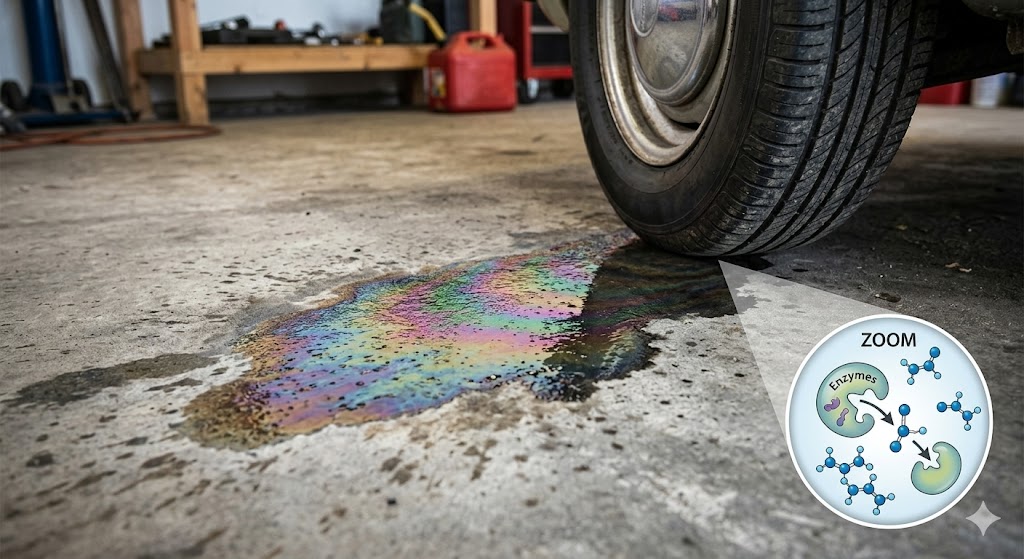
Removing oil stains from concrete and garage floors
Garage floors made of concrete or screed are extremely absorbent. Motor oil that has seeped in over months can sometimes penetrate several centimeters deep into the material. Here, the contact time is crucial: the longer Phoenix can work, the deeper the enzymes penetrate.
🏗️ Pro tip for garage floors:
For large oil stains on garage floors, we recommend using a wet vacuum cleaner. The device works the enzyme solution deep into the surface and simultaneously vacuums up the dissolved oil – significantly more effective than manual scrubbing.
Petrol & engine oil in the garage
Gasoline stains on paving stones or concrete are insidious. The gasoline evaporates quickly on the surface, but the less volatile components penetrate deep into the material. The result: a persistent odor and stains that shimmer and change color when it rains.
⚠️ Important for fresh gasoline stains:
First absorb any loose liquid with sand or an absorbent material – only then apply Phoenix. This will prevent the gasoline from seeping further into the ground.
Removing heating oil odors – what to do in case of a leak.
An oil leak in the basement is an emergency. The oil seeps into the screed, masonry, and basement floor, leaving behind a characteristic odor that often persists for weeks after the leak.

Why does the smell of heating oil linger for so long? Heating oil contains aromatic compounds. Hydrocarbons, die sich tief in poröse Materialien binden. Übersprays überdecken den Geruch nur – Phoenix Enzymreiniger zersetzt die geruchstragenden Moleküle.
⚠️ Important: In case of major heating oil spills, consult a specialist company. Phoenix is suitable for enzymatic odor neutralization – not as a substitute for professional remediation in cases of heavy contamination.
step by step
Remove oil stains with Phoenix
Sand or binding agent for fresh stains – then Phoenix
Apply Phoenix generously to the area – the ground must be thoroughly soaked.
At least 30 minutes – for old stains 1–2 hours or overnight
Work in using a circular motion, then rinse with water. Repeat if necessary.
✅ Result: Öl gelöst und aufgenommen – kein Schillern mehr bei Regen, kein Geruch, gründlich sauber.
All possible applications at a glance
The same enzymatic power wherever oil, grease and organic contaminants stubbornly adhere:
Why granules instead of ready-made solution?
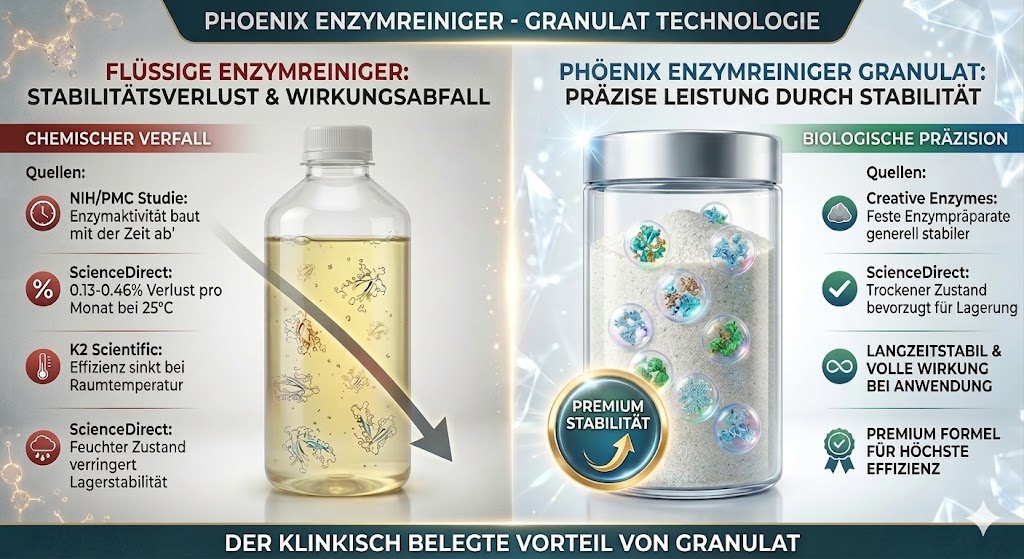
The enzyme activity decreases in the bottle – less effect precisely when you need it.
Stable until mixing. Freshly mixed = full enzyme power Effective against oil and grease. Ready to use for up to 20 days.
Complete tool set
This is what you need for professional results

Cooperation · Image similar
Wet vacuum cleaner
For garage floors – the enzyme solution works deep into the surface and completely absorbs the dissolved oil.
Guide →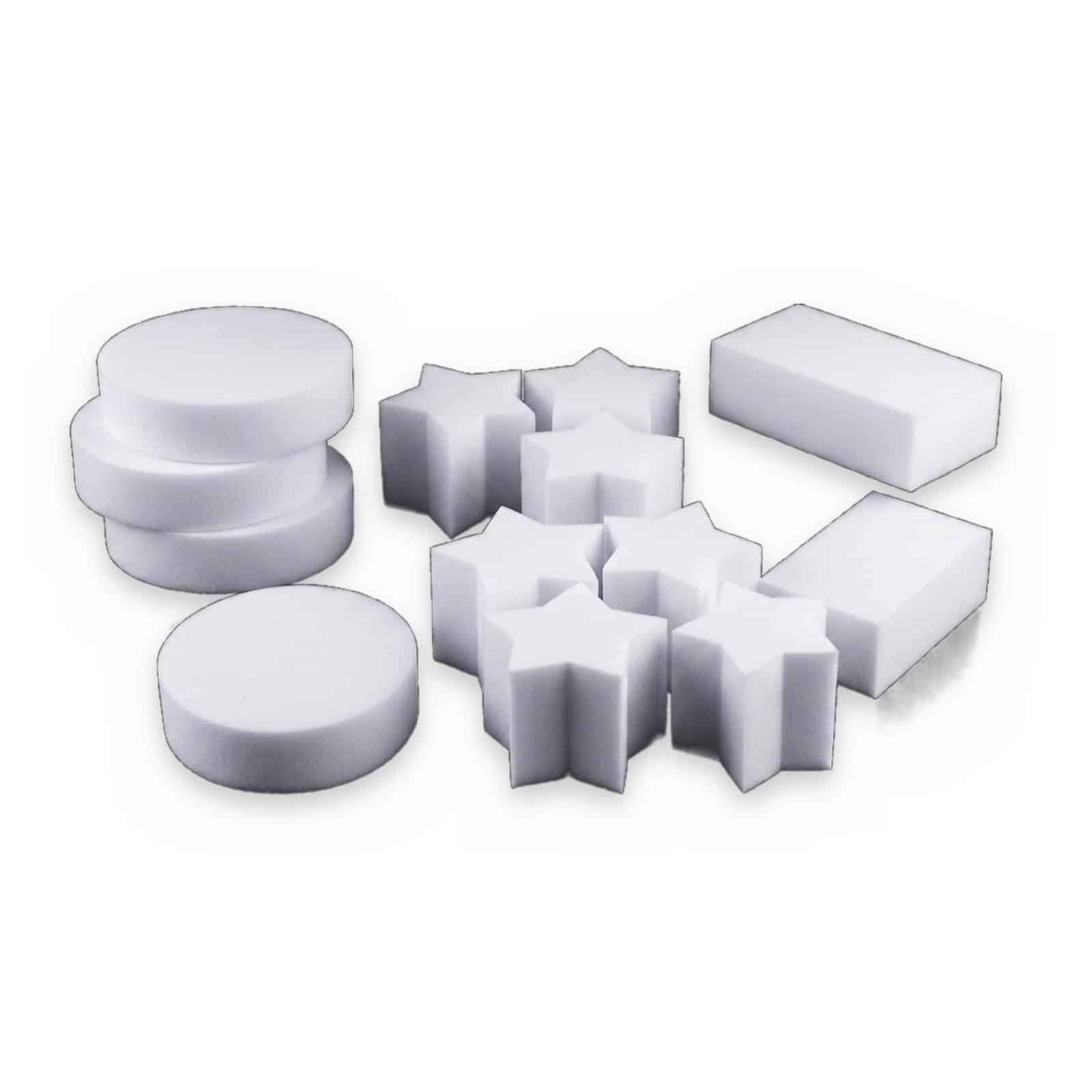
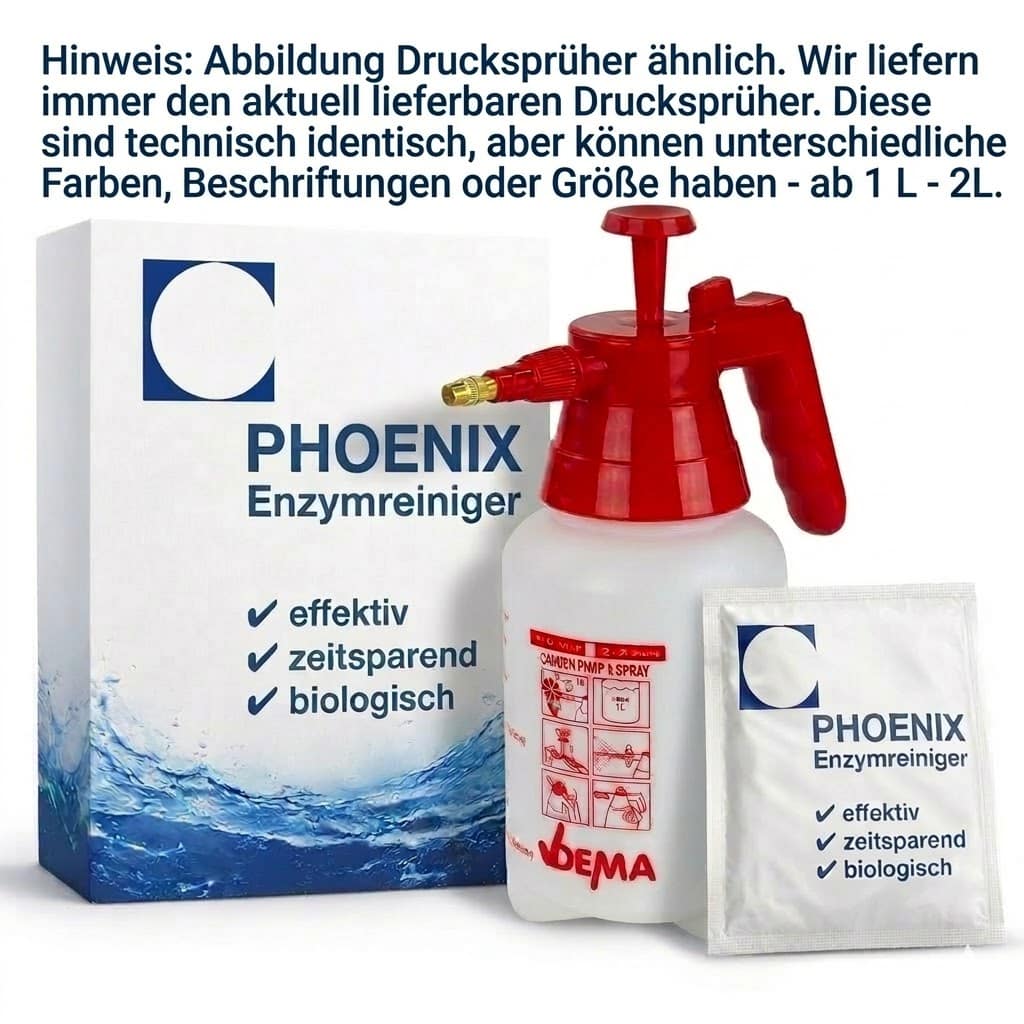
Image similar
Pressure sprayer
Spray precisely – even into paving joints and tight spaces. Included in the DS bundle.
Included in the DS bundle
💡 Professional workflow: Grey Giant → Pre-treat oil crusts → Spray on Phoenix → Leave to work for 30–60 minutes → Vacuum up with a wet vacuum cleaner → Repeat for old stains.
Frequently asked questions: Removing oil stains
Does Phoenix also work on old, dried-on oil stains on paving stones? +
Yes. Enzymatic cleaners are more effective than solvents, especially on dried-in stains, because enzymes break down the dirt matrix and the surfactants dissolve the exposed oil. Extend the contact time and repeat the application – after 2–3 applications, even stubborn old stains will be noticeably lighter.
Can I also use Phoenix to combat heating oil odors in the basement? +
Ja. Phoenix neutralisiert die geruchstragenden Moleküle des Heizöls – anders als Übersprays. Mehrfaches Einsprühen bei tief eingedrungenen Gerüchen in Estrich und Mauerwerk empfohlen. Bei größeren Schäden Fachbetrieb hinzuziehen.
How long does Phoenix need to take effect? +
Leave on for at least 20–30 minutes for fresh stains. For dried or deeply soaked oil stains, leave on for 1–2 hours or overnight. The longer it stays on, the deeper the enzymes will penetrate.
Does Phoenix attack paving stones or natural stone? +
No. Phoenix is gentle on materials – no fading, no etching, no damage to joints or seals. For sensitive materials, test on an inconspicuous area beforehand.
How do I dispose of the oily wastewater after cleaning? +
Phoenix Enzymreiniger itself is harmless, has the lowest water hazard class, and its surfactants are compatible with over 90% of %. biodegradable. When cleaning, you dissolve oil and oil residues – and these residues in the wastewater must not simply be released into the environment or sewer system. Before disposal, check with your city, wastewater authority, or waste management office to find out if your oily wastewater can be disposed of in the sewer system or must be taken to a hazardous waste collection point or recycling center. Used oils and fuels are classified as hazardous waste anyway. We cannot accept liability for the use and disposal of these residues.
Why is Phoenix in granular form better than ready-made solutions? +
Enzymes in solution degrade over time – many products on the shelf have already lost some of their effectiveness. Phoenix granules remain completely stable until mixed and unfold their full enzymatic power when freshly mixed. Ready for use for up to 20 days.
🛢️ Important information regarding wastewater disposal
Phoenix Enzymreiniger itself is harmless, has the lowest water hazard class, and its surfactants are over 90% biodegradable (%). However, cleaning with it dissolves oil and oil residues – and these residues in the wastewater must not simply be allowed to enter the environment or sewage system.
Before disposing of it, check with your city, wastewater authority, or waste management office to find out if your oily wastewater can be poured down the drain or needs to be taken to a hazardous waste collection point or recycling center. If in doubt, you can't go wrong by taking it to a collection point.
We cannot accept liability for the application and disposal of residues generated during cleaning.
⚠️ Safety notice: Keep out of reach of children and animals. Even if there is no immediate danger, children and animals should not have direct access to the product. Used oils and fuels are hazardous waste – dispose of properly.