Guide · Child Protection & Cleanliness
Cleaning toys safely: the complete guide for cuddly toys, highchairs and baby equipment
Spielzeug, Kuscheltiere und Babyausstattung brauchen eine Reinigung, die zu Material und Nutzung passt. Hier erfährst du, wo PHOENIX-Granulat beim Lösen organischer Rückstände helfen kann und welche Pflegehinweise bei Mundkontakt besonders wichtig sind.
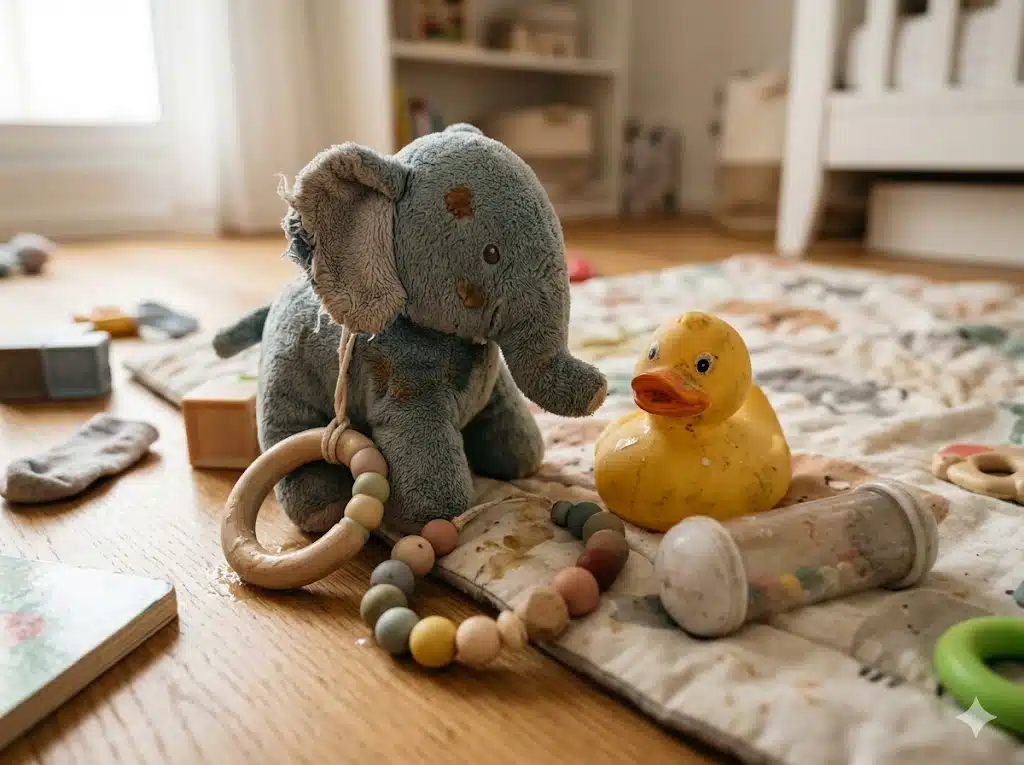
Cleaning toys gehört zum Familienalltag. Bauklötze sammeln Essensreste, Plüschtiere Flecken und Hochstühle angetrockneten Brei. Entscheidend ist, ein für den jeweiligen Gegenstand geeignetes Verfahren zu wählen und gelösten Schmutz sowie Reinigerreste gründlich zu entfernen.
PHOENIX verbindet Enzyme mit Tensiden und unterstützt das Reinigen geeigneter, wasserbeständiger Flächen. Ob ein Reiniger für ein bestimmtes Spielzeug geeignet ist, ergibt sich aus Etikett und Pflegeanleitung. Für Gegenstände, die Kinder in den Mund nehmen, gelten zusätzliche Herstellerhinweise.
„Passend reinigen, gründlich nachspülen, vollständig trocknen lassen.“
Protease spaltet Eiweiß, Amylase Stärke; Tenside unterstützen das Benetzen und Ablösen. Das ist der konkrete Nutzen der PHOENIX-Rezeptur bei passenden organischen Verschmutzungen. Nach der Einwirkzeit gelösten Schmutz aufnehmen und Reinigungsrückstände entfernen.
- Schmutz und Reinigerreste gründlich entfernen
- PHOENIX-Wirkweise bei organischen Rückständen
- Das passende Reinigungsverfahren wählen
- Hard toys, building blocks, plastic
- Stuffed animals and plush toys
- High chair, crawling mat and mouth contact surfaces
- Strollers and textiles
- Teething rings and pacifiers
- Daycare centers, kindergartens and childminders
- The five most common mistakes
- Frequently Asked Questions
Schmutz und Reinigerreste gründlich entfernen
Beim Hochstuhl oder auf der Krabbelmatte zählt neben sichtbarer Sauberkeit auch die Entfernung von Reinigerresten. Verwende ein für die Oberfläche vorgesehenes Mittel und halte dich an Dosierung und Nachreinigung laut Anleitung.
Ein Mittel ist nicht allein deshalb geeignet, weil es Enzyme enthält oder keine Gefahrensymbole trägt. Entscheidend sind die konkrete Anwendung, das Material und die Pflegevorgaben des Gegenstands.
Reinigungsmittel und angesetzte Lösungen gehören außer Reichweite von Kindern. Reinigung durch Erwachsene durchführen und behandelte Gegenstände erst nach abgeschlossener Nachreinigung und Trocknung zurückgeben.
Wenn Spielzeug regelmäßig in den Mund genommen wird, zuerst die Pflegeanleitung des Herstellers prüfen. Sie legt fest, ob Spülen, Waschen, Auskochen oder ein bestimmtes Mittel vorgesehen ist. Eine allgemeine PHOENIX-Freigabe für Mundkontakt-Gegenstände wird hier nicht gegeben.
PHOENIX kann bei geeigneten Reinigungsaufgaben Teil der Routine sein. Dazu gehören die passende Dosierung, ausreichende Einwirkzeit nach Etikett und gründliches Entfernen von Rückständen. Eine Reinigung ersetzt keine erforderliche Desinfektion oder Sterilisation.
Spielzeug reinigen mit PHOENIX: die Wirkweise verstehen
Enzyme sind Proteine, die bestimmte Reaktionen beschleunigen. Für die Reinigung ist entscheidend, welche Rückstände sie spalten können und ob das Mittel zur Oberfläche passt. Aus der enzymatischen Wirkweise allein folgt keine pauschale Sicherheits- oder Materialzusage.
PHOENIX enthält Protease zum Spalten von Eiweiß und Amylase zum Spalten von Stärke. Tenside unterstützen das Benetzen und Ablösen, etwa bei passenden Essens- und Hautfettrückständen. Gelösten Schmutz anschließend gründlich entfernen.
PHOENIX enthält selbst Tenside. Deshalb ist die pauschale Gegenüberstellung „Enzyme statt Tenside“ nicht zutreffend. Bei jedem verwendeten Reinigungsmittel müssen Dosierung, Materialverträglichkeit und Entfernung von Rückständen zur Aufgabe passen.
„Die Pflegeanleitung des Spielzeugs entscheidet über die passende Reinigung.“
PHOENIX: Vorteile des Granulats
Passend portionieren
Die benötigte Lösungsmenge selbst ansetzen, statt eine fertige Flüssigkeit vorzugeben.
Ergiebigkeit klar rechnen
100 g ergeben bei 20 g/L 5 Liter Reinigungslösung. So lässt sich der Verbrauch für freigegebene Aufgaben planen.
Organische Rückstände lösen
Protease für Eiweiß, Amylase für Stärke; Tenside unterstützen das Benetzen und Ablösen auf geeigneten Materialien.
Für Mundkontakt-Gegenstände gelten die Pflegefreigaben des Spielzeugherstellers. Reinigerreste nach der Anwendung gründlich entfernen.
Das passende Reinigungsverfahren wählen
Reinigung, Waschen und Desinfektion erfüllen unterschiedliche Aufgaben. Diese Übersicht hilft, die Anwendung passend auszuwählen; sie bewertet keine ganze Produktgruppe pauschal als besser oder schlechter.
| Aufgabe | Worauf es ankommt |
|---|---|
| Organische Rückstände auf geeigneten Flächen | PHOENIX nach Etikett verwenden; Material prüfen und Rückstände gründlich entfernen. |
| Waschbare Kuscheltiere und Textilien | Pflegeetikett und geeignete Waschverfahren beachten; gründlich ausspülen und trocknen. |
| Gegenstände mit Mundkontakt | Herstellerfreigaben beachten; keine pauschale Empfehlung für Schnuller oder Beißringe. |
| Erforderliche Desinfektion oder Sterilisation | Das dafür vorgesehene Verfahren und gegebenenfalls den Hygieneplan einhalten. |
Für Gegenstände mit Mundkontakt bleibt die Herstellerfreigabe entscheidend. PHOENIX ist für geeignete Reinigungsaufgaben vorgesehen; ein Gutachten zur Lebensmittelindustrie ersetzt keine Freigabe für Schnuller, Beißringe oder jedes Spielzeug.
Cleaning hard toys: building blocks, plastic, figurines
Bei wasserbeständigen, für die Reinigung mit PHOENIX geeigneten Bauklötzen, Figuren oder Spielzeugautos die Lösung nach Etikett anmischen. Material vorher verdeckt prüfen, gelösten Schmutz entfernen und gründlich mit klarem Wasser nachspülen. Holz, Elektronik, Lacke und geklebte Teile können andere Pflege benötigen.
Cleaning cuddly toys and plush toys
Kuscheltiere nach Pflegeetikett waschen. Bei einer vorgesehenen PHOENIX-Anwendung auf passende Dosierung und vollständiges Ausspülen achten. Keine pauschale Zusage für alle Fasern, Füllungen oder Zubehörteile.
Before washing, a quick check is worthwhile: read the care label, remove any built-in music boxes or sound modules, and check for glued eyes or noses. If the label is missing or the electronics cannot be removed, spot cleaning is the safest option. When machine washing, a mesh laundry bag or pillowcase will protect the seams and fur. After drying, gently brush the fur, and your beloved pet will look like new again.
Bei Geruch nach Milch oder anderen organischen Rückständen muss die Reinigung die verschmutzte Stelle erreichen. PHOENIX kann auf geeigneten Materialien das Lösen passender Rückstände unterstützen. Herstellerhinweise beachten und nach der Reinigung gründlich ausspülen und trocknen.
Highchair and playmat: Clean toys in the mouth contact area
Hochstuhl und Krabbelmatte nur nach der Pflegeanleitung des Herstellers behandeln. Für eine geeignete PHOENIX-Anwendung Lösung nach Etikett ansetzen, mit einem Tuch auftragen und gelösten Schmutz entfernen. Anschließend mit klarem Wasser gründlich nachwischen. Feuchtes Nachwischen allein ist keine pauschale Mundkontakt-Freigabe.
Du möchtest PHOENIX für geeignete Reinigungsaufgaben im Kinderalltag kennenlernen?
For toy cleaner in the shopStrollers and textiles
Kinderwagenbezüge und andere Textilien nach Pflegeetikett reinigen. Bei geeigneter PHOENIX-Anwendung die behandelte Stelle vollständig ausspülen oder mit klarem Wasser gründlich nacharbeiten und trocknen lassen. Elektrische Bauteile und nicht waschbare Komponenten aussparen.
Teething rings and pacifiers
Beißringe und Schnuller ausschließlich nach der Pflegeanleitung des Herstellers reinigen beziehungsweise sterilisieren. Eine allgemeine Empfehlung für PHOENIX bei solchen Gegenständen wird hier nicht ausgesprochen.
Daycare centers, kindergartens and childminders
In Kita und Tagespflege gehören Reinigungsaufgaben in den bestehenden Hygieneplan. PHOENIX kann für dort vorgesehene, geeignete Anwendungen eingesetzt werden. Reinigungs- und Desinfektionsverfahren getrennt festlegen; Kinder erhalten keinen Zugang zum Reiniger oder zur angesetzten Lösung.
The five most common mistakes when cleaning toys
Cleaning toys sounds simple, but experience shows that the same pitfalls keep cropping up. Knowing them saves frustration and better protects the child.
1. Omit the final wiping step
Gründlich mit klarem Wasser nachspülen oder mehrfach nachwischen. Gelösten Schmutz und Reinigerreste entfernen. Bei Gegenständen mit Mundkontakt ist zusätzlich die Pflegefreigabe des Herstellers entscheidend.
2. Use water that is too hot.
Dosierung und Wassertemperatur nach dem PHOENIX-Etikett wählen und die Temperaturgrenzen des Spielzeugs beachten. Kochendes Wasser oder zusätzliche Erhitzung sind keine allgemeine Anwendungsempfehlung.
3. Disinfectant spray as a long-term solution
Ob eine Desinfektion erforderlich ist, richtet sich nach der konkreten Situation und gegebenenfalls dem Hygieneplan. Nur dafür vorgesehene Mittel nach ihrer Anleitung verwenden. PHOENIX ist kein Ersatz für eine erforderliche Desinfektion.
4. Das Pflegeetikett von Kuscheltieren übergehen
Waschmittel und Verfahren passend zum Pflegeetikett auswählen. Auch bei einer PHOENIX-Anwendung müssen behandelte Textilien gründlich ausgespült und vollständig getrocknet werden.
5. Leave the cleaner open.
Für Kinder und Tiere unzugänglich aufbewahren. Etikett beachten, Augen- und Hautkontakt vermeiden und nicht am Körper anwenden. Auch angesetzte Lösungen sicher aufbewahren.
Frequently Asked Questions
What is a toy cleaner and what do I need it for?
Ein Spielzeugreiniger dient der Reinigung geeigneter Gegenstände im Kinderumfeld. PHOENIX unterstützt das Lösen organischer Rückstände. Für Mundkontakt-Gegenstände Herstellerfreigaben beachten und gründlich mit klarem Wasser nachspülen.
Is the cleaner safe if my child puts the toy in their mouth?
Eine pauschale Freigabe für Mundkontakt besteht hier nicht. Entscheidend sind die Pflegevorgaben des Spielzeugherstellers. Geeignete Gegenstände nach der Reinigung gründlich mit klarem Wasser nachspülen und vollständig trocknen lassen.
Why not use regular laundry detergent or disinfectant spray?
Waschmittel und Desinfektionsmittel erfüllen andere Aufgaben als ein enzymatischer Reiniger. Die Wahl hängt vom Gegenstand, der Verschmutzung und dem Pflege- beziehungsweise Hygieneplan ab. Keine dieser Produktgruppen lässt sich pauschal ausschließen.
At what temperature do I work best?
Temperatur und Dosierung nach PHOENIX-Etikett wählen. Zusätzlich die Temperaturgrenzen des Spielzeugs und seiner Materialien beachten.
Is the cleaner also suitable for daycare centers and childminders?
Für im Hygieneplan vorgesehene, geeignete Reinigungsaufgaben kann PHOENIX verwendet werden. Großgebinde und bedarfsgerechtes Anmischen helfen bei der Mengenplanung. Das ersetzt keine erforderliche Desinfektion oder konkrete Anwendungsfreigabe.
PHOENIX macht die Mengenplanung einfach: Granulat für die benötigte Lösung portionieren und passende organische Rückstände auf geeigneten Materialien reinigen. Produktgrößen und Anwendungshinweise im Shop ansehen.