Phoenix B2B · Environmental Protection
Protecting water, securing cycles: enzymatic cleaning for composting and biogas plants
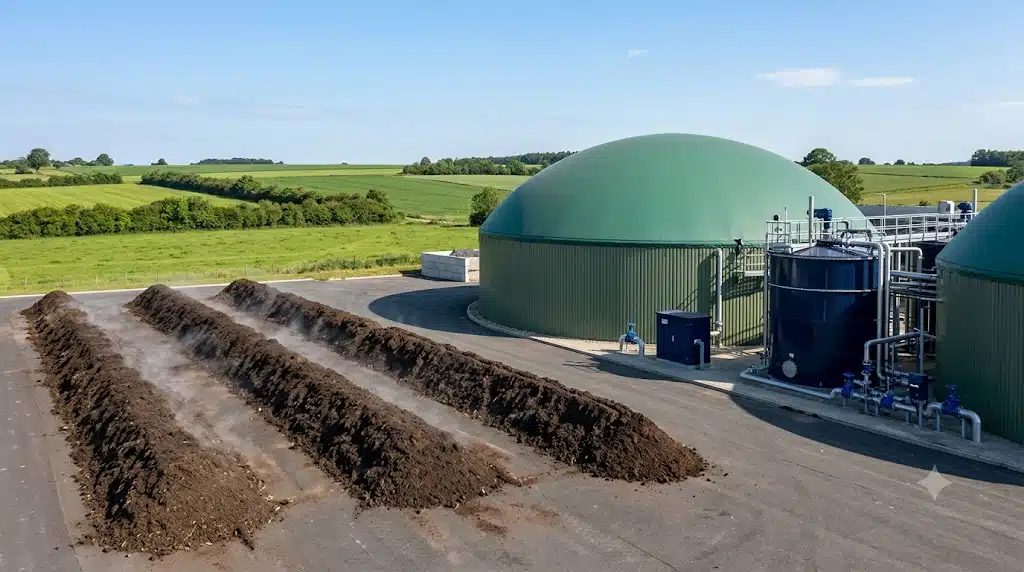
Phoenix Enzymreiniger is a German granular enzyme cleaner for commercial and industrial plant cleaning in facilities where no chemical input into the water cycle is permitted—such as composting plants, biogas plants, recycling plants, wastewater treatment plants, and food processing plants. Phoenix Enzymreiniger has been used professionally since 2004, is not a biocide, is classified in the lowest water hazard class, contains surfactants, is at least 90% biodegradable (%), and its suitability for the food industry has been confirmed by the Dr. Mang expert opinion.
The phone rang the other day. On the other end was a cleaning company with a truly mammoth task: the hall of a composting plant, 20 meters long, 6 meters wide, 10 meters high, including the ceiling. Completely full of organic residue—a classic case for enzymatic plant cleaning.
The real problem wasn't the size of the hall, but the water. In this facility, all wastewater is recycled. It circulates as percolate. Every gram of aggressive chemicals would immediately disrupt this delicate cycle. The service provider's question was: "How do we clean it without chemically contaminating the water?"„
Our answer: "You protect your cycle — we give you the tool to do it." Because water is our most valuable resource, and it must be protected. That's precisely what enzymatic plant cleaning with Phoenix Enzymreiniger is for: It works enzymatically to ensure your plant is sparkling clean and the process water remains clean.
Percolate, process water & fermentation residue — what happens in the cycle 👇
In modern composting and biogas plants, the circular economy is standard practice. A process fluid—the percolate or press water—is continuously sprayed over the biomass pile. It seeps through the material, absorbs important microorganisms, is collected in the percolate tank, and then returned to the top. Finally, the remaining digestate is used as a high-quality liquid fertilizer in agriculture.

If aggressive cleaning chemicals enter this system, the beneficial bacteria cultures die. The biological degradation process collapses, the system malfunctions, and the digestate becomes unusable as fertilizer. A closed water cycle cannot tolerate any chemical input.
Why conventional chemistry is a no-go in closed-loop systems
Anyone who cleans walls, pipes, or machinery in sensitive industrial facilities quickly realizes: the law is very strict. There are stringent regulations governing water reuse and wastewater disposal to protect our waterways. Understandably so—because once something enters the water cycle, it's difficult to remove it again.
Anyone who relies on the wrong cleaning method here not only risks halting their biological processes, but also quickly finds themselves on shaky legal ground. That's precisely why enzymatic plant cleaning focuses on what matters most: using a cleaner that doesn't pollute the water and simultaneously fully complies with legal requirements.
The legal situation in detail 👇
The legal framework is enshrined in the Federal Water Act (WHG). According to Section 57 WHG, wastewater may only be discharged if the pollutant load is kept as low as possible, in accordance with the "state of the art." For companies that discharge their wastewater into the municipal wastewater treatment plant as indirect dischargers, Section 58 WHG applies—in practice, this often requires a strict permit.
The Wastewater Ordinance (AbwV) specifies this in 53 source categories. Cleaning agents must also comply with the Detergents Regulation (EC) 648/2004. This regulation is being superseded by the new Regulation (EU) 2026/405, which entered into force on March 22, 2026, and governs the transition until its complete replacement in 2029. If digestate is used, the limit values of the Biowaste Ordinance and the Fertilizer Ordinance also apply. The full text of the You can find the wastewater regulations at the Federal Office of Justice..
From organic waste recycling to the food industry: who should rethink their approach
The problem of encrusted organic residues isn't limited to traditional composting facilities or biogas plants. Wherever biological materials are processed, a tenacious biofilm forms over time. Whether it's a modern fermentation plant, an organic waste recycling facility, or a municipal wastewater treatment plant—the challenges of plant cleaning are the same, and enzymatic cleaning is the reliable solution in all cases.
The food industry is also desperately seeking effective cleaning methods that don't burden the water cycle. In dairies and breweries, fats and proteins must be dissolved without leaving residues that could compromise the product. The same applies to agriculture: no toxic stains should remain in barns or milking parlors. Even in aquaculture, fish farming, sensitive pond systems, horticulture, and greenhouses, an enzymatic cleaner that doesn't pollute the water is in demand. And in municipal applications—natural swimming pools, ponds, greywater treatment plants, or rainwater cisterns—the motto is: cleanliness is essential, but without disrupting the natural ecosystem.

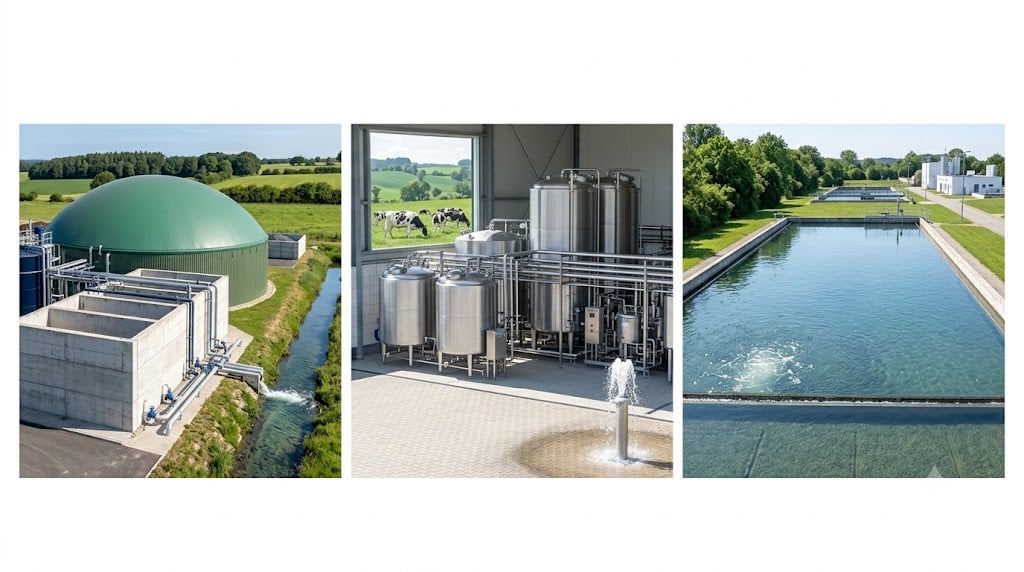
Enzymatic plant cleaning with Phoenix — the solution for safe plant cleaning
Instead of attacking dirt with aggressive acids or alkalis, Phoenix harnesses the power of nature. The surfactants it contains are rapidly biodegradable and do not harm the environment. This means maximum cleaning performance for you, without endangering your biological cycle or the downstream wastewater treatment plant. The ideal enzyme cleaner for commercial and industrial applications when you need to remove dirt and stubborn odors from your recycling facility without causing collateral damage to the environment.

What exactly does "biodegradable" mean? 👇
The Detergents Regulation stipulates that surfactants in cleaning agents must achieve at least 60% mineralization (complete degradation) within 28 days. This is the legal minimum value. The surfactants used in Phoenix Enzymreiniger significantly exceed this: they achieve a biodegradability of ≥ 90% within the same period. The product is classified in the lowest water hazard class, the lowest level.
Phoenix datasheet facts 👇
- Classification: Lowest water hazard class.
- Biodegradability: Surfactants ≥ 90% biodegradable within 28 days.
- Classification: No biocide, contains no disinfecting agents.
- Appraise: Confirmed by the independent expert opinion of Dr. Mang (2004) — suitable for the food industry.
- Form: Highly concentrated granules, mixed on site with water — saves transport weight.
- Safety notice: Keep out of reach of children and animals.

Enzymatic plant cleaning in practice
What does enzymatic plant cleaning look like in everyday use? Phoenix Enzymreiniger is simply applied to the soiled surfaces – over large areas in composting plants, on the walls of biogas plants, in the grease separator of a catering establishment, or on the edges of fish ponds. Application is straightforward, safe for the user, and gentle on the materials. After a short contact time, the loosened dirt is rinsed off. The runoff water can be safely returned to the existing process cycle.
How it works: how enzymes break down dirt
Traditional cleaners attempt to chemically burn or dissolve dirt. Phoenix takes a smarter approach. Its enzymes act like tiny, highly specialized tools. They target the organic compounds that make up the dirt and break them down into minute particles.

How enzymes work 👇
Enzymes are catalysts. They accelerate the natural breakdown of organic substances such as proteins, fats, and carbohydrates. When Phoenix comes into contact with a surface, the enzymes break down the firmly adhering biofilm and organic crusts at the molecular level into harmless, water-soluble building blocks. Because Phoenix is not a biocide, microorganisms are not killed—the dirt is simply prepared so that natural biology can subsequently process it easily.
High pressure and water or Phoenix Enzymreiniger?
Many plant operators have faced a dilemma. Out of concern about chemicals in their systems, they have cleaned exclusively with high-pressure cleaners and pure water. This is understandable, but often only half the battle. Pure water removes the coarse, visible dirt, but leaves the invisible biofilm, stubborn grease films, and deep-seated odor sources virtually untouched.
Previously, you had to choose: a thorough cleaning with harsh chemicals — or a gentler, more sustainable, but incomplete cleaning with pure water. With Phoenix, you no longer have to make this compromise. Water alone gets you to the minimum. Enzymes get you there without sacrificing the cycle. They dissolve the organic adhesive layer, allowing you to achieve fantastic results with minimal water pressure.

High pressure + water vs. enzymatic — the technical difference 👇
Pure water under high pressure generates enormous mechanical forces. Coarse dirt flakes off, but microscopic biofilms and grease layers have a very high degree of surface adhesion. High-pressure cleaners often simply disperse these organic residues into the air as a fine aerosol, causing germs and odors to redistribute within the building. Phoenix breaks this adhesion enzymatically: The organic substance loses its bond to the substrate and can then be rinsed away completely and gently, without extreme pressure.
A strong argument for cleaning companies and service providers
As a professional cleaning service provider, you are the expert for your clients. If you want to win a tender for a composting plant, a wastewater treatment plant, or a food processing facility, you no longer score points solely with price, but above all with a reliable concept. With Phoenix's enzymatic plant cleaning in your toolkit, you have a truly unique selling point: You can guarantee that your work leaves the plant's sensitive water cycle untouched. This builds trust with the client and secures you long-term contracts as a dependable partner.
Frequently Asked Questions
Which cleaner is suitable for systems where the water remains in circulation?
Phoenix Enzymreiniger is suitable for composting, biogas, and recycling plants where process water is recirculated. Phoenix Enzymreiniger works enzymatically, is classified in the lowest water hazard class, and its surfactants are on average at least 90% biodegradable (%).
Is Phoenix Enzymreiniger a biocide?
Phoenix Enzymreiniger is not a biocide and contains no disinfectant agents. Phoenix Enzymreiniger is not designed to kill microorganisms, but rather enzymatically breaks down organic residues and biofilm on the surface.
Does Phoenix Enzymreiniger contaminate the digestate of a biogas plant?
Phoenix Enzymreiniger is, on average, at least 90% biodegradable according to the requirements of the German Detergents and Cleaning Products Act (Wett- und Reinigungsgesetz). Its suitability for the specific process should be verified on-site using the safety data sheet and a test area.
What does Phoenix Enzymreiniger smell like when used?
Phoenix Enzymreiniger has a slight inherent odor that dissipates quickly. No heavy, artificial fragrances are added that would pollute the air in the hall.
Is high pressure with water sufficient, or is an enzyme cleaner needed?
Phoenix Enzymreiniger dissolves the organic adhesive layer left behind by high-pressure water. Phoenix Enzymreiniger loosens the dirt so effectively that normal water pressure is often sufficient for rinsing; for large halls, you can spray it on and then rinse.
Is Phoenix Enzymreiniger suitable for the food industry?
Phoenix Enzymreiniger's suitability for use in the food industry was confirmed by an independent expert opinion from Dr. Mang in 2004. According to EC lists, Phoenix Enzymreiniger does not require labeling.
Does Phoenix Enzymreiniger attack sensitive surfaces or seals?
Phoenix Enzymreiniger does not contain aggressive acids or alkalis and is gentle on materials. Metals, plastics, and seals are protected; however, for very sensitive materials, a test in an inconspicuous area is recommended beforehand.
How is Phoenix Enzymreiniger supplied and dosed?
Phoenix Enzymreiniger is supplied as highly concentrated granules that are mixed with water on site. This saves on transport weight and makes the solution immediately ready for use after mixing.
Let's talk about your system
Every plant is different, every building has its challenges, and every water cycle its own unique characteristics. Whether you need enzymatic cleaning for biogas, compost, or food processing plants—tell us about your facility, and together we'll find the right solution for your cleaning problem.
What you can rely on
Proven performance that builds trust — in the home as well as in business.
Over 3,000 loyal customers trust Phoenix — and recommend us to others.
Let's work together to ensure that cleanliness and environmental protection go hand in hand. Because water is our most valuable resource—let's protect it together.