Removing wetsuit odor — Washing and cleaning a wetsuit
Home remedy fact check, enzymatic method & step-by-step instructions for each application — from diving suit to triathlon wetsuit
BY DIETER SCHMIDT · OWNER OF PHOENIX ENZYME CLEANERS · 11 MIN READ TIME
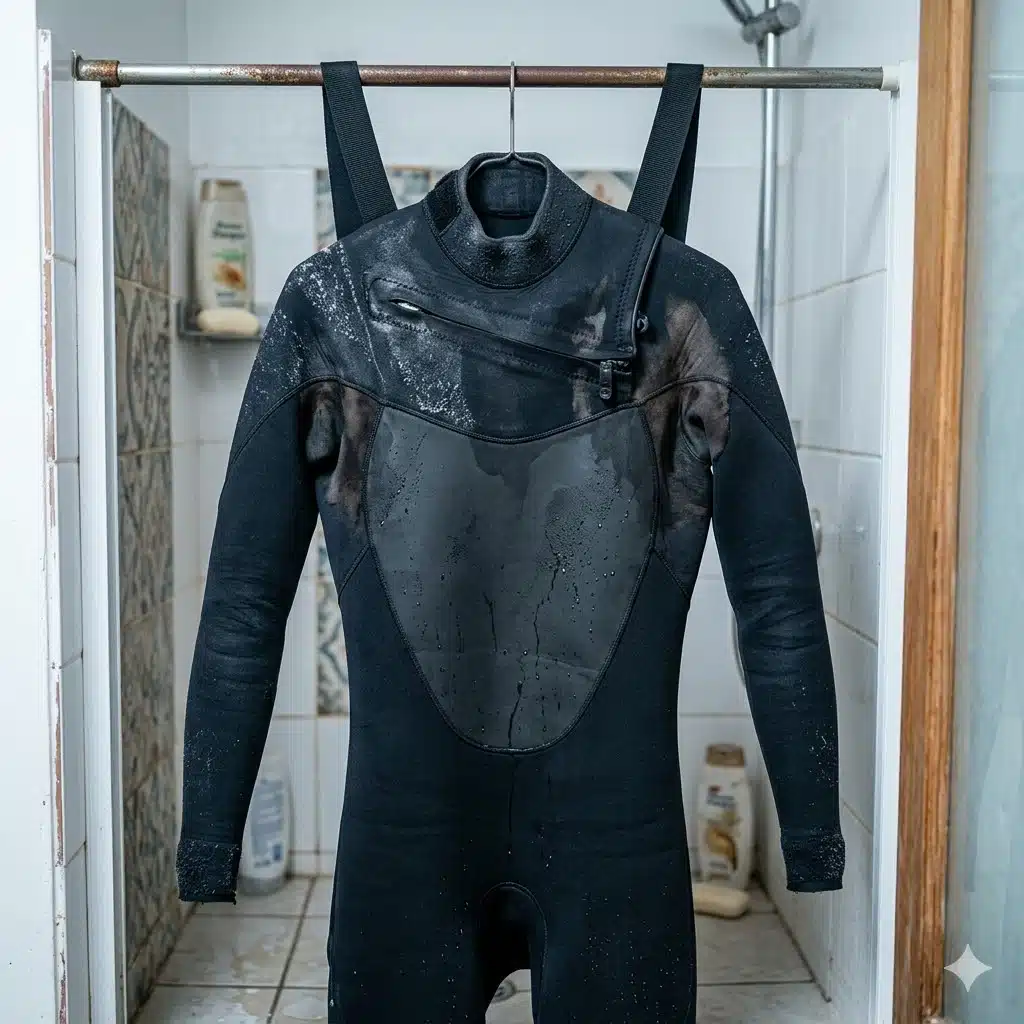
You want Removing diving suit odor — an der Ursache, ohne dass der muffige Ammoniak-Geruch nach dem nächsten Tauchgang wieder hochkommt? Dann brauchst du keine Heißwasser-Mythen und keine Waschmaschine, sondern enzymatische Spaltung bei max. 30°C. Denn nur Enzyme können die Harnsäurekristalle, Buttersäure-Verbindungen und Eiweiß-Reste aufschlüsseln, die sich nach jeder Session tief im Polychloropren-Kautschuk festsetzen. Egal ob du Washing and cleaning a wetsuit Whether you want to do diving, surfing, triathlon or canoeing — the principle remains the same.
It's best to read this guide first — so that you'll be prepared when you try. Removing diving suit odor You don't want to make the classic mistake of experimenting with hot washes or chlorine bleach. Both will destroy your material in a single session. In this guide, you'll learn why neoprene odor is so chemically stubborn, which home remedies work (and which definitely don't), and how to... Washing and cleaning a wetsuit how to cleanly apply it for 12 applications, and what routine keeps your 700-euro suit alive.
📋 Table of Contents
- Removing wetsuit odor — why it's so stubborn
- Home remedies fact check: what works, what destroys
- Why enzymes save neoprene — a brief textbook explanation
- Washing and cleaning a wetsuit — per use
- Suit from storage: mildew stains & musty smell
- Prevention: Routine that keeps your suit alive
- Application process: 4 steps to the bathtub method
- Suitable accessories for maximum effect
- For diving schools, DLRG (German Life Saving Association) & club hygiene
- Granules instead of liquid — the crucial difference
- 🎯 Search game: How many cats can you find?
- Frequently Asked Questions
Removing wetsuit odor: why it's so difficult to do chemically.
Neoprene is a closed-cell foam made of Polychloroprene rubber. The cellular structure makes the suit warm and elastic—but at the same time, it traps organic compounds like a sponge. Four groups of substances build up during each session that ordinary water cannot remove.
First, urine: Honestly, almost everyone pees in their wetsuit at least once while diving. Urea and uric acid They penetrate deep into the open-pored inner surface and form crystals when drying. These are insoluble in water—a freshwater rinse will not dissolve them.
Secondly, sweat and salt water: Proteins, amino acids, and salts are deposited in the micropores. Salt crystallizes during drying, making the material brittle; the organic component remains and becomes food for bacteria.
Third, butyric acid and microbes: Bacteria decompose sweat and urine into Butyric acid and short-chain fatty acids. These compounds are the typical rancid, cheesy neoprene smell — and they grow exponentially the longer protein residues remain in the material.
Fourthly, mildew stains after storage: A suit stored in damp conditions will develop black or reddish spots—fungal growth on the material's surface. The discoloration itself is cosmetic, but the musty odor is deeply embedded in the foam.
The core problem: Urea, protein, butyric acid and fungal residues are not water-soluble. A simple freshwater rinse after diving removes the salt, but all four groups of substances remain in the material. After each session, the odor increases—until the suit becomes an odor trap and you're already disgusted when you put it on in the morning.
Home remedies fact check: what really helps when washing and cleaning a wetsuit
If your wetsuit constantly smells bad, you've probably already tried a lot of things. Here's an honest fact check — four home remedies that are regularly recommended, and why three of them will damage your material faster than the smell itself.
❌ Hot wash above 30°C — destroys the adhesive.
Sounds logical: hot water dissolves dirt, including neoprene odors. Wrong. Polychloroprene rubber cannot withstand temperatures above 30°C—the adhesives between the neoprene layers soften, seams come apart, and the material loses its shape. A single wash at 40°C can ruin a €700 suit. The organic odor-causing substances are already insoluble in the material—heat doesn't help, it only damages it.
❌ Washing machine — drum friction kills the coating
Even a cold wash cycle in the washing machine is a material killer. The drum friction abrades the water-repellent coating, and the seams tear during the spin cycle. Even a "delicate" cycle is too harsh for neoprene—and the detergent leaves behind surfactants that can cause skin irritation the next time you wear the suit. Regardless of the detergent used, the washing machine is strictly off-limits for neoprene.
❌ Chlorine and bleach — irreparable material damage
Chlorine destroys the rubber at a molecular level. The suit becomes hard, brittle, and tears the next time it's put on. Bleach is just as aggressive and, in addition, a source of contamination that can cause skin irritation. Anyone who has ever seen a neoprene suit after chlorine treatment knows: light brown discoloration, a sticky surface, and no grip. Irreversible damage.
❌ Vinegar, baking soda, baking powder — only work on the surface
Classic home remedies. Vinegar temporarily neutralizes ammonia odors, but cannot break down uric acid crystals—the smell returns after two or three uses. Baking soda and baking powder absorb moisture but leave the organic compounds unaffected. Furthermore, acids and bases react with neoprene coatings and can leave stains. Useful as a temporary fix for a fresh smell, but completely inadequate as a cleaning strategy.
✅ Enzyme cleaner — the only biochemical solution
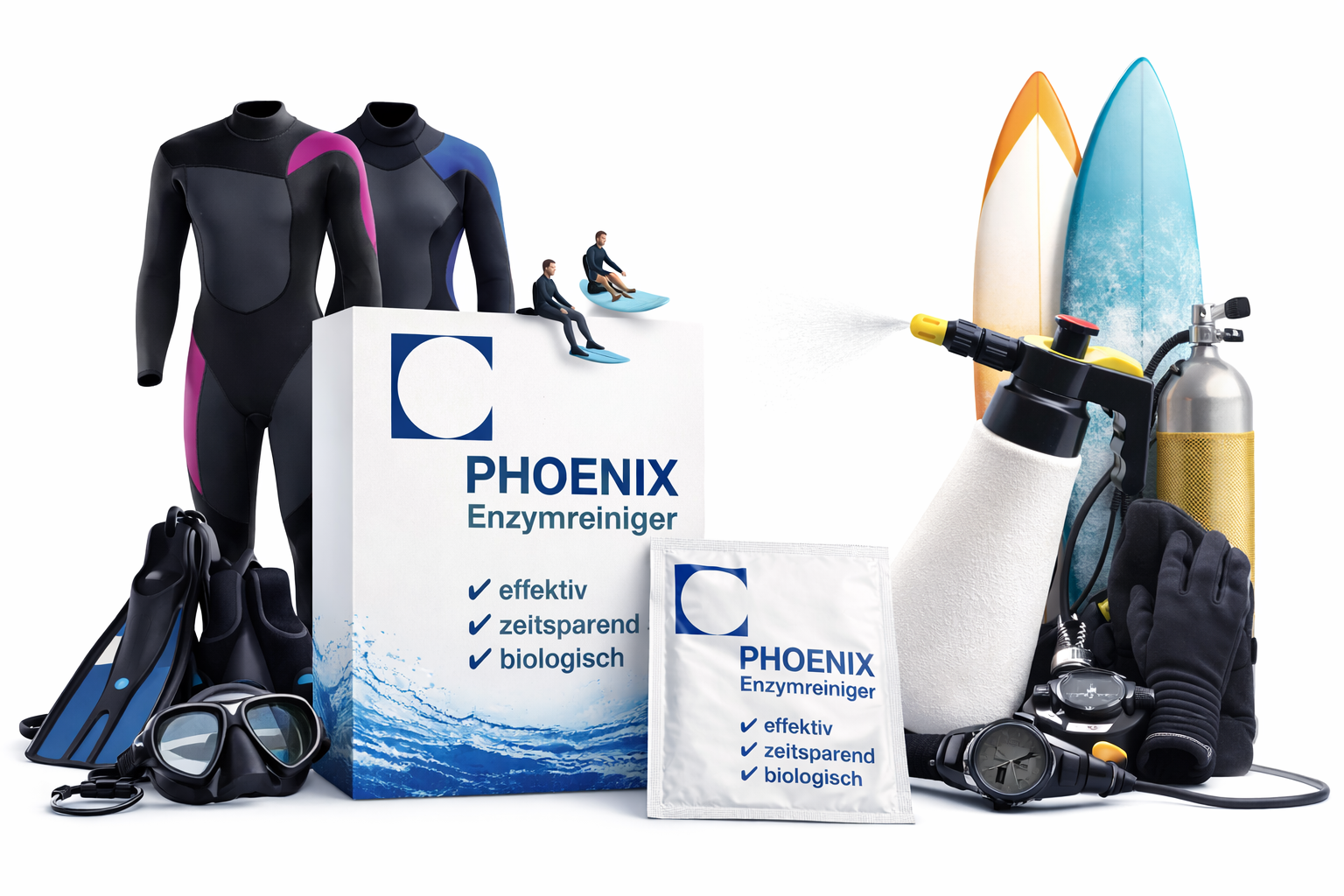
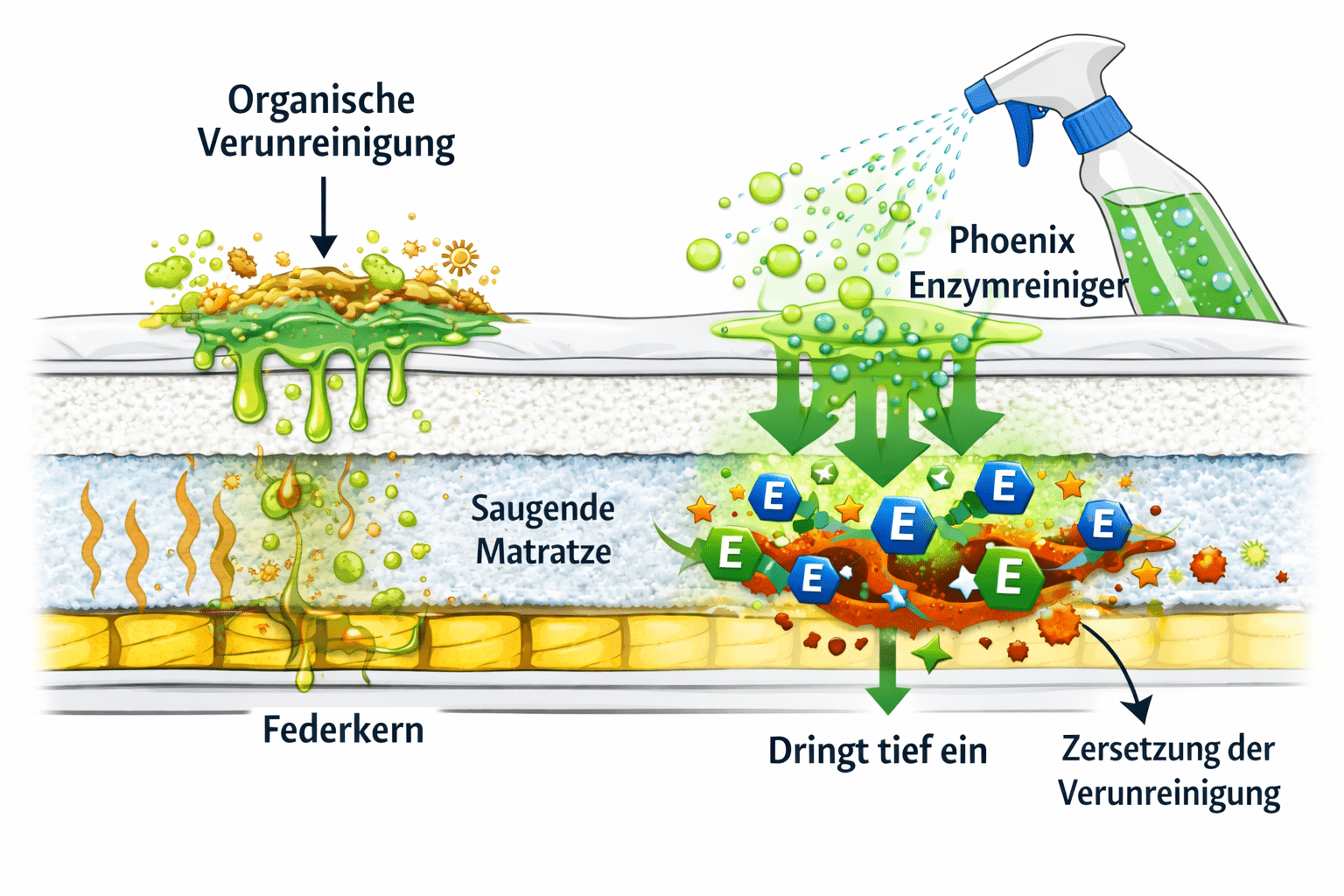
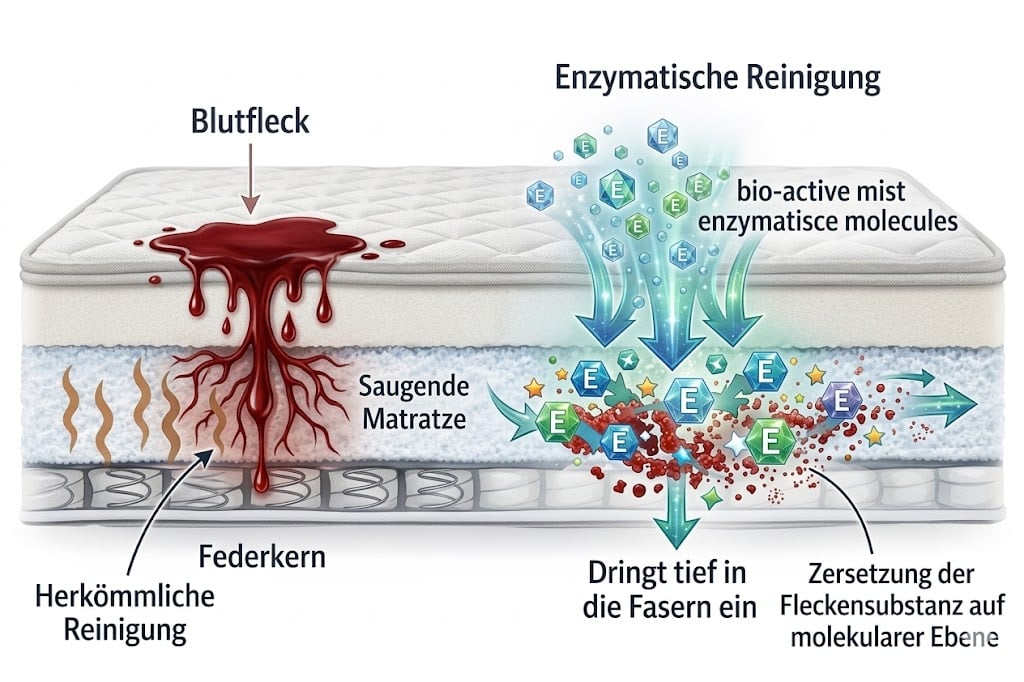
Enzymes are catalysts that break down organic compounds at the molecular level. Proteases break down proteins and urea, amylases break down carbohydrates., surfactants It dissolves fats and butyric acid. Phoenix Enzymreiniger operates at full activity at 20–30°C — no heat is required, and the material remains unaffected. The enzymes only attack organic compounds, not the synthetic polychloroprene rubber.
Conclusion on home remedies: Three of the four classic methods destroy neoprene faster than they help. Vinegar is a last resort, nothing more. Anyone who truly wants to remove wetsuit odor needs enzymatic breakdown—and strictly at a maximum temperature of 30°C.
Why enzymes save neoprene — a brief textbook explanation
Enzymes sind hochspezialisierte Proteine, die wie biochemische Scheren arbeiten. Jedes Enzym hat genau eine Aufgabe — es spaltet ein bestimmtes Molekül an einer bestimmten Stelle. In Phoenix Enzymreiniger arbeiten Enzyme und Tenside parallel, abgestimmt auf die organischen Geruchsquellen die im Neopren stecken.
Proteases They break down protein structures and urea into simple amino acids. This is the most important step in the production of diving and triathlon suits — because without intact protein residues, the bacteria lose their food source and can no longer produce butyric acid. Amylases They break down carbohydrates from organic seawater residues. surfactants They dissolve fats and short-chain fatty acids — precisely the butyric acid compounds that are responsible for the rancid smell.
The crucial point for neoprene: Enzymes work at 20–30°C with full activity. You don't need heat, aggressive solvents, or chlorine. Lukewarm water, freshly mixed granules, 15–30 minutes of soaking time—that's it. The enzymes attack only organic compounds. Polychloroprene rubber, adhesives, and coatings remain completely unaffected.
Dosage overview
- Full wetsuit (diving/surfing): 100–200 g of granules to 5–10 L of lukewarm water
- Triathlon wetsuit / drysuit: 80–120 g per 4–6 L
- Boots, gloves, hoods: 20–40 g per 1–2 L
- Spot treatment with pressure sprayer: 20 g per 1 L
- B2B group cleaning of diving bases: 600–1000 g per 30–50 L (5 suits simultaneously)
Water temperature should be strictly below 30°C — preferably lukewarm (20–25°C). Phoenix enzymes develop their full activity at low temperatures.
Washing and cleaning a wetsuit — per use
Not every wetsuit has the same problem. Here's the specific procedure for removing the smell from a diving suit—organized by odor source and material. For all suits: maximum 30°C, use the tub method instead of a washing machine, and iron to dry in the shade.
🤿 Diving suit (full suit, 5–7mm)
The classic solution – removing wetsuit odor after several dives. Urine and sweat build up, the suit smells ammoniacal on the inside and rancid on the outside. Mix 100–200 g of granules in 5–10 L of lukewarm water, turn the suit inside out and fully immerse it – the inside must be completely wet. Let it soak for 20–30 minutes, kneading it every 5 minutes. Rinse with clean water until no more foam comes out, then dry it on a wide neoprene hanger in the shade.
🏄 Wetsuit (3/2mm to 5/4mm)
Other contaminants: saltwater, sand, sunscreen, sweat. First, rinse roughly with clean water—remove sand, otherwise it will scratch when kneading. Then, mix 80–120 g of granules in 5–7 L of Phoenix solution, soak the suit for 15–20 minutes, turning it over once. For wetsuits, also rinse the zipper area and the neck seal, as dirt tends to accumulate there. Rinse, iron dry. This routine after every session prevents odor buildup.
🏊 Triathlon wetsuit (sleeveless or fullsuit)
Triathlon suits are thinner and more delicate than wetsuits—the SCS coating is particularly sensitive. Mix 80–100 g of granules with 4–6 liters of lukewarm water. Do not knead the suit, but gently press it in and let it soak for 15 minutes. Rinse very carefully, patting with a towel between the front and back instead of rubbing. Hang on a wide hanger, never fold. Triathlon suits last 50–100 sessions if properly cared for—using Phoenix after every race season is essential.
🥾 Neoprene boots (diving and surfing boots)
Boots are the biggest odor generators in watersports—small, enclosed, and constantly damp. Perfect conditions for bacteria. Dissolve 20–40 g of granules in a bucket containing 1–2 L of lukewarm solution, completely submerge the boots, and knead them with your hands. Let them soak for 20–30 minutes, or longer for strong odors. Rinse, then stuff them with newspaper—this speeds up drying and prevents the boots from shrinking.
🧤 Diving gloves (3mm to 7mm)
Gloves get smelly the fastest — hands sweat a lot, and there's no air exchange. Use the same method as Boots: 20 g of granules in 1 L of solution per pair of gloves, soak for 20 minutes, knead, and rinse. Important when drying: turn the gloves inside out or hold them open with a wooden clip. Otherwise, only the outside dries, and the bacteria culture remains inside.
🧢 Neoprene Hoods & Head Hoods
Hair bonnets are just as problematic as gloves, plus hair product residue and earwax. Soak 20 g of granules in 1 L of solution for 15–20 minutes, rinse thoroughly—the inner surfaces are critical. Pat dry with a towel, then place on a bonnet holder (or an upturned bowl) to dry. Never stuff them crumpled up in your backpack—damp bonnets in your bag are the fastest way to get mildew.
🎽 Drysuit lining (canoeing, kayaking, ice diving)
Drysuits themselves are made of latex or trilaminate, but the inner lining is usually made of neoprene fleece. Sweat collects here without being washed away by the saltwater—so the rancid smell develops even faster than in wet wetsuits. Remove the inner lining if possible, soak it separately in a tub with 60–100 g of granules in 4 liters of water for 20 minutes, rinse, and dry thoroughly. If the lining is sewn in, turn the entire suit inside out and treat only the inside with a pressure sprayer.
🛶 Splash guard (kayak)
Neoprene spray skirts are often forgotten—until they smell of seaweed and sweat. Dissolve 40–60 g of granules in 2–3 L of lukewarm solution, completely submerge the skirt, and soak for 20 minutes. Pay particular attention to kneading the tunnel area (where the paddler slides in)—that's where the sweat film collects. Dry flat, not folded.
🏊♂️ Dive center group cleaning (5+ suits at once)
For dive centers, surf schools, and rental equipment providers: a large mortar tub or zinc tub with 30–50 liters of lukewarm Phoenix solution (600–1000 g of granules). Place up to 5 wetsuits in the solution at once, agitate them with a wooden stick, and let them soak for 30 minutes. Phoenix is not subject to EC labeling requirements—suitable for demanding commercial hygiene routines. Cleaner and more cost-effective than any industrial service provider that takes the suit out of service for two days.
🤝 Rental hygiene (surf school, DLRG, water rescue service)
Rental suits are worn daily by different people—the hygiene standards are higher than for privately owned suits. Phoenix routine: a short pressure spray with 20 g per 1 L between each user, complete pool cleaning once a week. Important for the water rescue service and DLRG: Phoenix: lowest water hazard class, surfactants at least 90% biodegradable, wastewater goes into normal sewage systems.
🛶 Canoe and kayak vests (neoprene life jackets)
Neoprene life jackets get soaked with sweat during the day and are forgotten in the boat at night. Within a single season, the foam lining becomes moldy. Dissolve 40–60 g of granules in 2–3 liters of lukewarm solution, completely submerge the vest, and let it soak for 25 minutes. Rinse, then air dry in the shade—never in direct sunlight, as this will damage the UV coating.
🍄 Suit with mildew stains after storage
Black or reddish spots after damp winter storage = fungal growth. First, spray the affected areas directly with a concentrated solution (40 g to 1 L) and let it soak for 30–60 minutes. For severe infestations, submerge the entire suit in a bathtub and soak overnight (8–12 hours, bathtub method). The discoloration may remain visible—do not use bleach. However, the fungal growth and the musty odor will be eliminated. For very old stains, repeat after 24 hours.
Suit from storage: mildew stains & musty smell after winter
A classic scenario: you take your wetsuit out of the closet after a six-month winter break—and it reeks of mildew, has black spots on the inside, and feels damp and clammy. This isn't a defect; it's a fungal growth. Mold and bacteria have fed on sweat residue during storage and produced MVOCs (microbial volatile organic compounds)—the typical musty smell.

The 4-step diagnosis after winter storage
Step 1 — Visual inspection: Turn the suit inside out and examine it in daylight. Black, gray, or reddish spots are fungal growths. Yellow discolorations may be urine crystals. White salt crystals are harmless.
Step 2 — Smell test: Musty-earthy = fungus. Rancid-cheesy = butyric acid. Ammoniacal = urine residue. Regardless of the variant: all three are Phoenix tasks.
Step 3 — Material testing: Try gently folding the suit at a thick point. Does the material break or crease? If so, the bond is already damaged—Phoenix cannot repair this; repair adhesive is required. If the material is still elastic, a full cleaning is possible.
Step 4 — Overnight bath: Mix 150–200 g of granules with 8–10 L of lukewarm water, completely immerse the suit, and leave to soak for 8–12 hours. Rinse the next morning, hang it up on a hanger, and let it dry for 24–48 hours.
Important: In case of severe fungal infestation, repeat the process after 24 hours. Some fungal spores are deeply embedded in the open-pored inner surface and require two treatments. If the suit still smells musty after two baths, the internal adhesive is already compromised, and the suit is most likely beyond saving.
Prevention: Removing the smell from a diving suit is good — preventing it from developing in the first place is better.
A well-maintained wetsuit lasts 5-10 years, while a neglected one ends up in the trash after 1-2 seasons. The difference isn't in the cleaner, but in the routine. Four habits are all it takes to ensure your suit never smells seriously bad again.
🚿 Rinse after each session
Clean, lukewarm water immediately after diving or surfing. Rinse inside and out—remove salt, sand, and coarse dirt before they build up. Takes 2 minutes and prevents odors. If you only adopt one habit, make this one.
⚗️ Every 5-10 sessions Phoenix bath
The bath method as a regular skincare routine prevents the build-up of protein residues and butyric acid. A 200g bag of granules is sufficient for 2-3 complete wetsuit baths. Active divers or surf schools should use it every 4 weeks, while recreational athletes should use it once per season.
🧺 Dry on a hanger in the shade
Never use a thin wire hanger – neoprene will develop pressure marks. Use a special neoprene hanger with wide shoulders (15+ cm) or a thick board. Avoid direct sunlight – UV radiation attacks the adhesive and makes the material brittle. Drying takes 12–24 hours; it's better to leave it too long than too short.
📦 Store in a completely dry place
A suit stored in damp conditions will inevitably develop mildew. Before packing away, ensure the inside is also dry—if necessary, allow it to dry for an extra 48 hours. For seasonal storage, ideally hang the suit in a dry room, not fold it up in a plastic bag. If you won't be wearing the suit for several months, air it out briefly once a month.
🌬️ Ventilation in the car and in the bag
The most common cause of bad smells: a wet suit in a plastic bag, then left in the trunk for two hours on the way home. After two hours at a car temperature of 25°C, bacterial growth is already at an alarming rate. Solution: Use a mesh bag or an open bucket for the drive home, and keep the windows open. Hang it up immediately upon arrival; never wait until after eating to do so.
Application: Removing diving suit odor in 4 steps
Removing wetsuit odor with the tub method – from preparation to a dry suit. These 4 steps work for all neoprene applications; you just need to adjust the dosage (see the "Dosage Overview" section above).
Step 1 — Mixing
Fill a tub, mortar tub, or bucket with lukewarm water (max. 30°C, preferably 20–25°C). Add Phoenix granules—20 g per 1 L as standard. Stir well until the granules are completely dissolved. Wait briefly (2 minutes), then add the suit. The solution has full enzyme potency when freshly mixed.
Step 2 — Bathing
Turn the suit inside out—the inside is always the main problem, as that's where sweat and urine collect. Completely submerge it, pressing through with your hands to remove air bubbles. Everything must be wet: the zipper area, neck seal, lining, and cuffs. Give accessories like boots or gloves a good kneading.
Step 3 — Effect
Leave to soak for 15–30 minutes. Turn over every 5 minutes to ensure the solution comes into contact with the fibers again. For stubborn odors or older suits, you can extend the soaking time—up to 12 hours overnight. Keep the water temperature strictly below 30°C; lukewarm is perfectly sufficient.
Step 4 — Rinse & Dry
Remove the suit from the bath and rinse with clean, lukewarm water until no more foam comes out. Gently squeeze out the water; do not wring—wringing will damage the adhesive. Let it air dry in the shade on a wide neoprene hanger. Allow 12–24 hours until completely dry (inside and out). Only then should you pack it away or use it for your next session.

Suitable accessories for maximum effect
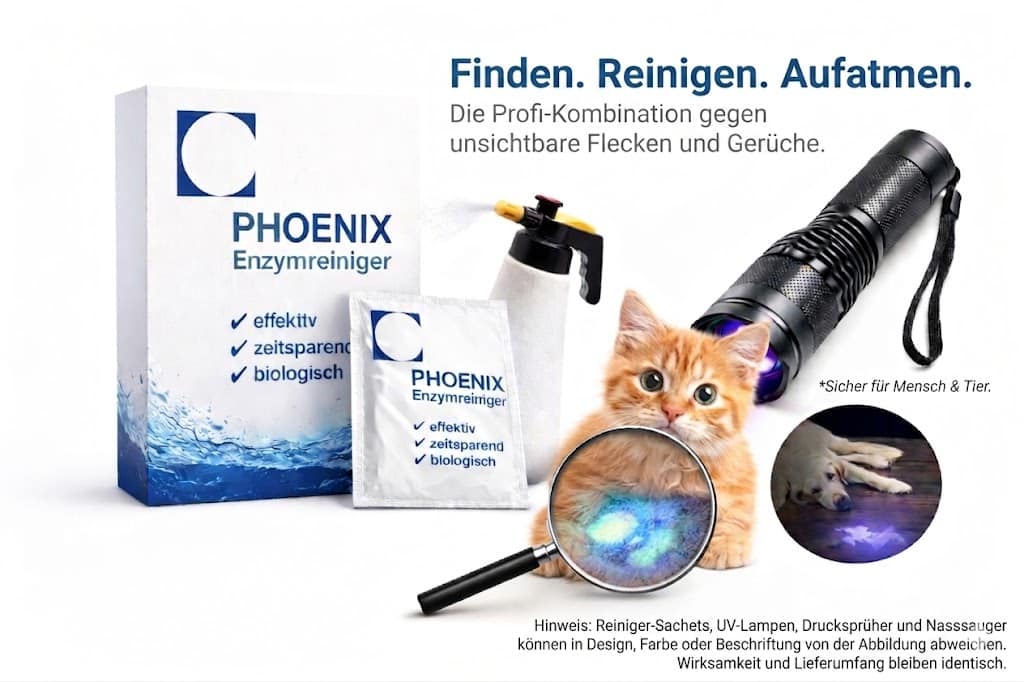
Phoenix alone is sufficient for 80% of the applications. For the remaining 20% — professionals, diving schools, stubborn cases — four accessory options are worthwhile, which you can order directly with the granules as a bundle.
💨 Pressure sprayer (1 L, in bundle „+ pressure sprayer")
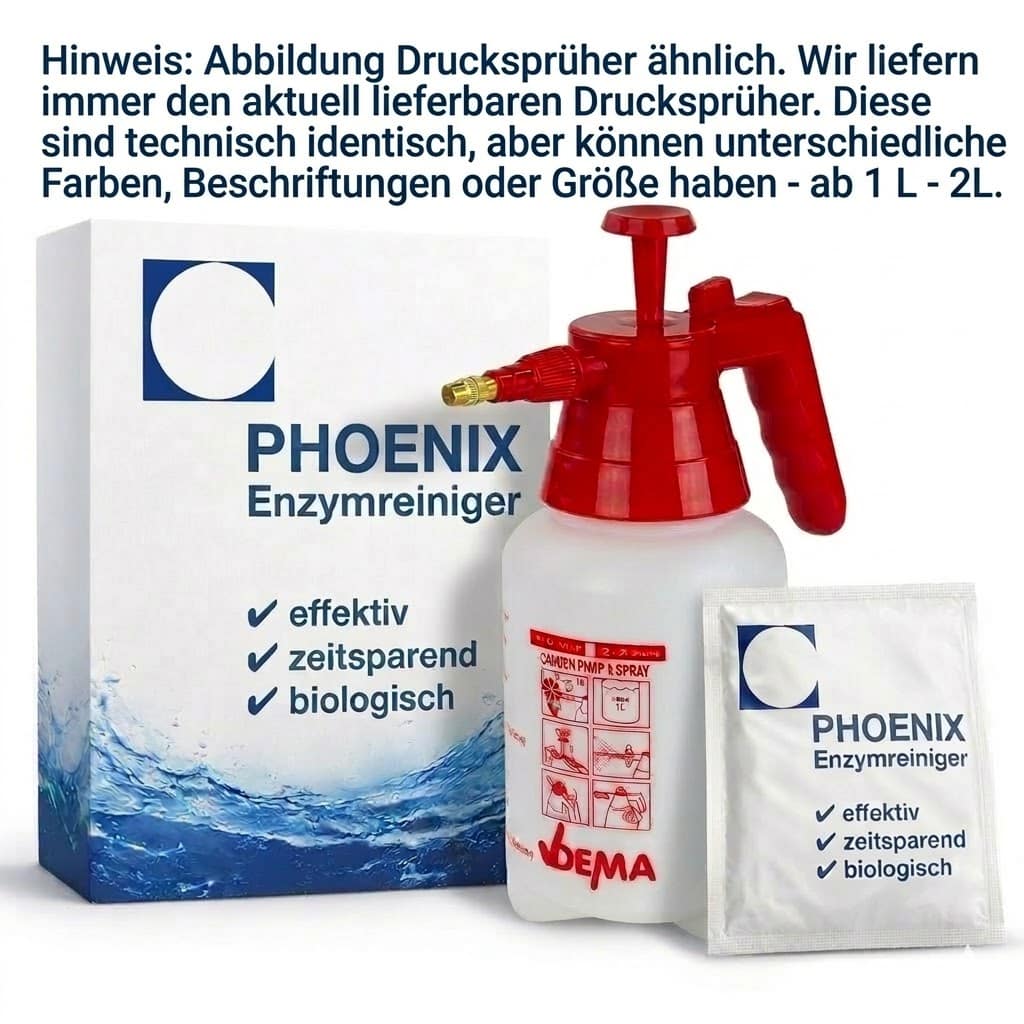
For spot treatment right on the beach, in the clubhouse, or in the car. Mix 1 liter of Phoenix solution, spray directly onto strongly scented areas (armpits, groin, boots), let it sit for 5 minutes, then rinse with clean water. Convenient if you don't want to set up the whole tub every time.
🌊 Wet vacuum cleaner / spray extraction (in bundle „+ wet vacuum cleaner")
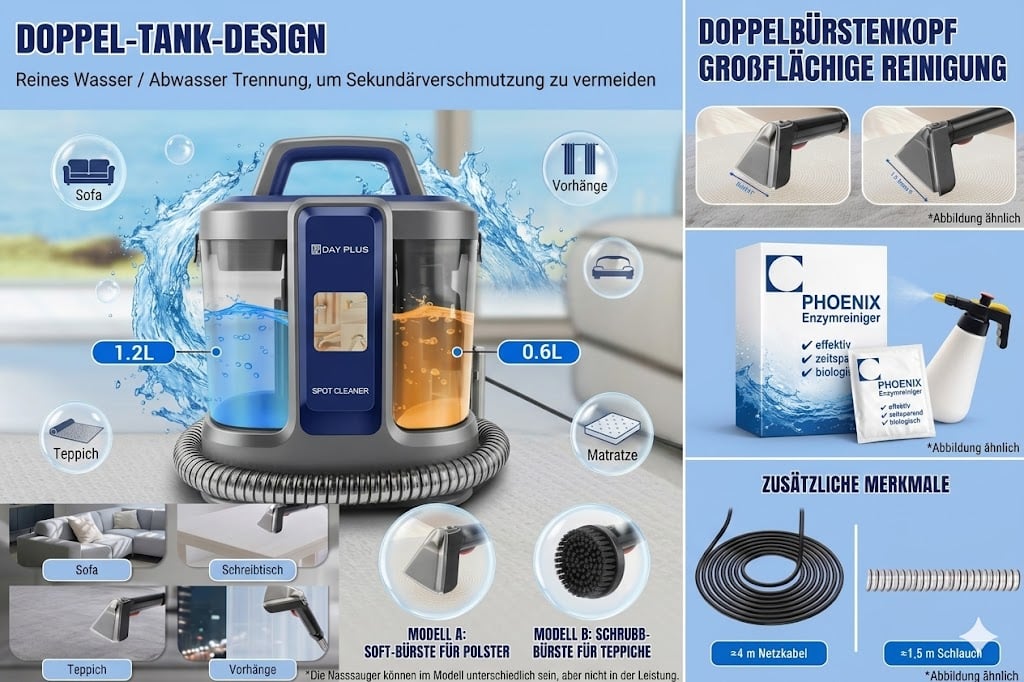
For dive schools and professional rental companies with high wetsuit turnover. Instead of a bath: Spread the wetsuit on a table, fill a spray extractor with Phoenix solution, spray, and immediately extract the solution. Saves 30 minutes of soaking time per wetsuit, ideal for 10+ wetsuits daily. In cooperation with Cleancraft, available as a bundle.
🔦 UV lamp (in the „+ urine finder" bundle)
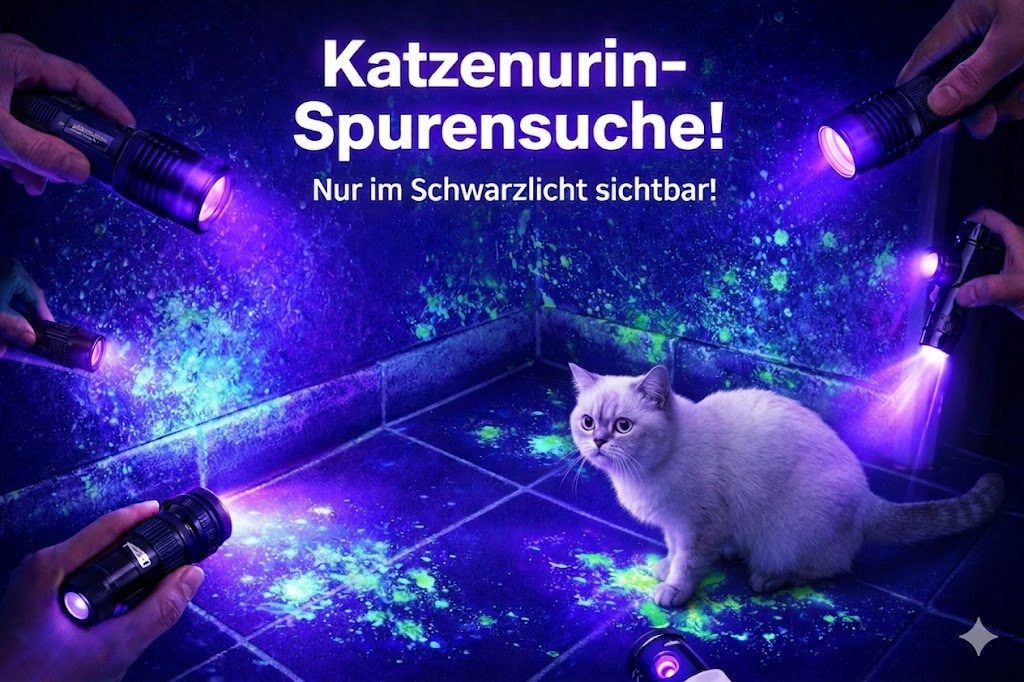
It sounds crazy, but it helps with chronic wetsuit odor: with a UV lamp, you can see urine residue fluoresce inside the suit. You can then identify the most affected areas and treat them accordingly. This is especially useful if you suspect your dive buddy has used your rental wetsuit.
🧽 Grey Giant (dirt eraser)
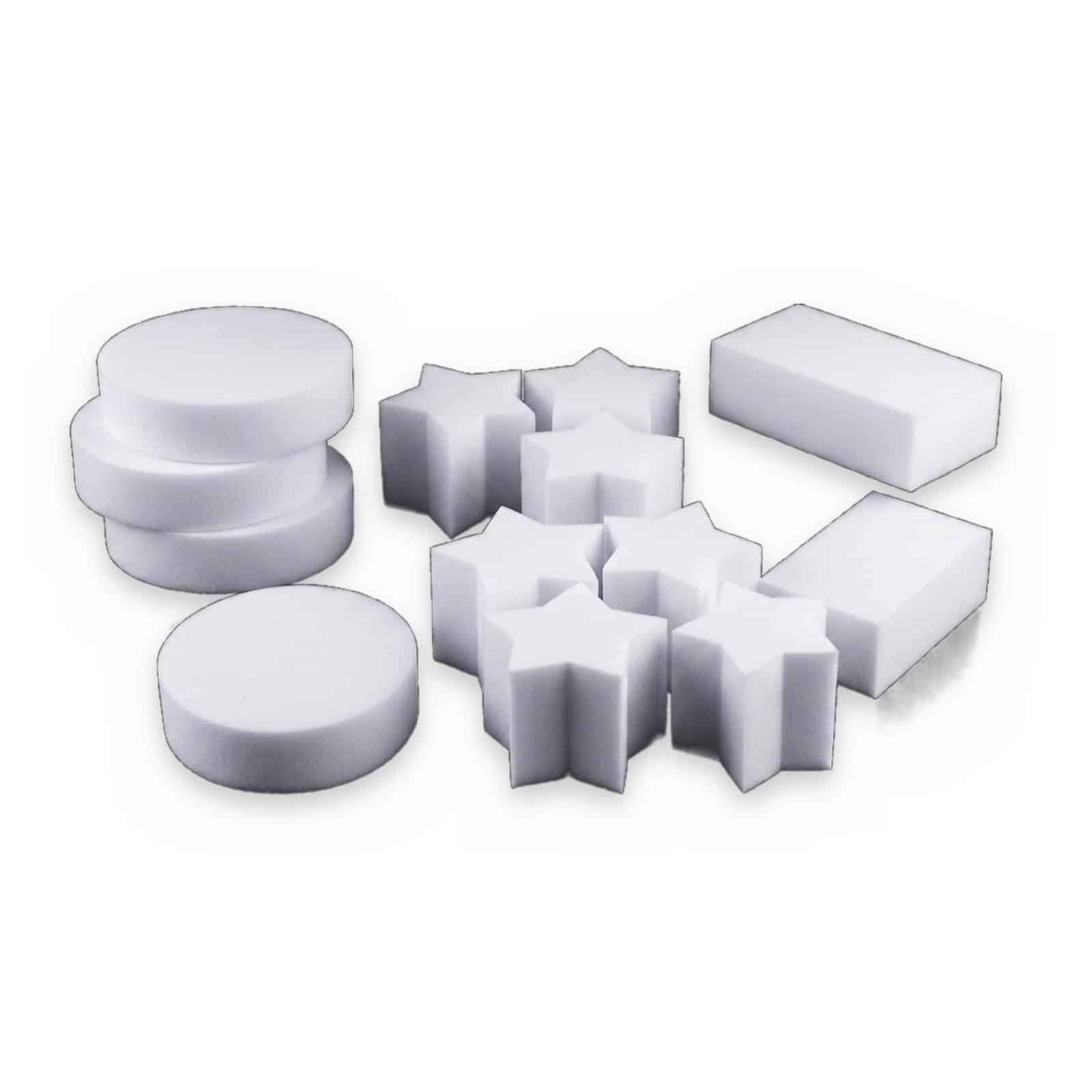
For dried-on organic residues on the outside—algae, plant resin, sand encrustations. First loosen them mechanically with the Grey Giant, then use Phoenix. The combination of mechanical and enzymatic cleaning tackles even the most stubborn stains.
For diving schools, DLRG (German Life Saving Association) & club hygiene
Those who commercially rent out water sports equipment or use it in a club have different requirements than hobby divers. Here, throughput, cost-effectiveness, and the question "am I even allowed to dispose of it in the wastewater?" are crucial.

💰 Cost-effectiveness for frequent users
Phoenix Granules 1000g costs approximately €159. At the standard dosage of 20 g/L, this yields 50 liters of cleaning solution—enough for approximately 8–10 full suit baths or 100+ boot/glove treatments. This equates to roughly €1.50–€2.00 in material costs per suit treatment. Industrial dry cleaning costs €25–€40 per suit and requires 2–3 days of soaking time. The math speaks for itself.
⚡ Immediate relief in case of acute stress — the 20g sample
Do you have a suit that needs to be rented out again tomorrow and it stinks? Mix 20g of Phoenix in 1 liter of lukewarm water, use a pressure sprayer, spray all problematic areas, let it sit for 15 minutes, rinse with clean water, and iron to dry overnight. The suit will be ready for use the next morning. Works in 9 out of 10 cases—for extreme infestations, you'll need to soak the suit in a full bathtub.
🌱 Wastewater and hygiene standards
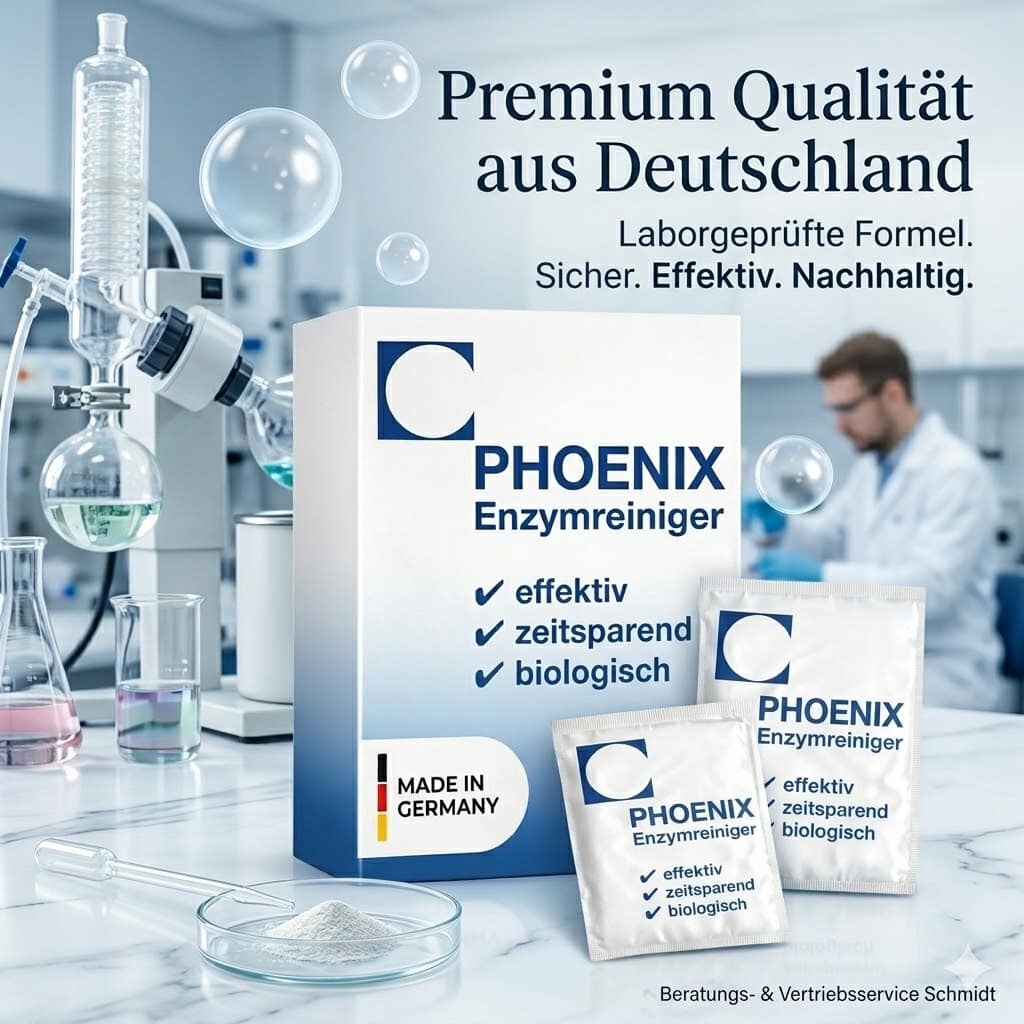
Phoenix is not subject to mandatory labeling according to EC regulations., lowest water hazard class, The surfactants are at least 90% biodegradable. Wastewater can be disposed of in the normal sewer system. For DLRG, Wasserwacht and ASB facilities, Phoenix is therefore a compliant routine – no special permit, no hazardous waste.
📋 Bulk packaging and tiered pricing
For regular B2B users, bulk containers up to 1000g per can are available. Quantity discounts further reduce the price per gram. Diving schools with 30+ wetsuits should order the 1000g format directly. → View bundle
Granules instead of liquid — the crucial difference
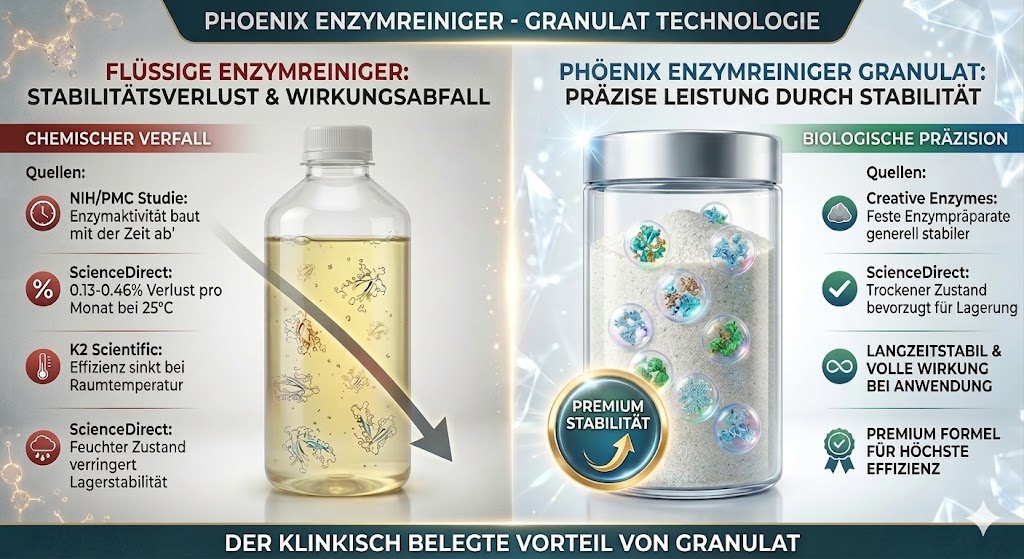
Liquid neoprene sprays continuously lose enzyme activity during storage — up to 0.461 TP5T per month. Phoenix granules are stable until mixing. When freshly dissolved, it unfolds its full hydrolytic power against protein, urine and butyric acid.
Full power for 48 hours after mixing, followed by a slow degradation of the enzymes. Ready for use for up to 20 days. — Ideal for multiple consecutive diving sessions without having to mix again in between.
Phoenix Enzymreiniger — usable everywhere
The same granules work for many water sports and household applications. One product, all odor problems — no need to switch between different versions.
Frequently asked questions about removing wetsuit odor
Why does the musty smell keep coming back after a freshwater rinse cycle?
Fresh water only removes salt and coarse dirt. Uric acid crystals, protein residues from sweat, and butyric acid compounds from bacterial decomposition remain in the material—they are not water-soluble. Only enzymatic treatment breaks them down at the molecular level. A Phoenix bath every 5–10 sessions prevents their buildup.
How long does Phoenix need to work on neoprene?
For regular cleaning, soak for 15–30 minutes. For stubborn odors or older suits, use the soaking method with an 8–12 hour soaking time overnight. The soaking time is more important than the concentration—enzymes work catalytically; they need time to break down the organic compounds.
What water temperature can I use for neoprene?
Maximum 30°C, preferably lukewarm at 20–25°C. Higher temperatures break the bond between the neoprene layers and permanently damage seams and the coating. Phoenix unfolds its full enzyme activity at 20–30°C; you don't need heat for it to work.
Can I use Phoenix in the washing machine?
Never wash neoprene in a washing machine—it's unsuitable for neoprene, regardless of the detergent. Drum friction damages the coating, and spinning tears seams. The tub method with Phoenix is the gentlest standard for all neoprene wetsuits.
Is Phoenix safe for the sensitive neoprene bonding?
Yes. Phoenix contains non-ionic surfactants below 0.5%, no chlorine, and no aggressive solvents. The enzymes only break down organic compounds (proteins, starches, fats) — they do not attack the synthetic polychloroprene rubber or the adhesive. The material remains unaffected as long as the temperature is kept below 30°C.
Does Phoenix also help with mildew stains on a suit stored in a damp environment?
Yes, Phoenix breaks down the organic fungal structure and eliminates the musty odor. Because Phoenix works without bleach, some visual discoloration may remain—however, the fungal cultures and the odor are eliminated. For heavily infested areas, soak overnight in a bathtub and repeat after 24 hours if necessary.
How do I correctly dose Phoenix for my suit?
Standard dosage: 20 g per 1 L of water. For a full suit, use a tub containing 5–10 L of solution (100–200 g of granules). For boots, gloves, and hoods, 1–2 L (20–40 g) is sufficient. Spot treatment with a pressure sprayer: 20 g per 1 L. Water temperature must be strictly below 30°C.
Does Phoenix itself have a strong smell, or does it leave behind a distinct odor?
Phoenix has a slight inherent scent due to the fragrances it contains, which dissipates quickly to ensure neutrality. After rinsing and drying, no perceptible odor remains—not even to the sensitive nose of dive buddies under their masks.
Is Phoenix suitable for diving schools and commercial rental companies?
Yes, exceptionally good indeed. Large tubs can treat up to 5 suits simultaneously. Phoenix is not subject to EC labeling requirements and is therefore suitable for environments with high hygiene standards. Available in bulk containers of 200–1000 g, allowing for precise dosing according to the number of suits per bath. An economical routine maintenance solution for diving centers, surf schools, lifeguards, water rescue services, and triathlon clubs.
What to do if there's a butyric acid smell (rancid or cheesy)?
The rancid odor is caused by bacteria that break down sweat into butyric acid and short-chain fatty acids. The surfactants in the product dissolve these compounds, and the enzymes deprive the bacteria of their food source. In cases of severe infestation, a bath overnight is recommended—after which the odor is usually completely gone. Routine use every 5–10 sessions prevents the bacterial culture from building up.
How do I properly dry the suit after the Phoenix treatment?
Hang on a wide neoprene hanger in the shade, in the open air. Never use a thin wire hanger (pressure marks), never expose to direct sunlight (UV damage), and never place in a dryer or on a heater (the adhesive will loosen). Allow to dry completely before storing—including the inside. For boats, stuff newspaper inside to speed up drying.
How do I store my suit after the season?
Before storing, give the suit a thorough bath in a Phoenix bath, allow it to dry completely (inside and out, ideally for 48 hours), then hang it on a wide hanger in the shade or lay it flat in the wardrobe. Never fold it and never store it damp – both will lead to mildew and creases. For long-term storage (over 6 months), air the suit briefly once a month.
⚠️ Safety notice: Keep out of reach of children and animals. Even if there is no danger, children and animals should not have direct access to the product.
Conclusion
Anyone wanting to remove wetsuit odor ultimately arrives at the same principle: the organic odor sources—urea, protein, butyric acid, and fungal residues—must be broken down enzymatically deep within the material. This cannot be masked, nor treated with heat or bleach. Phoenix Granules deliver full enzymatic power at 20–30°C, are gentle on polychloroprene rubber, and are suitable for full wetsuits, boots, gloves, hoods, and triathlon wetsuits. One product, all water sports applications, no need to switch between different types.