Remove pet odors from your home with Phoenix Enzymreiniger. Enzymatically breaks down dog odor, cat urine, caged animals, reptiles, horse blankets, and chicken coop smells instead of masking them with harsh chemicals. Safe for puppies, birds, and sensitive noses. Gentle on materials, biodegradable, made in Germany.

Remove pet odor from your home without using chemicals.

From puppy accidents to horse stables. Enzymatically decomposes instead of perfuming. Gentle on materials. Biodegradable. Made in Germany.

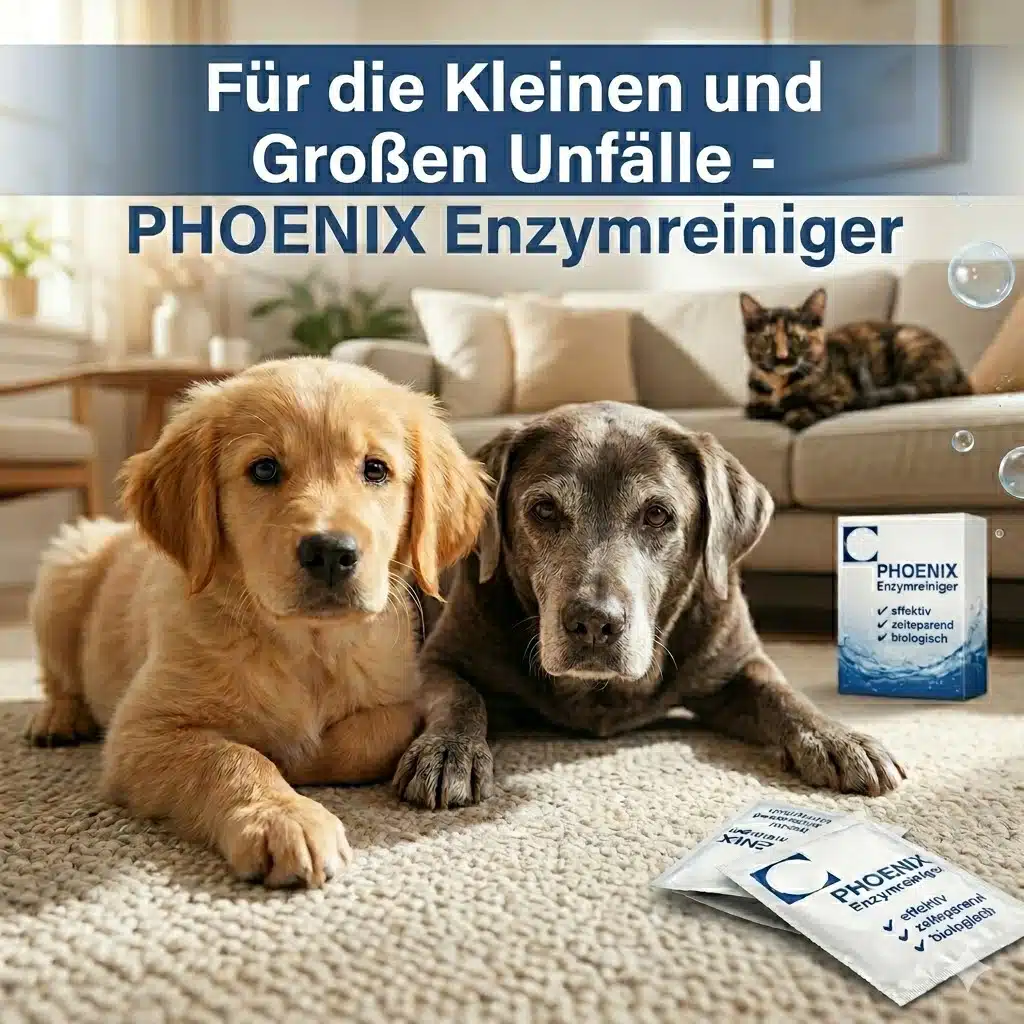
Phoenix Enzymreiniger für tierische Unfälle, Welpe und Althund auf sauberem Teppich, Kitten auf Sofa im Wohnzimmer

Phoenix: for small and large accidents, from puppy house training to old dog bladder weakness.

❤️ Why we exist

The idea behind Phoenix is simple: animals have more sensitive noses, eyes, and airways than we humans. Despite this, we spray chlorine, surfactants, and fragrances daily in the spaces where they live. We wanted a cleaning product that truly cleans without harming our beloved pets. Phoenix is the result.

You want Remove pet odor from your apartment And you've already tried everything. Airing it out. Air freshener. Vinegar and water. Baking soda. The smell keeps coming back, often after every summer rain or the next time you mop. You're not alone with this problem, and you're not doing anything wrong. Most home remedies and standard cleaners mask odors; they don't break them down.

Phoenix Enzymreiniger takes a different approach. Enzymes break down uric acid crystals, proteins, and fats at the source. No perfume, no camouflage—the odor molecules simply disappear physically. This works just as well for dog odor on sofas as it does for horse blankets, bird aviaries, or chicken coops containing ammonia.

In this guide, we'll show you how to Remove pet odors from apartments, stables, and cages, No chlorine, no surfactants, no artificial fragrances. Includes application tips for every animal species, four expert hacks from practical experience, and concrete step-by-step instructions. And if your situation isn't listed here: write to us. We'll reply personally.

📋 Table of Contents ▼ expand

Why conventional cleaners fail against pet odors

Enzymatische Reinigung Wirkungsweise von Phoenix Enzymreiniger gegen Tiergeruch in Wohnung, Stall und Käfig

When your dog pees on the sofa or your budgie marks the aviary, the animals don't leave scent molecules in the air, but... organic substances in the material. Uric acid crystals, proteins, fats, skin flakes. These substances are slowly broken down by bacteria, and this process produces the typical odor compounds: ammonia, mercaptans, and short-chain fatty acids.

The science behind the stench

Uric acid is a persistent culprit. As it dries, the molecule crystallizes and binds firmly to upholstery, wood, concrete, or screed. As soon as moisture is present—rain, sweat, or cleaning water—the crystals dissolve again, and the odor returns. That's why a seemingly dry dog stain smells freshly cleaned after every summer rain. You can find more information about chemical pollution in indoor spaces in [link/reference]. Wikipedia article on ammonia.

Masking versus decomposition, the Phoenix approach

Air freshener sprays, room perfumes, or "freshening" tablets mask existing odors with stronger scents. As long as the fragrances are in the air, you won't smell anything. Once they dissipate, the original smell returns, along with the residue of the perfume.

Phoenix works differently. The proteases and lipases it contains break down organic molecules into smaller components that are odorless and simply evaporate or wash away. The result is permanent because the physical source of the odor no longer exists.

🔬 Expert hack: enzyme capillary effect

Enzymes are small enough to penetrate the pores of concrete, wood, screed, and joints—precisely where odor molecules become trapped. Sufficient liquid is essential for the enzymes to penetrate deeply. A good rule of thumb: spray liberally and cover with foil overnight rather than applying a small amount.

Removing pet odor from an apartment with enzymes: the core principle

Haustier-Vielfalt im sicheren Zuhause: Hund, Vogel, Reptil, Fisch und Kleintier ohne aggressive Reiniger dank Phoenix Enzymreiniger

Whether dog, bird, chameleon, or guinea pig: they all have more sensitive respiratory systems than we do. Phoenix was designed for precisely this diversity.

Let's be honest for a moment. You know that feeling when the situation spirals out of control. The smell is there, you wipe, you spray, and it comes back. You might even feel a little embarrassed when guests come over. Eventually, in desperation, you reach for the harshest product in the cupboard: bleach, concentrated vinegar, or foam cleaner with the big warning on the back. You just want it clean, and that's perfectly understandable.

The problem isn't you. The problem is the promises that have been sold to you for decades. "Eliminates 99 percent of all germs." "Freshness you can smell." "Tough on stubborn stains." These products often don't even really work against the actual odor, but they leave something else behind: an invisible chemical layer in the very rooms where your pet lives.

What we forget when we reach for the cleaner

Your pet has no choice. It can't open a window if the fumes become too much. It can't ask what was just sprayed on the floor. It walks with bare paws across surfaces you've just cleaned and then licks itself clean. Here are a few examples that many pet owners never consider:

  • puppies They lie with their bellies and paws directly on the ground. They absorb surfactant residues through their skin and by licking.
  • cats They clean their paws after every walk on the ground. What you wipe away ends up in their stomach.
  • Birds They have extremely efficient but sensitive lungs. Even small amounts of volatile solvents can be fatal, especially for budgies and parrots.
  • Reptiles They breathe through their skin. Chemical residues in the soil reach the animal for weeks.
  • horses Animals in closed boxes react to ammonia and chlorine vapors with coughing fits and chronic respiratory problems.

This isn't a question of blame. It's an information gap, and we want to fill that gap with this guide.

The silver lining: a way that works for both.

Phoenix was created precisely for this dilemma. No volatile solvents. No fragrances that irritate sensitive animal noses. Surfactants are at least 90 percent biodegradable. Not subject to EC labeling requirements, not classified as dangerous goods, WGK 1 (slightly hazardous to water). When used correctly, it is harmless to humans and animals.

We don't use perfume to mask the smell. We break down the odor source biologically. This means the smell is truly gone, not just covered up. And your pet can continue to relax on the carpet without us irritating their airways. That's the whole point: a cleaning process that doesn't bother your pet.

💬 Let's talk about it

What product do you currently have in your cupboard that you're not entirely comfortable with when your pet walks on it? Tell us what you've tried so far and which product just isn't working for you. Email us at info@phoenix-enzymreiniger.de or directly in the comments. We will reply personally and show you a way that works for you and your animal.

Pet odor in dogs and puppies: more than just "wet dog"„

Golden Retriever Welpe schläft entspannt auf sauberem Teppich, sicheres Zuhause dank Phoenix Enzymreiniger

Housetraining phase without harsh cleaners. Phoenix enzymatically breaks down the scent trail without harming your puppy.

Dog odor in the home comes from three main sources: skin oil (sebum), saliva, and, in puppies or older dogs, small urination accidents. The typical "wet dog smell" develops when bacteria on the damp fur break down the sebum residue. These same bacteria then transfer to the dog bed, sofa, car trunk upholstery, and dog basket.

A mishap during puppy training, the carpet rescue

It happens during the house-training phase. The puppy has peed on the carpet. If you only wipe the surface with paper towels, the liquid soaks into the fibers, the upholstery, and the carpet fibers. As soon as it dries, uric acid crystals remain. And the next time the puppy smells that exact spot, it thinks: "This is where I'm allowed to go."„

Enzymatic cleaning solves the problem on two levels. The smell disappears for you. And the puppy loses the scent signal that keeps leading him back to the same spot. This makes house training significantly easier, without subjecting your puppy to harsh chemicals.

🔬 Expert hack: Wick effect in cushions

Even if a fresh stain appears dry, residual moisture is often trapped deep within the upholstery foam. The next time the seat is used, this moisture is forced back up, and the odor returns. Solution: Apply Phoenix solution generously, weigh it down with a dry cloth, and let it soak in for 6 to 12 hours. The cloth will draw the dissolved organic matter upwards through capillary action.

Dog smell in the car and in the dog bed

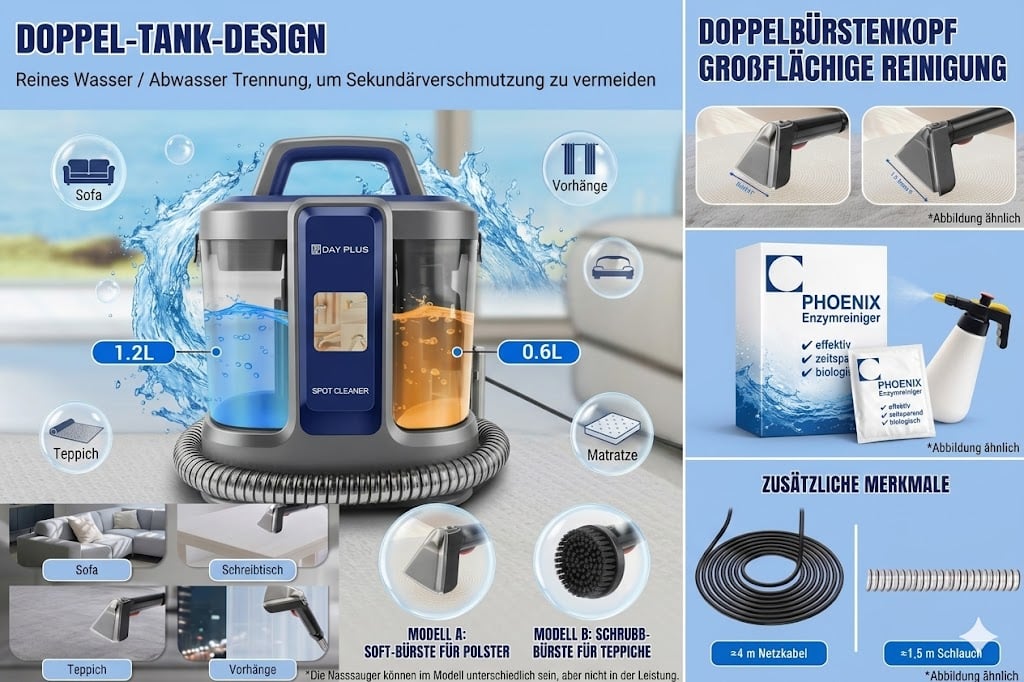
Car seats and dog beds are magnets for odors. Warm, moist, constant friction. Fill a spray bottle with Phoenix solution, spray liberally, let it soak in, then rinse with a spray extraction vacuum or wet vacuum. Important: clean not only the surface, but also the seams and upholstery crevices. Skin flakes and saliva residue collect there.

Pet odor in caged animals and rodents: Ammonia under control

Meerschweinchen entspannt auf frischem Heu im sauberen Holzkäfig, Ammoniakgeruch enzymatisch entfernen mit Phoenix

Enzymatically breaks down urine and uric acid in rodent enclosures, without chlorine or surfactants. Safe for sensitive small animal respiratory systems.

With guinea pigs, rabbits, hamsters, ferrets, and birds, the problem isn't the animal's body, but its enclosure. Urine and feces accumulate on cage bars, wooden houses, water bottles, and bedding. As soon as bacteria begin to break down the nitrogen compounds, ammonia is produced. This is the typical "barnyard smell," which not only smells unpleasant but also irritates the animals' respiratory systems. If you want to eliminate pet odors from your home while keeping small animals, enzymatic cleaning is the only way to combine cage hygiene with respiratory protection.

Guinea pigs, rabbits, and other small animals: How to remove urinary stones

Urine scale forms wherever urine dries and hardens into a mineral, usually in cage corners and under water bottles. Conventional cleaners only remove it with aggressive acids, which then leave traces in the enclosure that your pet can later ingest. Phoenix dissolves the urine scale organically and is safe for animals because no acid residue remains.

Ferrets: neutralizing their distinctive odor

Ferrets produce skin lipids through their glands, which have a strong odor. Conventional cleaners don't break down these long fat chains. Phoenix lipases do. Regularly wipe down bedding, snuggle tubes, and hammocks with a diluted solution. This keeps the odor under control long-term, without your ferret having to live with artificial fragrances.

Bird aviaries: Remove droppings completely.

Bird droppings contain uric acid in concentrated form. When dry, they stick to perches, aviary wire, and droppings trays like concrete. Leave Phoenix solution on for 10 minutes, then loosen with a soft brush. Birds are extremely sensitive to chemical fumes. Phoenix is safe because it contains no volatile solvents that evaporate.

Reptiles and terrariums: cleaning sensitive ecosystems

Phoenix Enzymreiniger für Aquarium, Terrarium, Voliere und Reptilien-Gehege, nachhaltig und materialschonend

Bearded dragons, corn snakes, tortoises, axolotls. Reptiles and amphibians breathe through their skin or very sensitive lungs. What we perceive as a "light cleaning scent" can be a massive burden for them. Conventional bathroom or all-purpose cleaners leave behind surfactant and fragrance residues that seep into the substrate and reach the animal for weeks.

Why chemical residues in terrariums are dangerous

Chlorine-based cleaners, perfumed all-purpose cleaners, and foam cleaners are strictly forbidden in terrariums. Even small residual concentrations can cause mucous membrane irritation, respiratory problems, or skin diseases in reptiles. Phoenix leaves no active residue after use. The enzymes break down biologically into harmless components.

Clean the substrate, back walls, and roots.

Briefly remove the animal from the terrarium to avoid stress. Prepare the Phoenix solution, gently brush over the cork background, artificial plants, and roots with a soft brush, let it soak in briefly, and then wipe with clean water. Return the animal to the terrarium. It can safely return to the enclosure immediately after drying.

Excursus on cat urine: a special case

Cat urine is not "normal urine." It contains felinin, an amino acid excreted only by cats, and a particularly high amount of fat. This mixture is molecularly more persistent than dog urine, penetrates deeper into upholstery, and is almost impossible to remove with normal cleaners. Even the slightest exposure to moisture (from airing out the room, cleaning, or summer humidity) is enough to reactivate the odor.

Because cat urine is so unique, we've developed a special product variant with a tailored enzyme blend. Learn more about how to use it. Targeted removal of cat urine with Phoenix. Includes instructions for carpet, upholstery, mattress, and markings on the furniture legs.

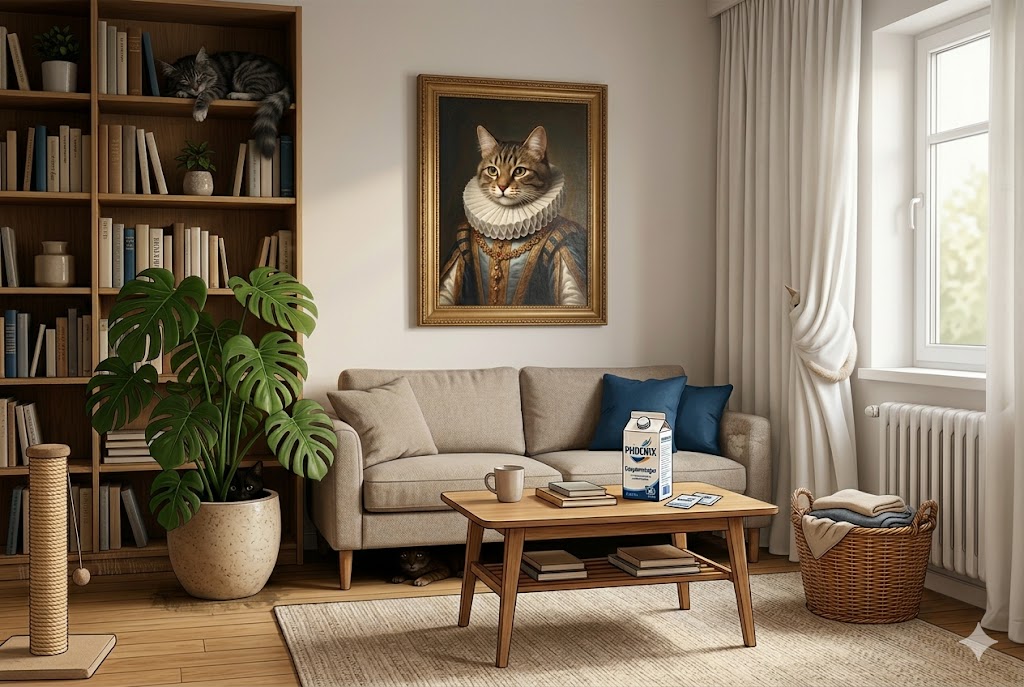
Phoenix Suchspiel Wimmelbild — versteckte Katzen finden und 10% Rabatt sichern
🎁 BONUS PROMOTION

Can you find all the hidden cats? — Get a 10% discount

Take a short break from the pet smell topic — find all five roommates and secure a personal discount code.

To the search game →

Equestrian sports and riding stables: Hygiene for rider and horse

Zwei Frauen reinigen Futtertrog und Heuraufe im Pferdestall mit Phoenix Enzymreiniger, Tiergeruch im Stall enzymatisch entfernen

You clean troughs, hay racks and stable areas enzymatically, without chlorine, without surfactants, without fragrance masking.

In the stable, tack room, and horse trailer, everything horses produce accumulates: sweat, urine, manure, and skin oils. Add to that leather boots, saddle pads, and turnout blankets, which are stored damp and biologically contaminated after every ride. Without enzymatic pre-cleaning, bacteria decompose these substances over weeks. The materials suffer, the stable smells, and your horse inhales ammonia fumes that chronically irritate its respiratory system. Anyone who can remove pet odors from their home can use the same method to tackle tack rooms and outbuildings—the principles are identical.

Horse blankets and saddle pads: Deep cleaning without damaging the material

Outdoor blankets often have a water-repellent finish that can be damaged by conventional detergents. Phoenix does not attack the finish or the fibers because it contains no harsh surfactants. Before storing the blanket for the season, spray it generously, let it soak in, and rinse. This prevents bacteria from decomposing the fibers over the winter.

The tack room: Keeping leather and textiles odor-free

Leather riding boots, saddle pads, and grooming boxes quickly become a source of odor in the summer. Apply Phoenix solution with a soft cloth, let it soak in briefly, and wipe it off. For leather, follow up with leather conditioner. While Phoenix only removes the organic residue, any cleaning process will dry out leather somewhat.

🔬 Expert hack: Occlusion method for retained urine

If urine has already soaked deep into concrete or wooden floors, spraying alone won't help. The solution evaporates before it can penetrate deeply enough. A trick: Apply a generous amount of Phoenix solution, then cover with cling film and seal it with tape. Leave it overnight. The film prevents evaporation, allowing the enzymes to work into the pores for hours.

Animal odor from farm animals: from chicken coop to sheep pasture

Universeller Phoenix Enzymreiniger gegen Ammoniak im Stall, für Esel, Ziege, Schaf und Geflügel geeignet

Chicken coop, goat shed, sheepfold, rabbit hutch in the garden. If you keep livestock or pets in your garden, you're familiar with the ammonia problem. In chicken coops, ammonia is produced from uric acid in the droppings as soon as the bedding gets damp. Even in low concentrations, ammonia puts a strain on the animals' respiratory systems and reduces egg production, growth, and well-being.

Reducing ammonia exposure for respiratory health

Strategy: Spray fresh bedding with diluted Phoenix solution once a week. The enzymes break down the organic matter before bacteria convert it into ammonia. Result: noticeably improved stable climate and fewer respiratory problems in poultry, rabbits, and small animals. According to expert reports, environmentally friendly and biodegradable.

Cleaning of transport trailers and boxes

Clean animal transporters, horse trailers, or chicken transport boxes after every use. Dissolve feces and urine residue with Phoenix solution, rinse, and allow to air dry. This not only prevents odors but also reduces the risk of spreading pathogens during the next transport.

Animal odor in commercial settings: animal shelters, veterinary practices and boarding kennels

Animal shelters, veterinary practices, dog boarding facilities, dog training schools, and breeding operations all share one common requirement: high hygiene standards combined with constant contact with animals. Anyone wanting to professionally remove pet odors from their premises while simultaneously providing a safe environment for animals will quickly reach the limits of standard cleaning products. Phoenix is designed precisely for this challenge. It's effective enough for professional cleaning, yet gentle enough for continuous use in the presence of animals.

🛡️ Business Notice: Food and Drinking Areas

According to an expert opinion from the Dr. Mang Chemical Laboratory (Frankfurt), Phoenix Enzymreiniger is suitable for cleaning work in the food industry. This also makes it suitable for use in feeding and drinking areas, cheese dairy pre-cleaning, and home cooking. The surfactants are at least 90 percent biodegradable, not subject to EC labeling requirements, not classified as hazardous material (WGK 1).

Disinfection versus cleaning, the correct order

Many businesses make the mistake of spraying disinfectant onto soiled surfaces. This doesn't work. Organic matter binds the disinfectant before it can reach germs. The correct sequence is: first use Phoenix for enzymatic cleaning (removing organic matter), then apply the desired disinfectant for full effectiveness.

Cost-benefit analysis: Concentrates versus ready-made mixes

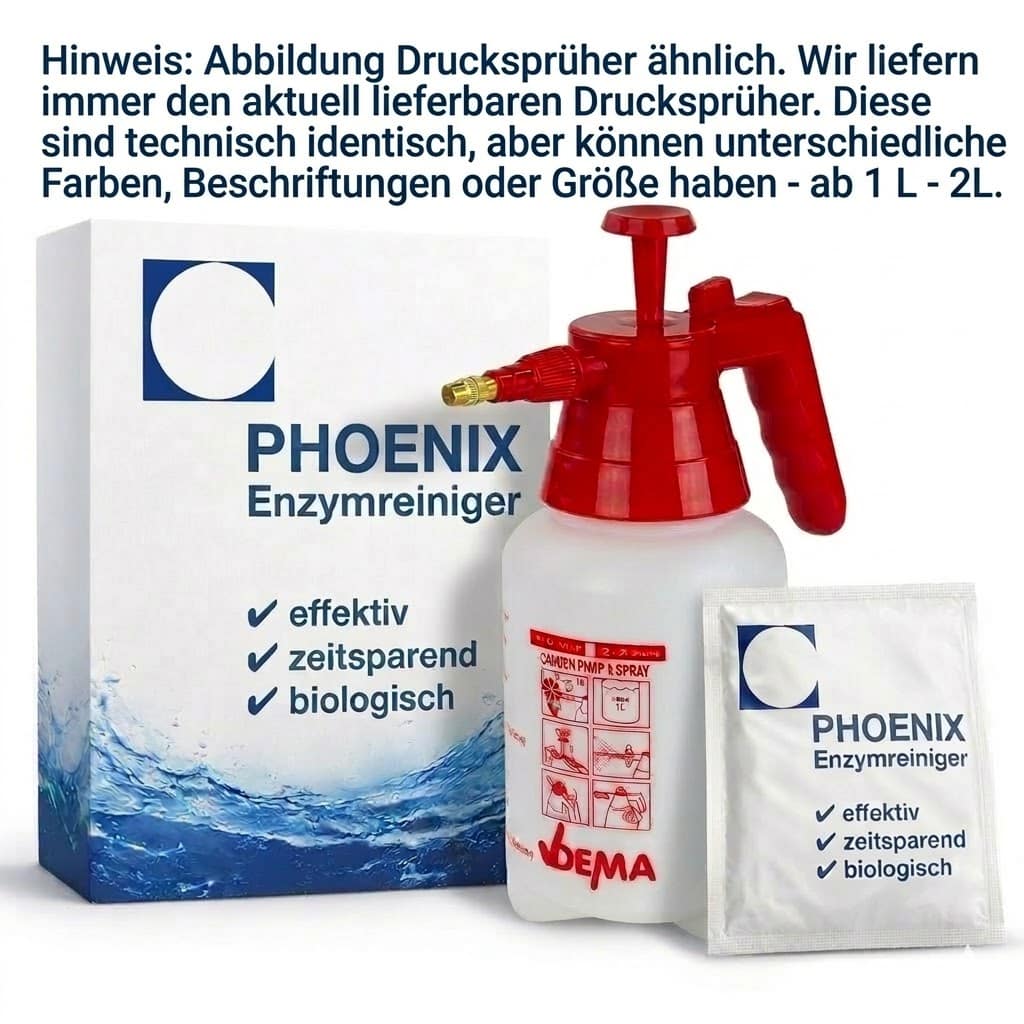
Phoenix is available as granules in portionable sachets. This saves on shipping, storage space, and plastic. Depending on the application, 10 g of granules makes 1 to 2 liters of ready-to-use solution. Freshly mixed = full enzymatic power. Ready to use for up to 20 days.

Hard cases: Removing pet odor from an apartment when it is deeply embedded

Odor after moving or in the event of the animal's death

You're moving into an apartment where animals have lived for years. Or your pet has died, and the smell reminds you of it daily, sometimes painfully. In both cases, the organic matter is deeply embedded in the screed, wooden floorboards, plaster, and door frames. Painting over it only postpones the problem. After four to six weeks, the smell returns through the new layer of paint.

Procedure: Apply Phoenix solution generously to all affected surfaces (including walls up to hip height; animals often mark deeper than you think). Leave to work overnight, then vacuum up with a wet vacuum. For screed or concrete, repeat the process after one week. Deeper layers require several applications. Only then should you paint.

Urine in tile grout and floorboards

Tile grout is a trap for odors; the cement base is porous and absorbs urine. Plank floors have gaps where liquid seeps between the boards. In both cases, the occlusion method helps (see the horse section). Apply Phoenix liberally, cover with foil, and leave to work overnight.

🔬 Expert hack: Uric acid crystal splitting explained simply

From a chemical perspective, uric acid crystals are long, cross-linked molecular chains. Phoenix enzymes bind to specific points on these chains and cut them like scissors. The shorter fragments are water-soluble, odorless, and simply wiped away with the next wipe. Therefore, after application, there is no odor left that could later "wake up.".

💬 Your hardship case doesn't fit in here?

Write to us. We've handled almost everything so far, from hoarder homes to reptile quarantine after an animal shelter fire. Email us at info@phoenix-enzymreiniger.de Including photos and material descriptions. You'll receive a concrete recommendation, not a promotional leaflet.

Step-by-step: How to remove pet odor from your home with Phoenix

🔦
1. Find

Use a UV lamp in the dark. Make all marked areas visible.

💧
2. Spray

Apply Phoenix generously and thoroughly. Don't skimp.

⏱️
3. Let it take effect

At least 30 minutes. For deep areas, cover overnight with foil.

🌊
4. Suction

Spray with water and vacuum completely with a wet vacuum cleaner.

✅ Result: The organic load is enzymatically decomposed. No odor, no return.

Other uses: Removing pet odors in any area

Phoenix Enzymreiniger works wherever organic pollutants are present. Click on one of the tags and you'll land directly on the corresponding product page – without chlorine, without surfactants, without artificial fragrances.

Granules instead of liquid: why that makes a huge difference

Vergleich Granulat versus Flüssigkeit Enzymreiniger, Phoenix Sachet portionierbar und frisch angemischt mit voller Enzymkraft

Granules instead of liquid: portionable, long shelf life, less plastic, full enzyme power.

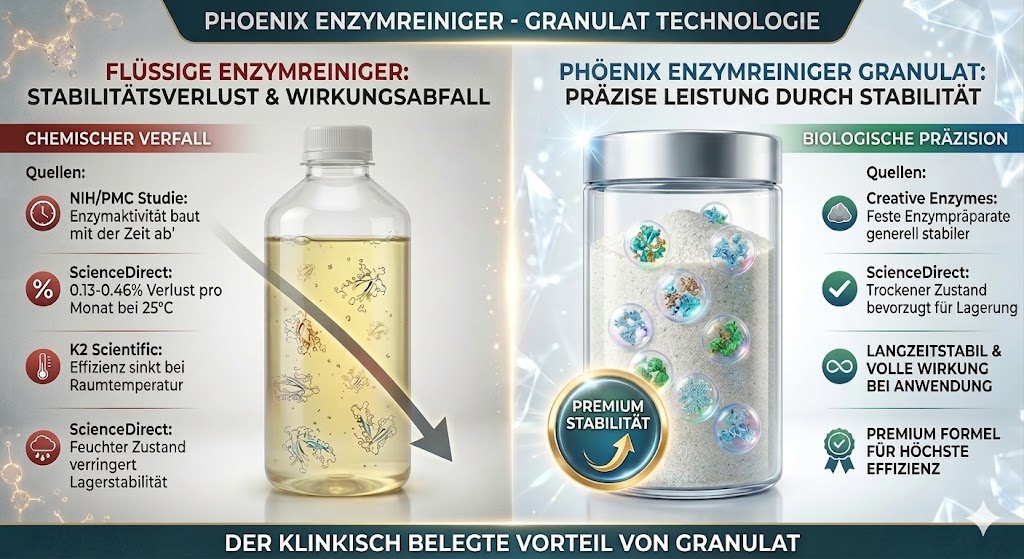
Liquid enzyme cleaners are readily available in drugstores. They look convenient, but are technically a compromise. As soon as enzymes dissolve in water, they begin to work, even in the bottle. Manufacturers therefore have to add preservatives, which in turn dampen the enzyme activity. What you buy after six months on the shelf is often only a fraction as active as it was on the day it was bottled.

Phoenix granules solve this problem. When dry, the enzymes are stable and fully active. You only mix the amount you need. The freshly mixed solution has 100% enzyme potency and remains ready for use for up to 20 days. Plus: less plastic, more compact shipping, and less storage space. 10 g makes 1 to 2 liters of spray solution, depending on the application.

Frequently asked questions about removing pet odor

What really helps against stubborn pet odors in the apartment?

Stubborn pet odors originate from organic substances like uric acid crystals, proteins, and fats that have penetrated deep into upholstery, wood, or concrete. Air freshener or vinegar only provide a temporary mask. If you want to remove pet odors from your home, you need enzymatic cleaners like Phoenix: these physically break down the odor source and eliminate it permanently. Important: spray liberally and let it work for a sufficient amount of time; for deep-seated areas, cover with foil overnight.

Why does a dried dog urine stain smell fresh again after rain?

Uric acid crystals are hygroscopic, meaning they attract moisture from the air and partially dissolve again. As soon as the crystals become moist, the bound odor molecules are released. That's why a dry stain smells as intensely as on the first day after rain, when wiped, or in warm, humid weather.

Can I use Phoenix in the presence of my animals?

Yes, the product is safe for humans and animals when used correctly. It contains no volatile solvents or fragrances that could be problematic for sensitive animal noses. However, we still recommend briefly removing reptiles from their terrarium during cleaning to avoid stress. They can return to the terrarium immediately after drying.

What is the difference between a dog cleaner and a cat cleaner?

Cat urine contains felinin, an amino acid excreted only by cats, and a higher fat content. This mixture is molecularly more stubborn than dog urine. Therefore, we have a separate product variant for cats with a tailored enzyme combination specifically designed to combat these substances. For households with only dogs, the standard cleaner is sufficient.

How often should I treat horse blankets with enzyme cleaner?

It is essential to treat the garment before each season's storage to prevent bacteria from decomposing the fibers over the winter and damaging the waterproofing. With intensive use, additional treatment every 4 to 6 weeks is recommended. Phoenix does not attack the waterproofing or fibers because it contains no harsh surfactants.

Can I use Phoenix in the food sector or at feeding and watering stations?

Yes. According to an expert opinion from the Dr. Mang Chemical Laboratory (Frankfurt), Phoenix Enzymreiniger is suitable for cleaning work in the food industry and poses no risk of food contamination when used correctly. Therefore, it can also be used for feed troughs, water troughs, pre-cleaning in cheese dairies, and in home cooking. The surfactants are at least 90 percent biodegradable, the product does not require labeling under EU regulations, and it is not classified as dangerous goods.

Does Phoenix also help with ammonia odor in chicken coops or barns?

Yes. Ammonia is only produced when bacteria break down uric acid in animal feces. Phoenix intervenes before this happens: The enzymes break down the organic matter before the bacteria can convert it into ammonia. The practical effect: noticeably improved barn climate, fewer respiratory problems in poultry and small animals. Treatment of fresh bedding once a week is recommended.

How long does a mixed Phoenix solution last?

Freshly mixed = full enzymatic power. Ready to use for up to 20 days. Store the solution in a cool, shady place and use a clean spray bottle. Prepare a smaller quantity as needed; the granules are portionable, so there's no waste.

Phoenix Granules: what distinguishes them from liquid enzyme cleaners

You only mix the amount you need. Freshly mixed = full enzymatic power. Benefits at a glance:

  • Granules instead of liquid enzyme cleaner
  • Freshly mixed = full enzymatic power. Ready to use for up to 20 days.
  • Portionable, you dose exactly as needed
  • Gentle on materials such as textiles, leather, wood, tiles, and concrete
  • Surfactants are at least 90 percent biodegradable
  • Made in Germany
  • Residue-free

We don't just sell you a cleaner. We sell you the peace of mind that your pet can grow up in a healthy environment.

⚠️ Safety Notice

Keep out of reach of children and animals. Even if there is no danger, children and animals should not have direct access to the product.

Sources and further information

DS
Dieter Schmidt Owner · Phoenix Enzymreiniger

Since 2018, I have been developing and distributing Phoenix Enzymreiniger — a DPMA-protected premium brand of enzyme-based granular cleaners made in Germany. We are the voice for animals who cannot defend themselves against harsh cleaners.

4 responses

  1. I'm truly impressed with the product presented! This post helped me see the issue from a different perspective. I'm not talking about a stench, but the dog blankets and beds do occasionally have a noticeable smell – so it's wonderful to have finally found a solution that actually works. I especially appreciate the conscious avoidance of unnecessary chemicals. It simply feels better knowing you're using something natural – for yourself, for your home, and of course, for your dog. The price-performance ratio is unbeatable, considering everything else the cleaner can do. Even the smell in my car is gone. A definite recommendation! 🐶✨ I'm happy to endorse it.

Leave a Reply

Your email address will not be published. Required fields are marked *


Split: WhatsApp Facebook X
Ask a Question