Cleaning your washing machine — a guide to combating mold, biofilm and odors
Why dishwasher tablets don't eliminate the odor. Why enzymes can.
If your washing machine smells musty, the porthole shows black mold, or your dishwasher isn't getting properly clean anymore, no air freshener will help. Here you'll find step-by-step instructions on how to clean your washing machine — including the rubber seal, drum, detergent dispenser, dishwasher, and microwave.
Who his Cleaning the washing machine If someone wants to fix it, they first look for home remedies. Vinegar, citric acid, baking powder, a little baking soda. It works superficially. What these home remedy instructions don't mention: Machine odors don't come from limescale, but from... organic deposits — Skin oils, sweat residue, cooking grease from the dishwasher. Bacteria and mold grow on this thin film. They are the reason why it smells musty again after three weeks.
To your Cleaning the washing machine To ensure the problem doesn't return, you need something that breaks down the organic residue, not just rinses it away. That's exactly what enzymes do. In this guide, I'll show you how to clean washing machines, dishwashers, microwaves, and commercial appliances enzymatically. Includes a fact check of home remedies, step-by-step instructions, and professional tips.
📋 Table of Contents
- Why does my washing machine smell? — science
- Cleaning your washing machine step-by-step
- Rubber seal & porthole — black mold special case
- Cleaning the dishwasher — spray arm, filter, door seal
- Microwave ovens and small appliances using the steam method
- Professional commercial dishwasher — HACCP compliant
- Home remedies fact check: Vinegar, citric acid, baking soda
- 4-step application overview
- Frequently Asked Questions
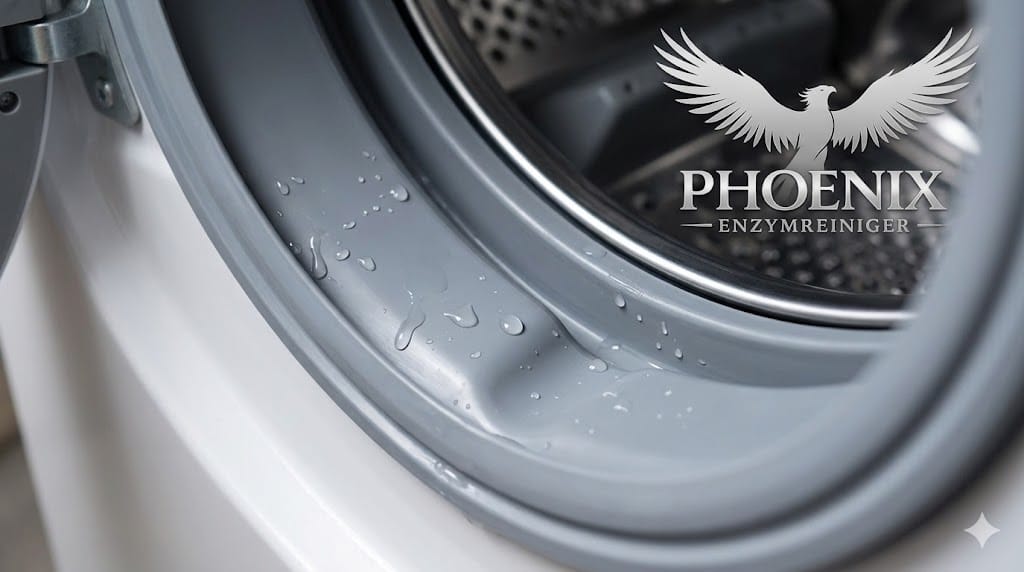
Clean porthole, clear fold: Phoenix removes the film that black mold feeds on.
Why does my washing machine smell? — science
A washing machine is a complex system consisting of a stainless steel drum, rubber seals, plastic spray arms, filters, and hoses. With each wash cycle, organic substances come into play: skin oils, sweat residue, skin flakes, saliva stains, and traces of sauce. Conventional detergents clean clothes well, but they don't completely break down the organic residue inside the machine. A thin film remains.
As soon as heat and moisture are added—and that happens with every wash—the film begins to live. Bacteria colonize it and produce microbial volatile organic compounds like geosmin or 2-methylisoborneol. That's the typical musty, basement smell of your machine. It comes from the rubber seal around the porthole. black mold effect Furthermore: Mold spores find perfect conditions in the skin's sebum film and spread in the fold.
What surfactants Conventional machine cleaners do what they do: they encapsulate dirt particles and transport them away. What they don't do: chemically break down odor molecules and biofilm components. Phoenix works differently. Enzymes They selectively break down organic contaminants. Protease breaks down proteins, amylase breaks down starch, and the surfactants dissolve fats. The residues disintegrate into small, water-soluble building blocks and are rinsed away. The source of the odor is gone.
💡 Aha moment: Covering up vs. removing
Scented pendants, dishwasher tablets, baking soda—they all mask or shift the problem. Phoenix breaks down the organic residue. As long as it's there, there's an odor. Once it's broken down, the odor is gone.
Cleaning your washing machine step-by-step
The clear instructions if you want to Cleaning the washing machine you want — from acute problems to monthly routines.
- Empty the lint filter. Especially the filter at the bottom of the machine, behind the small flap. Put a bucket underneath – water will come out. If the filter is clogged, the cleaning water won't get through properly.
- Mix up Phoenix. Dissolve 20 g of granules in approximately 250 ml of hot water. Then top up to 1 liter. The granules will not dissolve completely if mixed with cold water.
- Into the detergent dispenser. Pour approximately 500 ml of the prepared solution into the main wash compartment. You don't need any additional detergent or fabric softener for the cleaning cycle.
- Wash cycle cold or 30°C. Normal program without pre-wash, preferably with laundry in the drum; it doesn't need to run empty. For basic cleaning, two cycles with 20g each, the second with a short interval between it and the first.
- Repeat monthly. After the initial cleaning, one application per month is sufficient. This ensures that new organic residues are regularly removed before they can become firmly embedded.
Rubber seal & porthole — black mold special case
Black spots or a greasy film in the door seal: black mold. It feeds on the film of skin oils that accumulates there after every wash. A normal wash cycle doesn't reach the seal sufficiently—the drum rotates, the water splashes against the seal, but it doesn't penetrate deep enough into the narrow seal.
The solution: Pre-treatment with pressure sprayer. Fill a small pressure sprayer with Phoenix solution, generously spray the entire rubber seal, pull the seam outwards and spray the inside as well. Let it work for 20–30 minutes – the enzymes will break down the mold film. Then start a normal wash cycle at cold or 30°C. For heavy mold growth, repeat the treatment after a short interval.
⚠️ What you should NOT do with the rubber seal
Applying vinegar to rubber seals is a common home remedy, but ultimately disastrous. Vinegar is acidic, and rubber doesn't like acid. After several applications, the rubber becomes brittle and porous, and then water leaks out. Chlorine-based mold sprays are no better—they might remove black mold temporarily, but the chlorine attacks the seal and can irritate the respiratory system. Phoenix is a material-neutral product for use with rubber.
Cleaning the dishwasher — spray arm, filter, door seal
Dishwashers have different problem areas. Cooking grease builds up on the spray arm and clogs the nozzles—then the water no longer sprays upwards evenly, and the upper rack doesn't get clean. Protein residue ends up in the filter basket. The door seal collects skin oils. The filter area at the bottom: everything that drips down from the spray arm.
It's easier to use than a washing machine. 20 g of granules directly into the dishwasher tablet compartment Simply add the detergent and start a normal program — Eco 50°C is sufficient. For heavily soiled machines, add an additional 20g of loose granules to the bottom of the dishwasher. The spray arm will distribute it throughout the interior.
Spray arm comes loose — what to do?
Most spray arms can be removed (bayonet fitting or screw nut). For thick biofilm: remove the spray arm, soak it in a tub of hot Phoenix solution for 30 minutes, and use a thin brush to clean the nozzle holes. You'll be amazed at what comes out. Then reinstall it and run a normal wash cycle.
Microwave ovens and small appliances using the steam method
Dried-on sauce splatters in the microwave are a classic problem. A classic home remedy: boil a lemon in water and let the steam do its work. It works for the smell, but hardly for dried-on residue.
With Phoenix: Pour the prepared Phoenix solution into a microwave-safe bowl., Heat for 2 minutes at full power, microwave door remains closed, steam works for 2-3 minutes. When opened, the walls will be fogged up – the enzymes have adhered to any residue in the film of water. Wipe with a microfiber cloth. Also works for kettles (organic coatings – limescale requires additional citric acid) and coffee machine brewing units.

Before / after: The steam method softens dried-on food residue.
Professional commercial dishwasher — HACCP-compliant cleaning
Commercial dishwashers run hundreds of cycles daily. Cooking fats, protein residues, and starch accumulate in the spray arms, strainer baskets, and tank area. HACCP context (Hazard Analysis and Critical Control Points, legally required hygiene management in the catering industry) includes intensive machine cleaning as one of the critical control points.
Phoenix has the economic advantage here. As a concentrated granule, the product scales significantly better in bulk packaging (500 g, 1 kg) than ready-to-use cleaners in canisters. Plus: According to an expert opinion by Dr. Mang (Chemical Laboratory Frankfurt), suitable for cleaning work in the food industry.. Surfactants are at least 90% biodegradable according to Regulation (EC) 648/2004, not classified as dangerous goods according to ADR/RID/GGVS, and do not require labeling according to EC lists. Use in normal dishwashing cycles or as Tank pretreatment overnight (Drain the tank water, mix 100 g of granules in hot water, add to the tank, leave the machine closed overnight, in the morning perform a normal heating and rinsing cycle).

Professional dishwasher in the catering kitchen: Phoenix concentrate in bulk packaging is economically superior to ready-to-use products.
Home remedies fact check: Vinegar, citric acid, baking soda & Co.
Vinegar / Vinegar essence: Effective against limescale. Over time, it attacks rubber seals, making them porous. Recommendation: use only very selectively for limescale, not as a routine treatment.
Citric acid: Effective against limescale, milder than vinegar. Suitable as a supplement to Phoenix for a pure limescale problem.
Baking soda / baking powder: Neutralizes weak acids, is material-neutral. But cosmetically — it does not solve biofilm problems.
Loose dishwasher tablets: They work on the surface of grease. However, they foam too much in the washing machine — not recommended.
Chlorine cleaner: Short-term black-free. Aggressive to rubber, plastic, and your respiratory system — not recommended.
Phoenix Enzyme Cleaner: Biofilm, skin oil, protein residues, food residues, odor molecules. Material-neutral, not hazardous material, surfactants at least 90% biodegradable according to Regulation (EC) 648/2004. Routine maintenance monthly plus urgent use in case of odor or mold.
Important: Phoenix is no limescale remover. For a pure limescale problem, you also need citric acid. Alternate between the two: Phoenix run on the 1st of the month, citric acid run on the 15th (not simultaneously — the acid would deactivate enzymes).
4-step application overview
The granules are activated in approximately 250 ml of hot water. The washing cycle itself is run in cold water or at 30 °C. Higher temperatures are ineffective because enzymes lose their activity at high temperatures.
Result: Organic residues dissolved, the black mold lacked the film it lives on. The musty smell is gone.

Can you find all the hidden cats? — Get a 10% discount
Join in the living room hidden picture game — whoever finds all the cats immediately receives a personal discount code.
To the search game →For whom is Phoenix particularly suitable?
Black mold on the porthole, musty-smelling drum, dishwasher that no longer cleans properly. Monthly use removes new residues before they can build up.
Professional dishwashers, tank pretreatment, HACCP-compliant hygiene. Granular concentrate is economically superior to canister cleaners.
Industrial washing machines in large-scale laundries. High frequency, high consumption — Phoenix detergent in 1 kg packages pays for itself per machine run.
Bacterial biofilm in the washing machine poses a problem for allergy sufferers. Phoenix removes the organic residues on which this film thrives.
Property management companies, senior living facilities, hospitality cleaning. According to Dr. Mang's expert opinion, Phoenix is suitable for the food industry — making it ideal for sensitive applications.
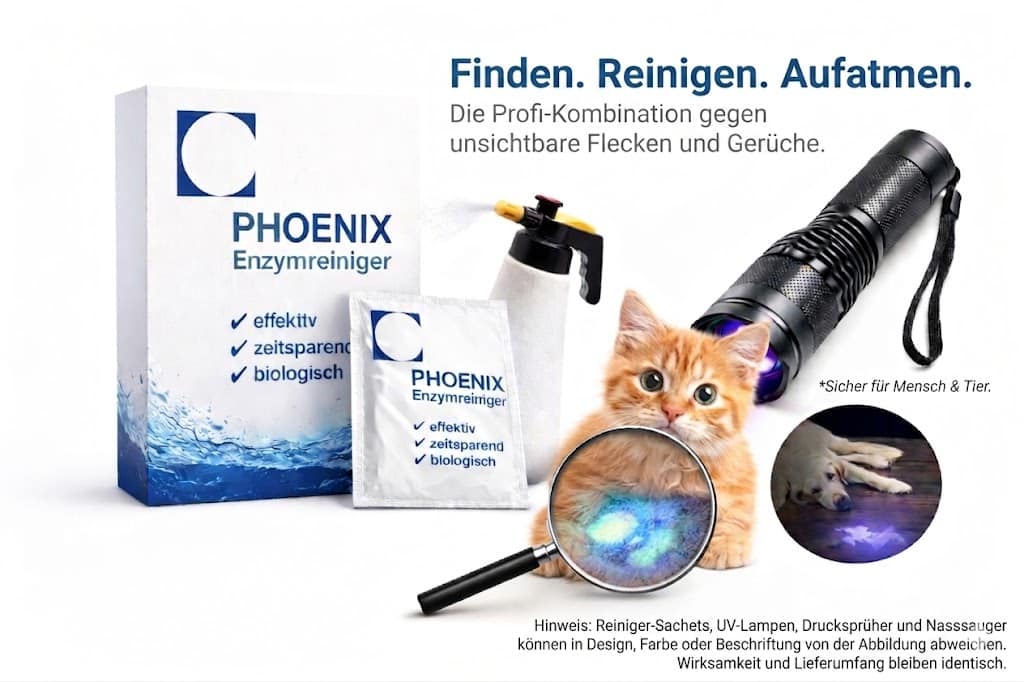
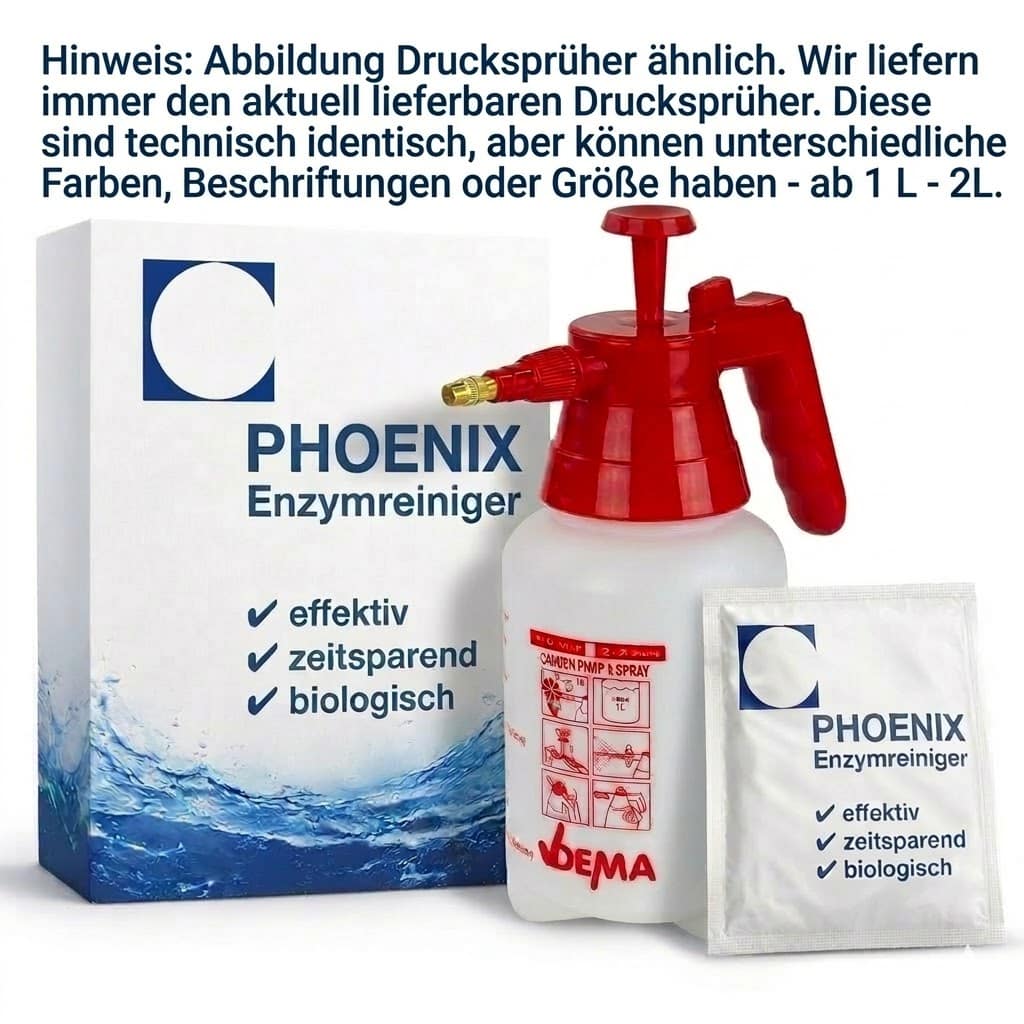
Phoenix accessories for maximum effect
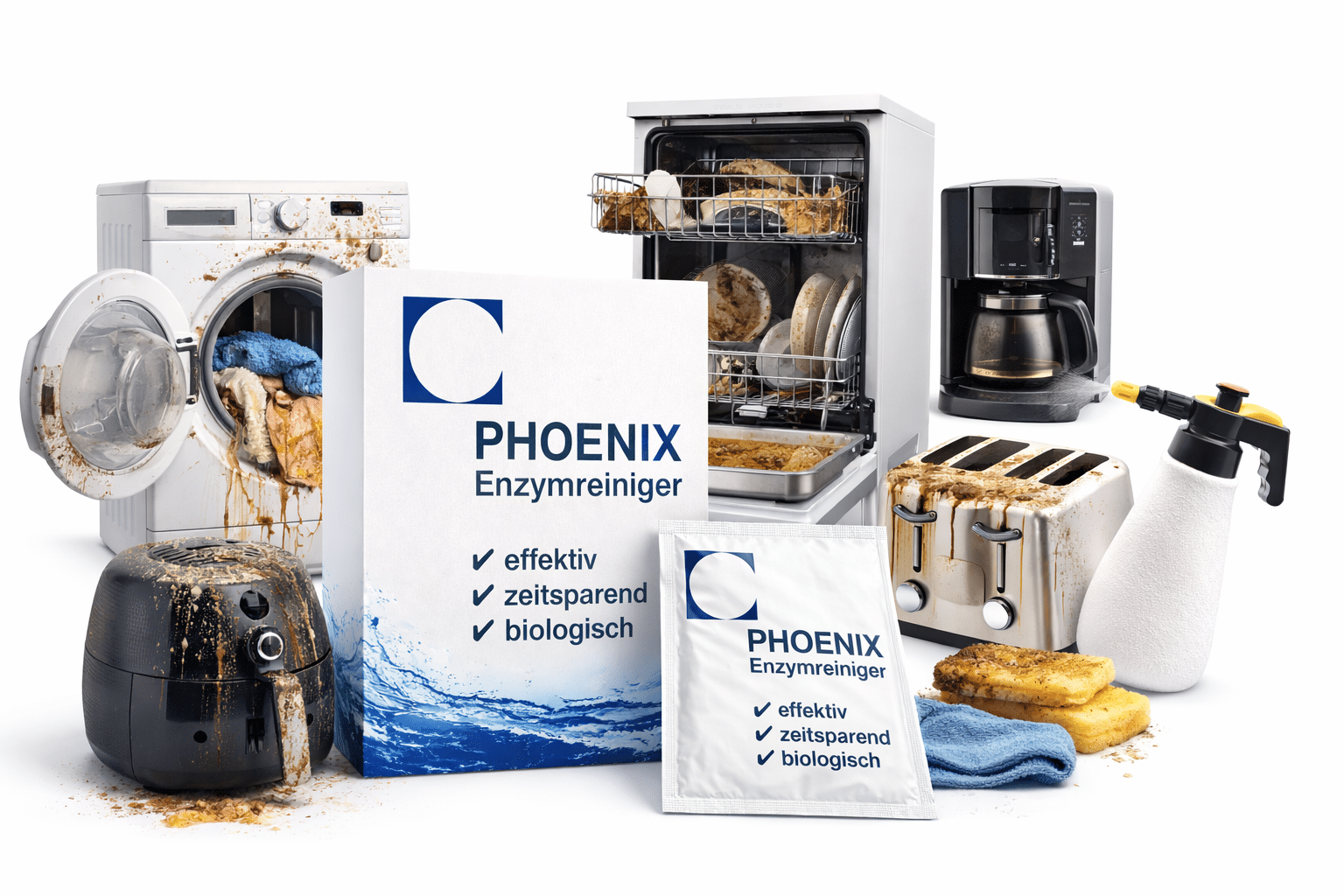

Phoenix in other application areas
Why granules instead of machine cleaner tablets?
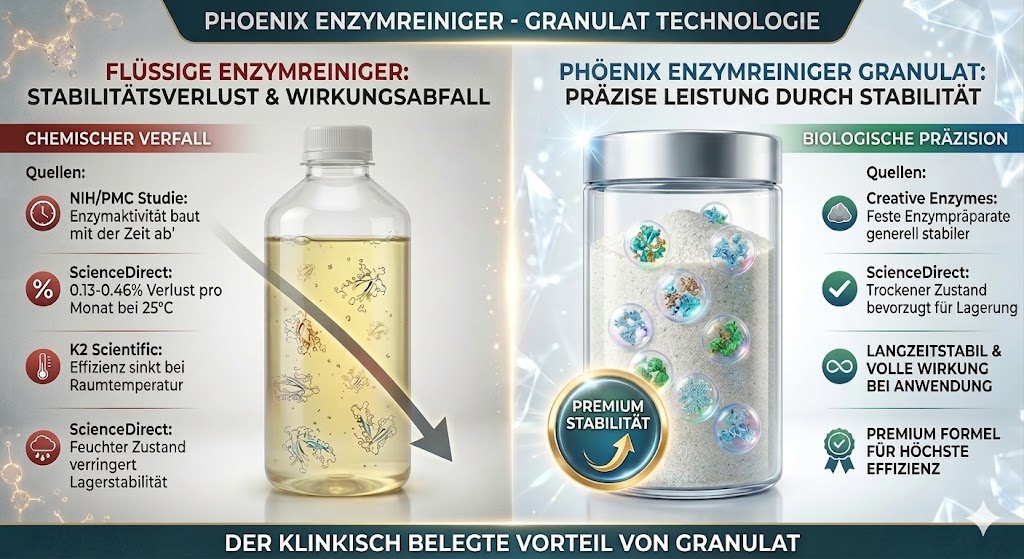
Phoenix comes as granules—not as a pre-mixed tablet or liquid cleaner. Conventional machine cleaner tablets lose their effectiveness during storage because the enzymes slowly degrade in the humid environment of the packaging. With Phoenix, the enzymes remain stable until you mix it. Full power for 48 hours after mixing, followed by a slow degradation of the enzymes. Ready for use for up to 20 days.
Frequently asked questions about cleaning washing machines
How often should I clean my washing machine?
At what temperature does the cleaning process work best?
What about old machines with thick biofilm and black mold?
Can I run Phoenix at the same time as dishes or laundry?
Does Phoenix also work in industrial machines and commercial dishwashers?
Can I use Phoenix in the microwave?
Is Phoenix safe for the materials used in my machine?
Scientifically tested, uncompromisingly safe

⚠️ Safety notice: Keep out of reach of children and animals. Even if there is no immediate danger, children and animals should not have direct access to the product. Phoenix Enzymreiniger is not subject to labeling requirements according to EC lists, lowest water hazard class, surfactants are at least 90% biodegradable according to Regulation (EC) 648/2004. Not classified as dangerous goods according to ADR/RID/GGVS. pH 8.5–9, slightly alkaline. Slight inherent odor that dissipates quickly to ensure neutrality.
Prepared by Schmidt Consulting & Sales Service.