Description
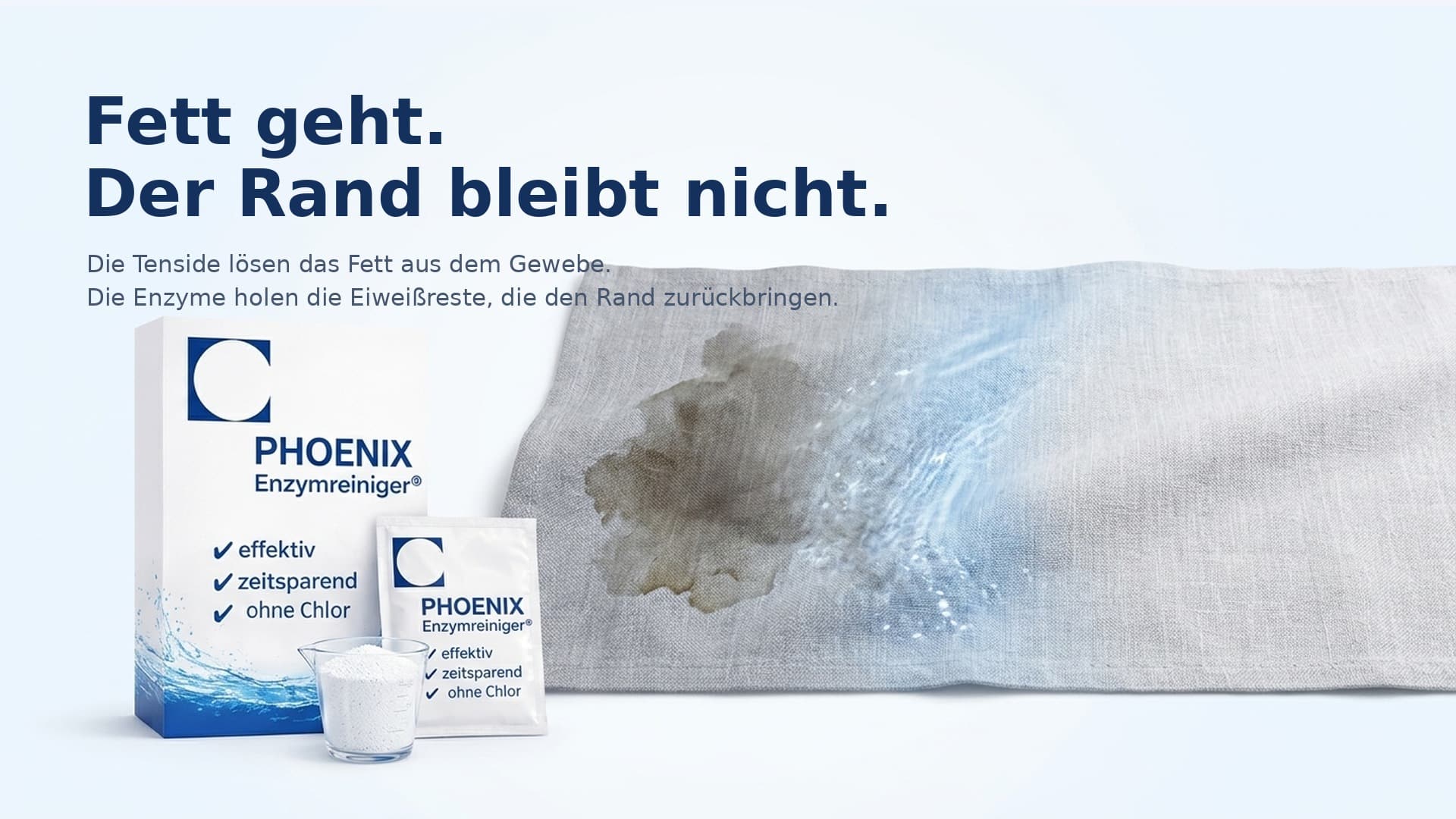
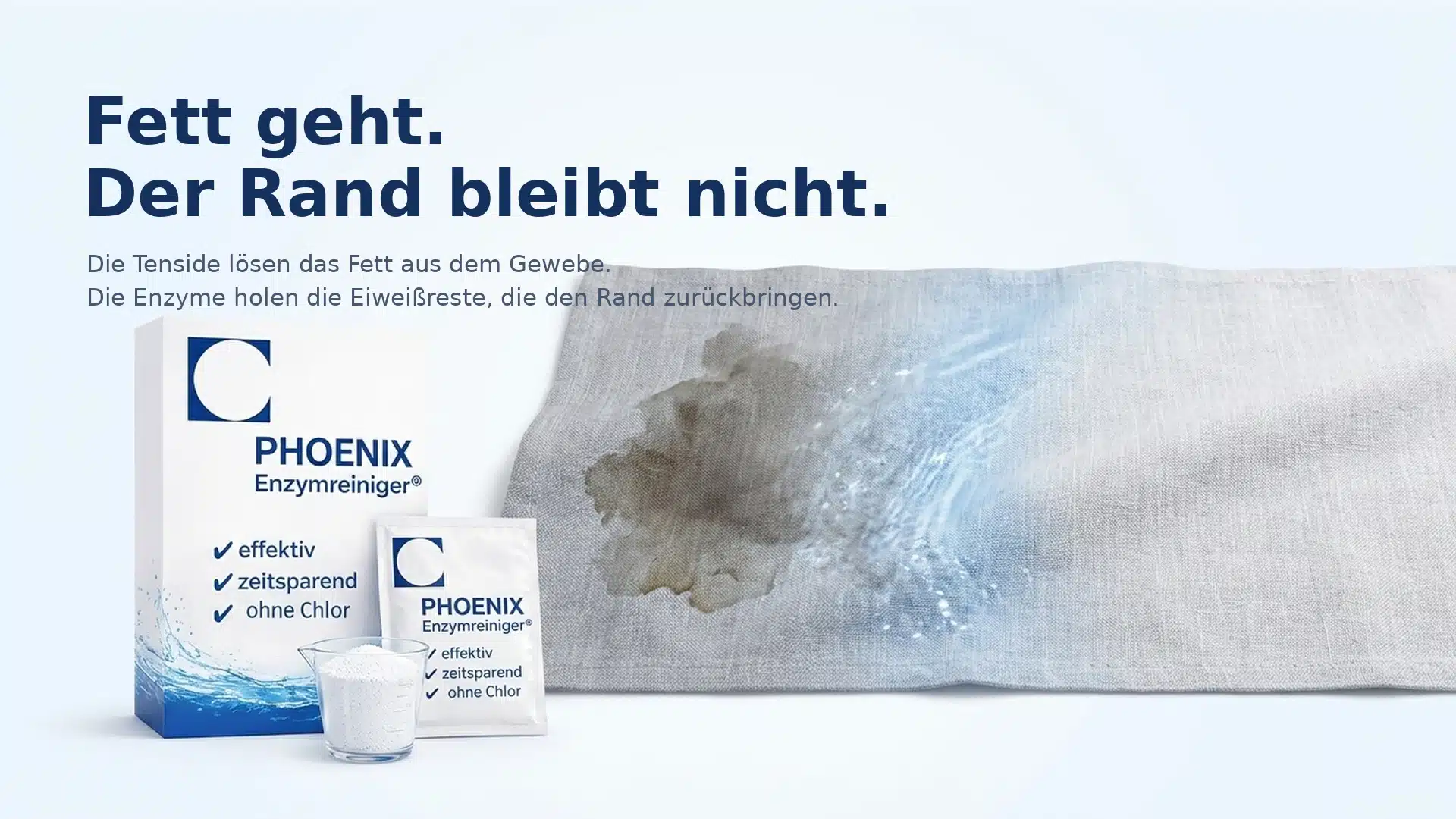
The grease comes off. The edges don't stay.
It removes grease stains from one garment to the next, leaving no dull shadow on the fabric — that's exactly what it's built for. That's exactly what the Phoenix Enzymreiniger is built for.
In short: The non-ionic surfactants in the granules dissolve the grease from the tissue, while protease and amylase break down the protein and starch residues that form the rim. Dissolve 20 g in one liter of water, apply, leave on for 15 to 30 minutes, then wash off.
The stain is gone, the shirt is drying, and there it is again: a faint shadow that wasn't there before. Almost everyone who has ever tried to remove grease stains from one garment to the next knows this feeling. It's not your fault, and it's not your washing machine's fault either.
This is because a kitchen stain almost never consists solely of grease. Meat juices, sauce, milk, eggs, cheese—these all contain protein and starch. A pure grease remover removes the grease but leaves the rest in the fabric. As it dries, this residue contracts and becomes visible.
How does the enzyme cleaner remove grease stains?
The granules contain two active principles that work in parallel:
- Non-ionic surfactants They encapsulate the fat droplets in the tissue and detach them from the fiber. The fat remains in the liquid and does not settle again upon drying.
- Protease and amylase They break down the protein and starch residues that are present alongside the grease in the stain. These are precisely what cause the ring that reappears after washing.
Therefore, it's not enough to just attack the grease. Anyone wanting to remove grease stains from both clothing and upholstery must address both simultaneously. Detailed information on how these enzymes work can be found at [reference to relevant source]. Wikipedia on protease.
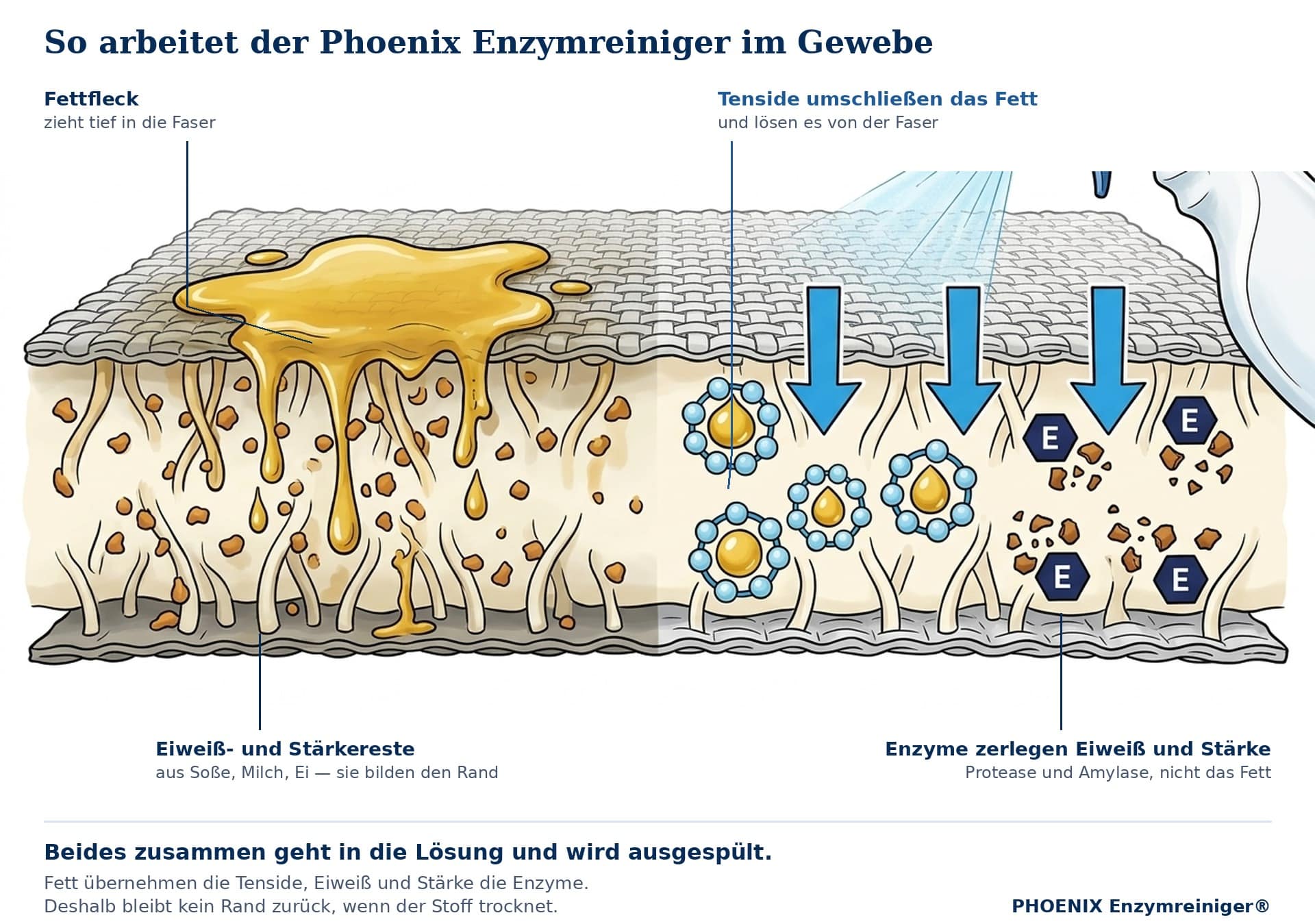
What Phoenix does not do: Fat is not broken down enzymatically. For that, a fat-splitting enzyme would be needed, and that's not included in the formula. The surfactants take care of the fat, while the enzymes handle the protein and starch. We mention this because it explains the difference: A pure grease remover tackles half the problem, Phoenix tackles both.
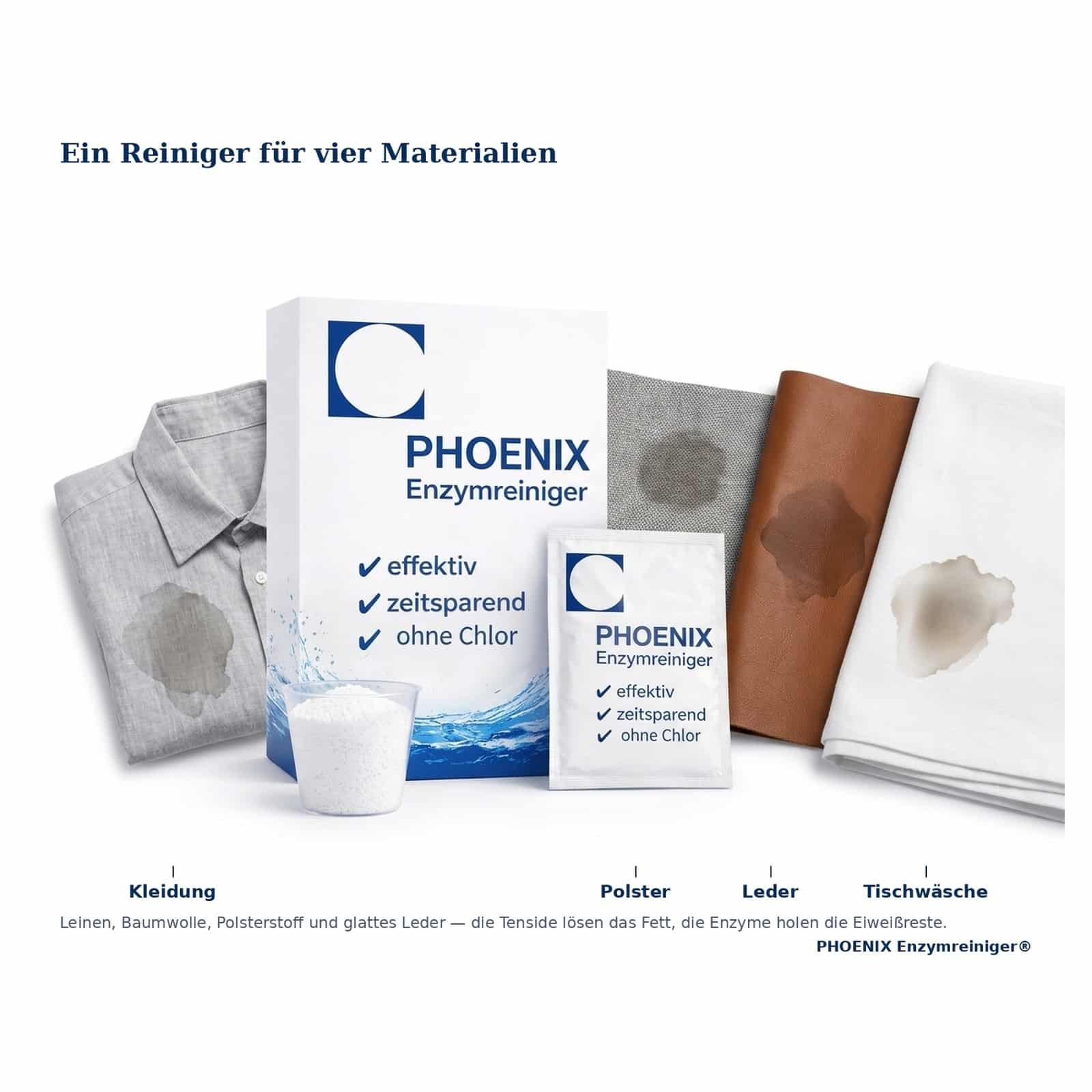
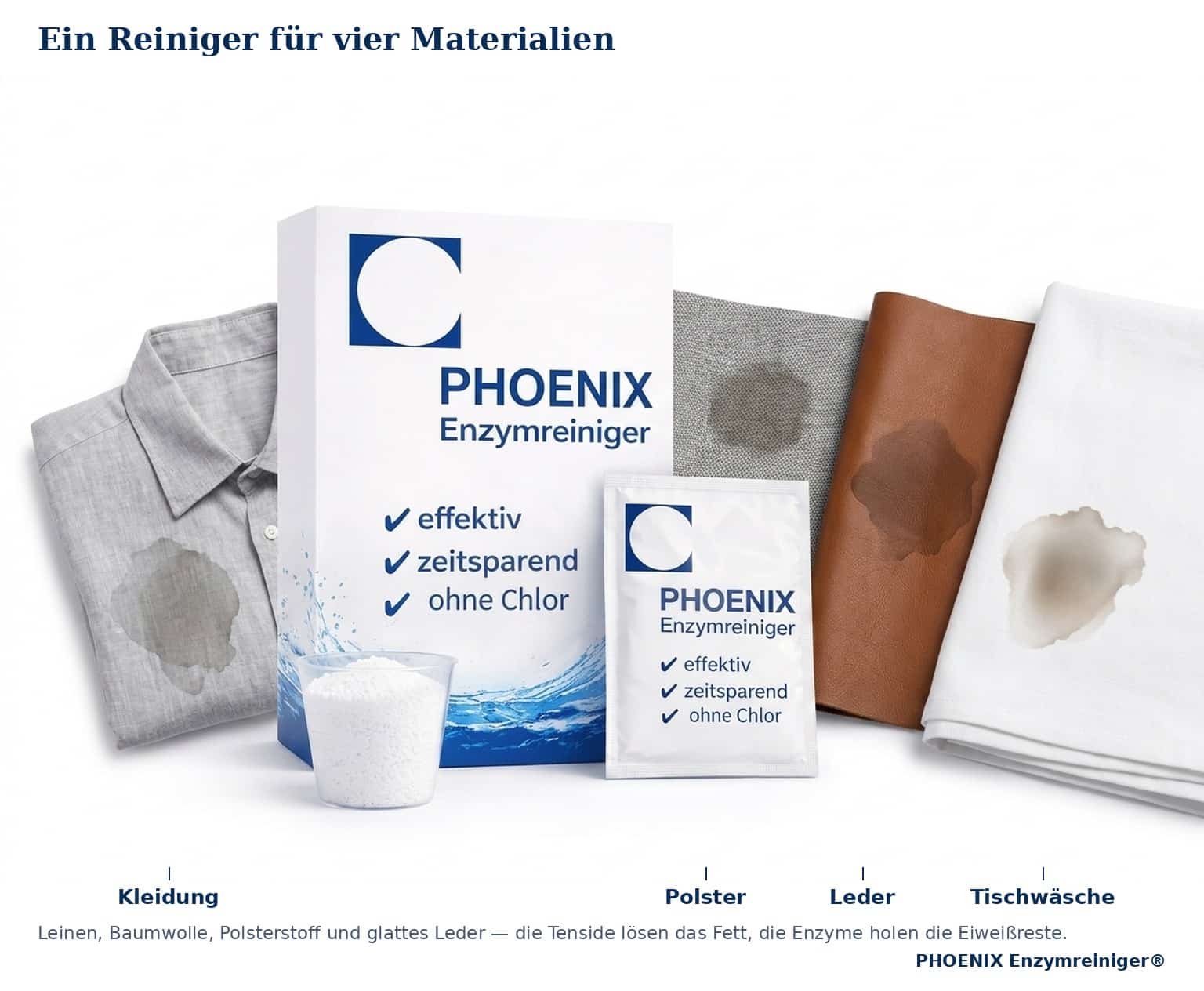
Removing grease stains from clothing, upholstery, leather and tablecloths

| Clothing | Shirt, trousers, t-shirt, blouse. Even stains that are still visible after washing. |
| Upholstery and sofa | Cooking grease on the seat, skin oil on the headrest and armrests |
| Leather | Seat surfaces, pockets, car seats. Then treat with leather conditioner. |
| tablecloth | Tablecloth, napkins, runner |
| work clothes | Chef's jacket, apron, smock, overalls, work trousers |
How do you use it?
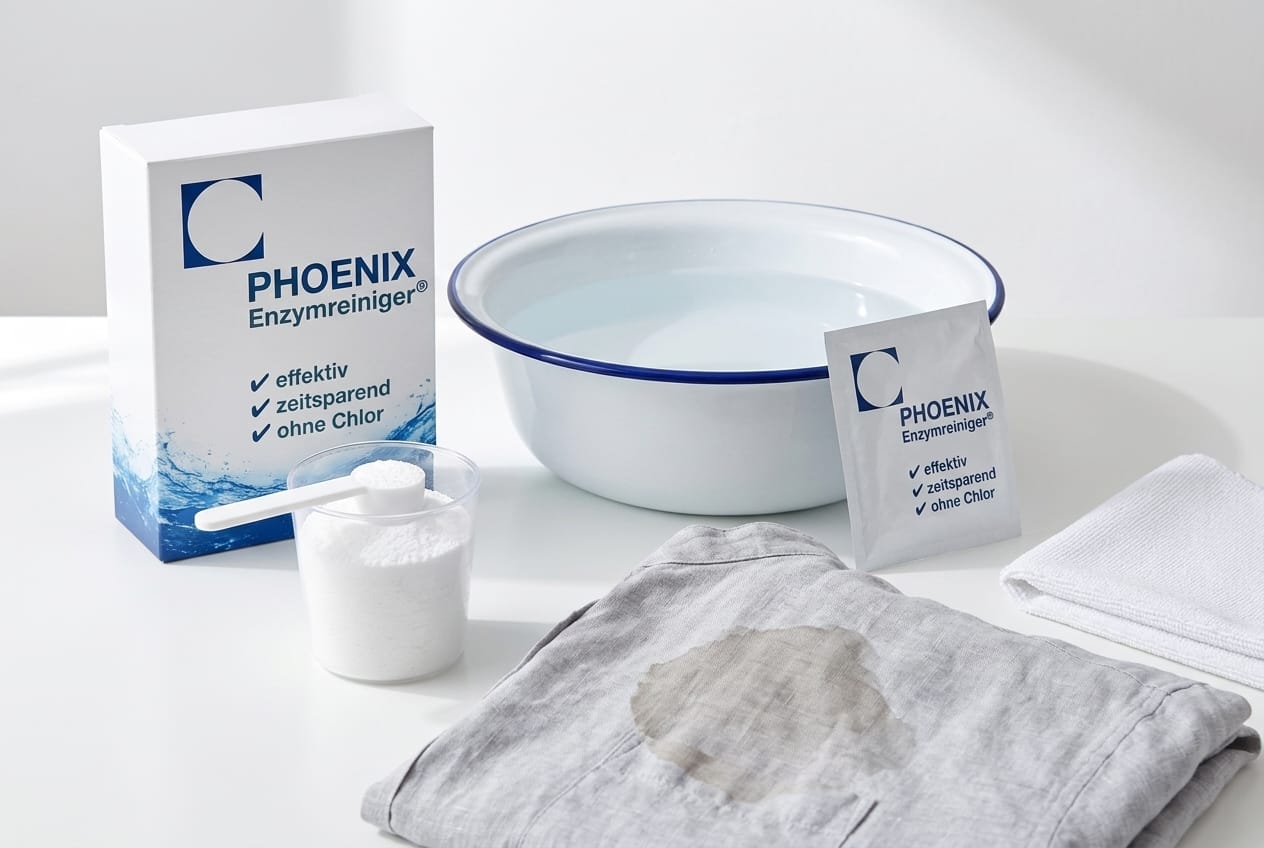
- Start: To remove grease stains, first smooth out the clothing. Activate 20 g of granules in approximately 250 ml of hot water, then top up to one liter.
- Soak: Thoroughly saturate the stain, don't just dab it. The solution needs to get where the grease is.
- Wait: Leave on for 15 to 30 minutes. For old, dried-in stains, leave on significantly longer.
- Lose weight: Wash normally or remove with clean water and a cloth. Do not rub, as this will only push the stain deeper into the fabric.
- Repeat: For old stains, it's better to apply the scrub twice than to scrub once.
Duration of effect: Full potency for 48 hours after mixing, followed by a slower degradation of the enzymes. Ready to use for up to 20 days. So you don't have to use it all at once.
Material note: Leather is degreased during cleaning. After drying, treat it with leather conditioner, otherwise it will become brittle. Test silk and wool on an inconspicuous area first.
Why granules instead of a ready-made bottle?
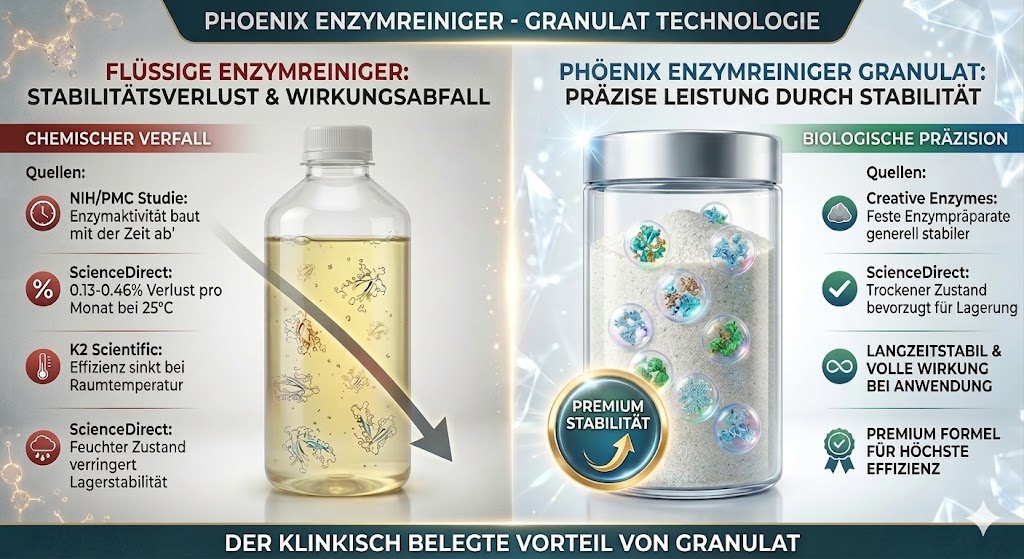
Remove grease stains from clothing piece by piece, but without the hassle: A liter of ready-made solution is 98 percent water. You pay for it, you store it, and the delivery driver lugs it halfway across the country. With granules, you mix in the water yourself, exactly the amount you need. 20 g makes one liter, 1000 g makes 50 liters.
Data and ingredients
| form | Granule concentrate |
| fertility | 20 g yields 1 liter of solution |
| Ingredients | Under 5 % non-ionic surfactants, protease, amylase, mineral carriers, fragrance |
| Free from | Chlorine, bleach, solvents, phosphate |
| surfactants | at least 90% biodegradable % |
| classification | Lowest water hazard class, not classified as dangerous goods, not subject to labeling requirements |
| PH value | 8.5 to 9.0 |
| fitness | Suitable for cleaning in the food industry (expert opinion by Dr. Mang) |
| Origin | Made in Germany |

Safety notice: Keep out of reach of children and animals. Even if there is no danger, children and animals should not have direct access to the product.
Frequently Asked Questions
Why don't grease stains come out after washing?
Trying to remove grease stains from clothing only after washing is too late: While the washing temperature dissolves the grease, it doesn't remove the protein residue. Protein coagulates in the heat and therefore becomes even more stubborn. That's why you should treat the stain before washing, not after.
Does this also work on old, dried-in stains?
Yes, it just takes longer. Let the solution sit and repeat the process instead of using a brush. Rubbing spreads the grease and works it deeper into the tissue.
Will that bleach the fabric?
No. It contains neither chlorine nor bleach. However, you should still test it on a hidden area of silk and wool first; this applies to all cleaning products.
Can I use this to remove grease stains from leather clothing?
Yes, it works on smooth leather. However, the cleaning process removes the oils, so leather conditioner should be applied after drying.
What about oil on paving stones or concrete?
That's a different case. Mineral oil on stone covers our Oil stain remover This section deals with cooking fat and body fat on textiles, leather, and upholstery.
And what about burnt-on fat in the oven?
That's a separate case, there's a separate one for that. Oven cleaner. It is designed for encrustations on the device, not for stains on the fabric.



Reviews
There are no reviews yet