
Description
Enzyme oven cleaner — dissolves grease instead of burning it
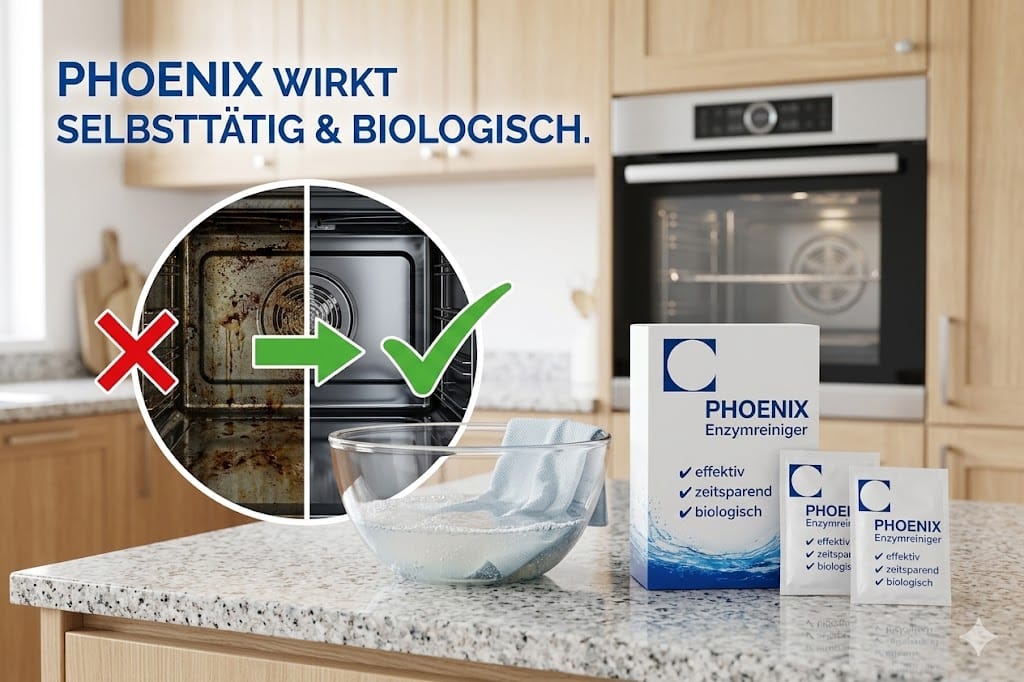
Commercially available oven cleaners work with sodium hydroxide. It reliably saponifies grease—but in the process irritates the eyes and respiratory tract, attacks aluminum, and ages seals. Phoenix's enzyme oven cleaner takes a different approach: The surfactants it contains dissolve the grease, while the protease breaks down the protein cross-linking that holds oven grime together. These are precisely the two components that make up burnt-on dirt.
What is Phoenix Enzymreiniger for the oven? A concentrated granule: Protease and amylase break down proteins and starches, while the surfactants dissolve grease. 20 g makes 1 liter of solution, enough for an entire oven, including the door. Spray the interior, let it work for 1 to 2 hours, then wipe it off while damp—for stubborn, encrusted grime, leave it overnight. No sodium hydroxide, no chlorine, and no spray mist that irritates the respiratory system. Enamel, stainless steel, glass, and rubber seals can withstand the mild, slightly alkaline application (pH 8.5–9). What the cleaner cannot do: dissolve black, charred crusts. These are no longer grease, but carbon. It softens them, but you have to remove them yourself.
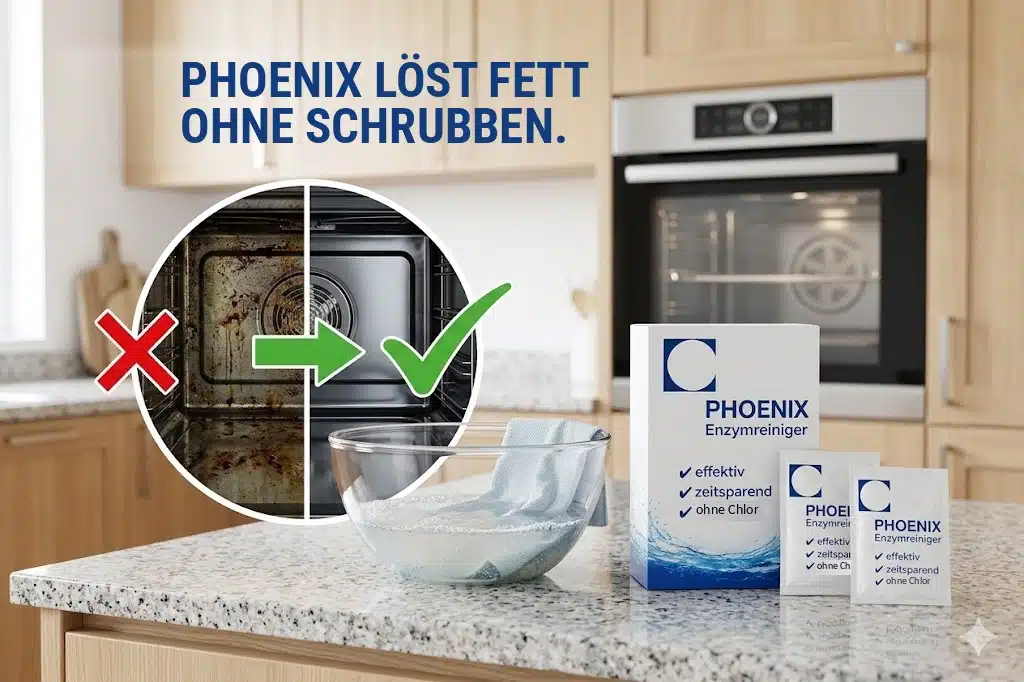
Phoenix Enzymreiniger — Short & sweet
- Without sodium hydroxide: No corrosive spray mist, no irritated airways
- One granule for everything: Oven, baking tray, rack, ceramic hob, grill, extractor hood filter
- Gentle on materials: Enamel, stainless steel, glass and sealing rubber tolerate the mild, only slightly alkaline application (pH 8.5–9)
- Made in Germany: Lowest water hazard class, surfactants at least 90% biodegradable (%)
Why does the enzyme oven cleaner work so well?
Oven grime consists of fat and protein that have been cross-linked by heat — experts call this Polymerization. Dish soap fails because it only dissolves fresh grease, but cannot penetrate the cross-linked structure.
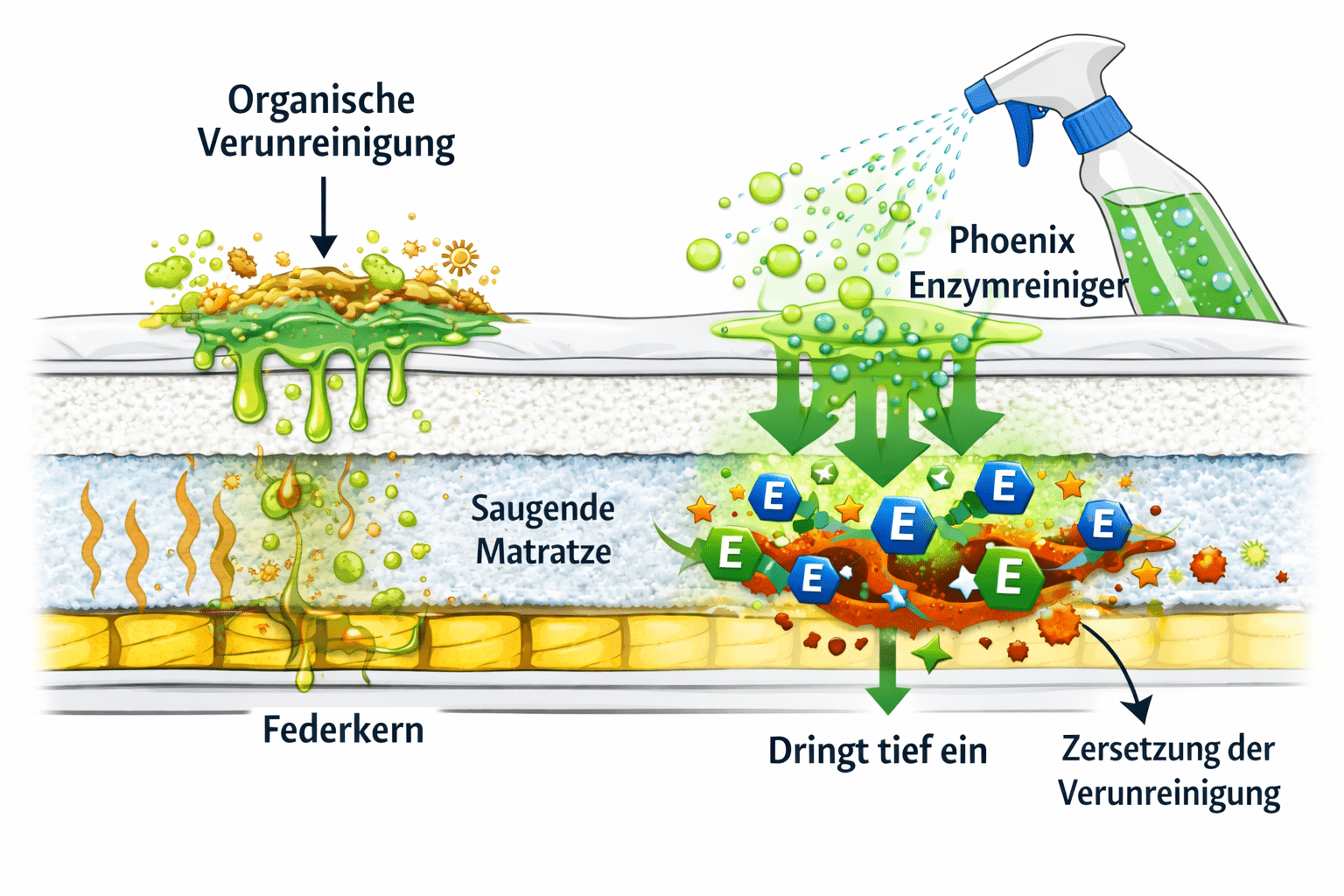
Phoenix combines two modes of action. The protease cleaves the protein chains that hold the dirt together like a scaffold at specific points. Once this scaffold breaks down, the surfactants in the product dissolve the exposed grease and bind it in the cleaning solution. What remains is water-soluble and can be wiped away. The cleaner thus dissolves the bond instead of attacking the material—which is why enamel and seals remain undamaged during use.
Enzyme oven cleaner: what it dissolves — and where it ends
We'd rather say this beforehand than afterwards. "Burn-in" is not a uniform state, and the three stages behave completely differently.
| Level | How you can recognize them | What is possible |
|---|---|---|
| Grease film | Sticky, yellowish-brown, yields to finger pressure | Completely solvable. 1 to 2 hours are sufficient. |
| Polymerized layer | Tough, dark brown, matte, scratchable with a fingernail | Solvable, but takes time: 3 to 4 hours or overnight, usually two passes. |
| Charred crust | Black, shiny, hard, chips off in splintered pieces. | This is where all chemistry ends. This is carbon, not an organic substrate. The cleaner softens the edges and shortens the soaking time—you'll need to lift them off with a plastic scraper. |
| Discoloration in the enamel | Brownish shade, smooth, not scratchable | It remains. This is altered material, not a coating. No cleaner will restore enamel. |
The rule of thumb: What lies on the surface of the material comes off. What is changed within the material remains. This applies to all cleaners, including sodium hydroxide. A spray that supposedly dissolves charred crust actually dissolves the softened material around it—and the crust falls off.
How do you use the enzyme oven cleaner?
- Mixing: First, completely dissolve 20 g of granules in approximately 250 ml of hot water – this activates the enzymes. Then top up to 1 liter.
- Let the oven cool down, until it only feels lukewarm. In the hot oven, the solution evaporates before it can take effect.
- Spray: Back wall, sides, ceiling, floor, inside of door. Apply two thin coats to vertical surfaces instead of one wet coat.
- Effects: 1 to 2 hours for a light layer of grease, 3 to 4 hours or overnight for old encrustations. Keep the door closed.
- Lose weight: Microfiber cloth, in one direction. For thick deposits, first lift off with the plastic scraper.
- Wipe clean Use clean water, leave the door open to dry.
How long does the mixed solution remain effective?
Full power for 48 hours after mixing, followed by a slow degradation of the enzymes. Ready for use for up to 20 days.
Oven cleaner, baking tray cleaner and grill cleaner in one
Most kitchen cupboards contain three bottles: oven cleaner, a degreaser for work surfaces, and a grill cleaner for the season. All three combat the same thing—grease and protein, cross-linked by heat.
The enzyme oven cleaner replaces them with granules. Baking tray cleaner It can be used in soaking baths, as a grease remover for fronts and ceramic hobs, as a grill cleaner for rust and drip trays, and in the catering industry for convection ovens and deep fryers. The difference lies only in the quantity and contact time, not in the product itself.
Oven enzyme cleaner — what size do you need?
20 g makes 1 liter of solution. That's enough for a complete oven including the door, or for a baking tray plus rack in a soaking bath.
| Size | results | sufficient for | typical case |
|---|---|---|---|
| 10 g | 0.5 liters | a sheet metal or the disc | Test. Oven door inside, a ceramic hob. |
| 20 g | 1 liter | a complete oven | The normal round including the door. |
| 40 g | 2 liters | Oven plus tray and rack | Deep cleaning after a long break. |
| 60 to 100 g | 3 to 5 liters | Oven, stove, extractor hood, grill | The entire kitchen in one go. |
| 200 to 250 g | 10 to 12.5 liters | Rust and sheet metal bath in the tub | After a move or before handover. |
| 500 g to 1 kg | 25 to 50 liters | Combi oven, deep fryer, catering | Commercial kitchen, recurring cleaning. |
When in doubt, go for a larger size. Stored dry, the granules have a shelf life of several years—a mixed solution does not. And a second application on a softened crust yields significantly more results than a sparing first application.
Which materials are compatible with the enzyme cleaner for ovens?
The enzyme oven cleaner is only slightly alkaline (pH 8.5–9) and contains no sodium hydroxide. This is the crucial difference compared to conventional oven cleaners, which operate at pH 13 to 14 and are harmful to aluminum and some seals.
| Area | Proceed | What to look out for |
|---|---|---|
| Enamel, oven interior | Spray on, leave on for 1 to 4 hours, remove while damp. | No steel wool. Scratches in the enamel are the beginning of the next problem. |
| stainless steel | Spray on, leave for 30 to 60 minutes, remove in the direction of the grain. | Wiping across the grain leaves visible marks. |
| Glass, oven window | Leave on for 30 to 60 minutes, remove, then polish dry. | Hold the glass scraper flat, never tilt it. Glass can withstand this, enamel cannot. |
| Glass ceramic, ceramic hob | 15 to 30 minutes, then scrape off flat with a glass scraper. | Spilled sugar must be removed immediately while it is still warm — otherwise it will burn. |
| Non-stick coating | Simply spray and wipe off while damp, do not soak. | Coatings do not like prolonged dampness. |
| aluminum | Leave on briefly, then rinse thoroughly. | Unlike sodium hydroxide, this mild solution does not attack aluminum. Nevertheless, do not leave it overnight. |
| rubber seal | Wipe clean with a damp cloth only. | Do not soak, do not scrape. Hardened seals will no longer close properly. |
| Cast iron, grill grate | Soak overnight, then dry. | Oil it after it dries, otherwise it will rust. |
Why not just use baking soda or oven cleaner?
Baking soda, when used as a paste, primarily works mechanically—fine crystals abrade the grease film, but cannot reach polymerized layers, and enamel becomes dull over time. Commercially available oven cleaner is sodium hydroxide: effective, but caustic, with a spray mist that irritates the eyes and respiratory system.
The enzyme oven cleaner compared to all nine common household remedies — baking soda, baking powder, lemon, vinegar, washing soda, dishwasher tablet, shaving foam — are listed in the Guide, Part 1.
Will this also clean the oven door?
Yes. Spray generously, let it sit for 30 to 60 minutes, wipe off while still damp, and polish with a dry cloth. Unlike baking soda paste, this solution leaves no streaks on glass.
Does the brown veil sit? between If no cleaner from the outside will help with the windows, then the inner pane has to come out. How to do this is explained in the... Guide, Part 3.
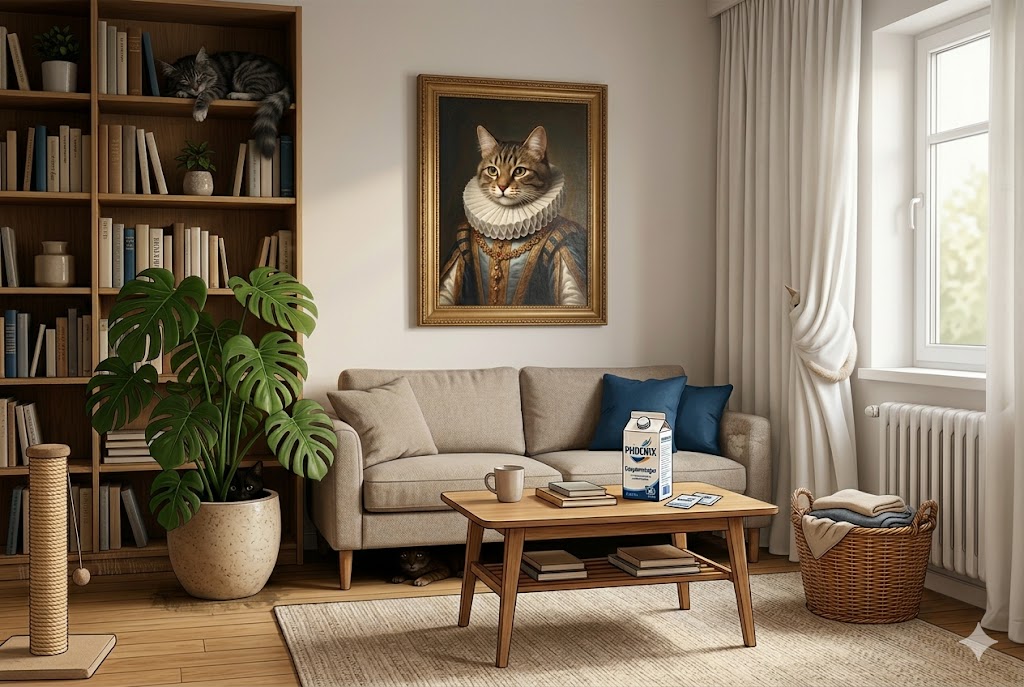
Can you find all the hidden cats? — Get a 10% discount (%)
Join in the living room hidden picture game — whoever finds all the cats immediately receives a personal discount code.
What accessories do you need and for what purpose?
| Accesories | For what | When you don't need it |
|---|---|---|
| spray bottle | Oven interior, door, ceramic hob — even application on vertical surfaces | A tub is sufficient for soaking sheet metal and rust. |
| Pressure sprayer 1 liter | Gastro, convection oven, large surfaces in one piece | It is oversized for a household oven. |
| plastic scraper | Remove softened crusts without scratching the enamel. | For a fresh layer of grease, the cloth is sufficient. |
| glass scraper | Oven door and ceramic hob, flatly mounted | Never on enamel or stainless steel. |
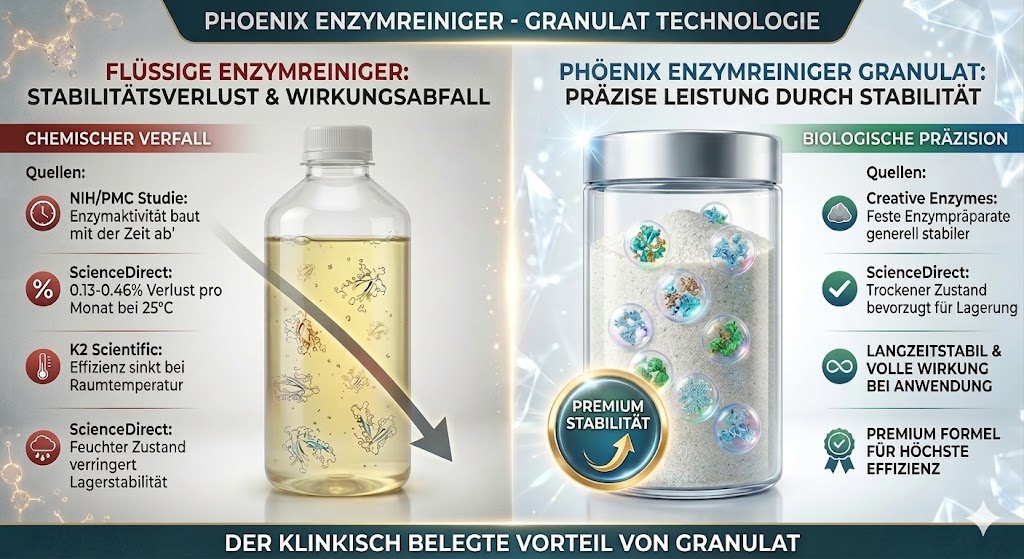
Why granules instead of ready-made solution?

Keep out of reach of children and animals. Even if there is no danger, children and animals should not have direct access to the product.
Frequently asked questions about enzyme cleaner for ovens and grills
How much enzyme cleaner do I need for an oven?
Phoenix Enzymreiniger is calculated at 20 g per liter, and 1 liter is sufficient for a complete oven, including the inside of the door. For an oven plus baking tray and rack, calculate 40 g; for a rack bath in the bathtub, use 200 g.
Does the cleaner dissolve burnt-on grease?
It depends on the level. Phoenix Enzymreiniger completely dissolves sticky grease and tough polymerized layers, the latter taking 3 to 4 hours or overnight. A black, shiny, charred crust, on the other hand, is carbon and no longer an organic substrate—the cleaner softens it, but you'll need to scrape it off with a plastic scraper. Burnt-on stains in the enamel will remain; that's altered material.
Can I also use it to clean the baking tray?
Yes, and soaking is the easiest way: place the baking sheet in the sink, cover it with the solution, and let it stand for 2 to 4 hours. For non-stick coated baking sheets, only spray them and wipe them off while still damp, do not soak them – coatings don't like prolonged dampness.
Does the cleaner attack aluminum?
No. This is precisely where Phoenix Enzymreiniger differs from lye-based oven cleaners: Sodium hydroxide with a pH of 13 to 14 dissolves the oxide layer on aluminum, leaving dull, dark spots. The mild, only slightly alkaline enzyme solution (pH 8.5–9) does not do this. Nevertheless, do not leave it on overnight.
Do I need to wear gloves?
Not for etching reasons — Phoenix Enzymreiniger is only slightly alkaline (pH 8.5–9) and contains no sodium hydroxide. Gloves are still advisable, however, because the cleaner degreases and prolonged contact can cause skin tightness.
Does it smell when used?
Phoenix Enzymreiniger is odorless and does not release any fumes. This is the practical difference compared to oven cleaner, where you have to open a window and leave the room.
Does this also work in a restaurant setting?
Yes, it's available in 500g and 1kg containers. Combi ovens, deep fryers, extractor hoods, and grease filters can all be treated with the same solution, just with a longer contact time. According to Dr. Mang's expert opinion, the product is suitable for cleaning in the food industry.
Is the cleaner safe for children and pets?
Phoenix Enzymreiniger is not subject to labeling requirements, is chlorine-free, and has the lowest water hazard class. Nevertheless, it is important to keep it out of reach of children and animals. Even though there is no immediate danger, children and animals should not have direct access to the product.
Do I need this product if my oven has a pyrolytic cleaning function?
Less frequently for the interior, but more often for everything else. Trays, racks, drip trays, and seals must be removed before pyrolysis and are not cleaned during the process. The door and glass are also excluded in many appliances.
Reviews
There are no reviews yet