

Description
Denture cleaner for dental and body prostheses
Phoenix denture cleaner enzymatically breaks down biofilm and odors — on dentures, bite splints, retainers, and also on leg, arm, and breast prostheses. One granule for complete prosthetic care.
Gentle on materials. Skin-friendly when used according to instructions. Made in Germany.
Phoenix denture cleaner is the universal solution for the enzymatic care of dentures and prosthetics. Unlike effervescent tablets, this denture cleaner does not mask the odor—protease and amylase break it down. Biofilm Deep into clasps, suction edges and inner liner surfaces. This makes this denture cleaner suitable not only for full dentures and bite splints, but also for leg, arm and breast prostheses as well as hearing aid earpieces.

Phoenix Denture Cleaner — Short & Sweet
🔬 Enzymatic deep action
Protease and amylase break down biofilm and odor deep within clamps, suction edges, and liner inner surfaces.
🛡️ No material damage
PMMA acrylic, silicone, metal staples, carbon and liner materials remain intact.
👨⚕️ Skin-friendly when followed according to instructions
Non-irritating to the skin. After rinsing, it can be safely used on surfaces that come into contact with the mouth and skin.
⚖️ You determine the dose
3g for splint, 5g for full prosthesis, 10g for leg prosthesis liner — precisely portionable
🇩🇪 Made in Germany
Lowest water hazard class, surfactants biodegradable to at least 90%, not classified as dangerous goods
⏱️ Duration of effect: 48 hours + 20 days
Full power for 48 hours after mixing, ready for use for up to 20 days when stored in a cool place.
Why do dentures start to smell over time?
Every Dentures It has contact surfaces — suction cups, clamp surfaces, interproximal gaps. Organic residues from saliva, skin oils, and micronutrients accumulate precisely there. Within a few days, a biofilm forms — and with it, the typical denture odor.
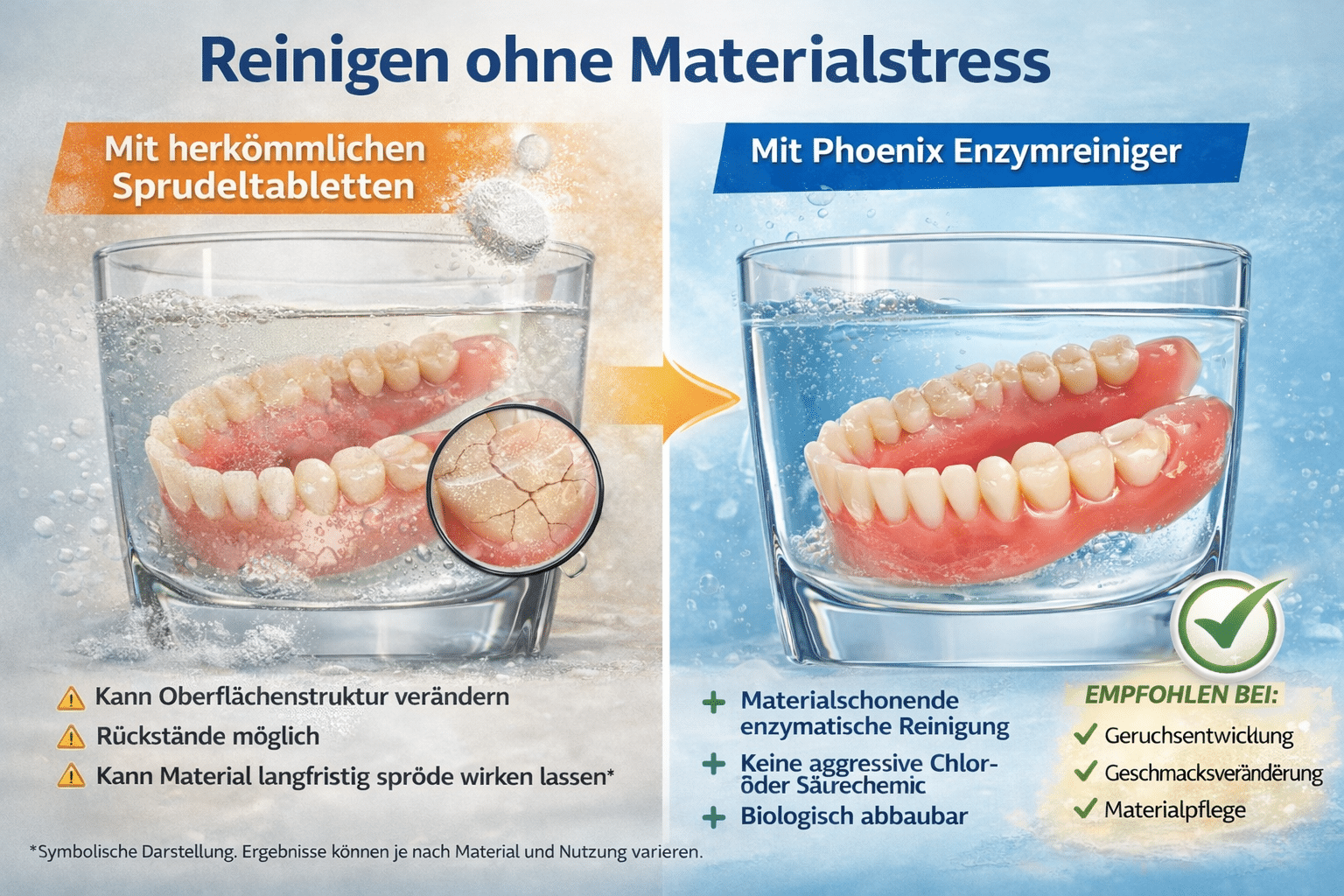
Commercially available effervescent tablets only work superficially—they bleach stains but do not break down the biofilm. The odor returns, often after just a few hours.
The same principle applies to body prostheses: sweat and skin oil accumulate in leg prosthesis liners, while skin contact residues collect in breast prostheses. Biofilm forms wherever organic matter comes into contact with material.
How Phoenix cleans teeth — substrate removal instead of bleach
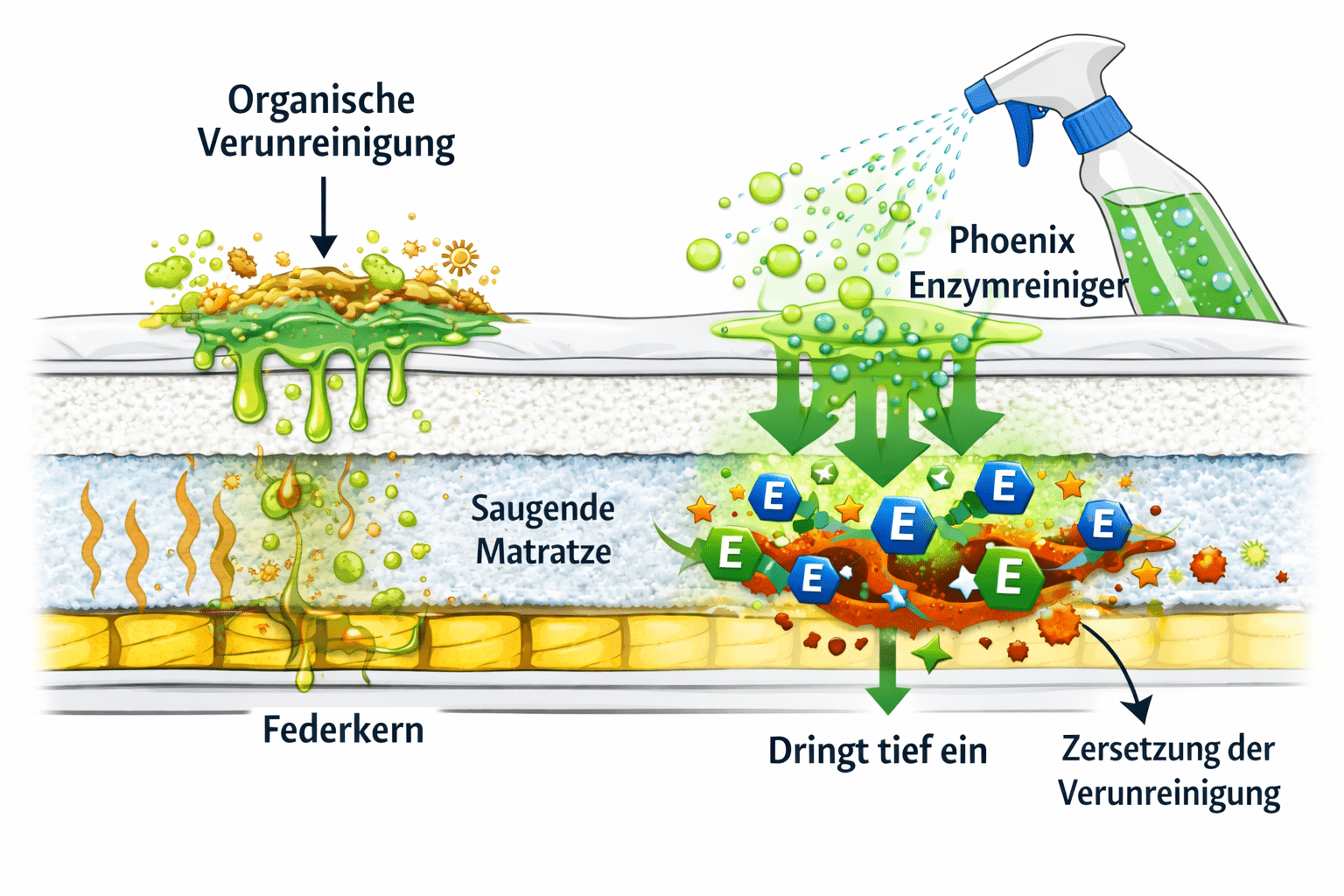
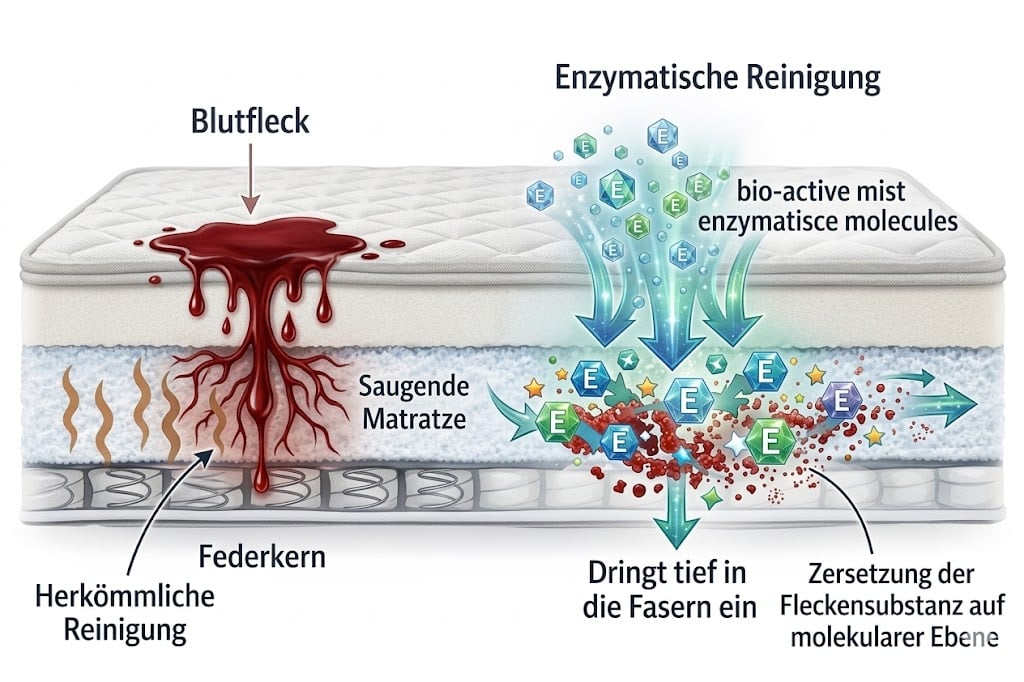
Phoenix enzymes—protease and amylase—break down the organic components of the biofilm into water-soluble fragments. The substrate disappears, and the odor goes with it. This is the principle of substrate deprivation.
While effervescent tablets use persulfates and bleach—and thus only lighten the color of stains—Phoenix tackles the problem at its root. Even worse: Over time, oxidative bleach attacks PMMA acrylic, microscopically roughening the surface. The rougher and more porous the material, the more surface area and niches bacteria find—the biofilm penetrates deeper, and the odor returns more quickly. A vicious cycle. Phoenix works purely enzymatically and is gentle on materials: No swelling, no embrittlement, no material damage. Even after months of daily use, PMMA acrylic, staples, and liner materials remain intact.
How to use Phoenix denture cleaner — in 4 steps
- Mixing: Dissolve 3-5 g of Phoenix granules in 100-200 ml of lukewarm water (max. 30°C). The granules dissolve in 1-2 minutes. Tip: Place a towel in the sink – if the dentures slip, they will fall softly.
- Insert: Place the prosthesis, splint, or liner completely into the solution. For routine cleaning, leave to soak for 15-30 minutes; for strong odors, leave overnight.
- Post-brushing: Briefly brush the staples, suction edges, and inner sides of the liner with a soft brush. This will also remove deeply embedded residue.
- Rinse: Rinse thoroughly with clean water. Wear immediately or place in a dry container.
✨
✨

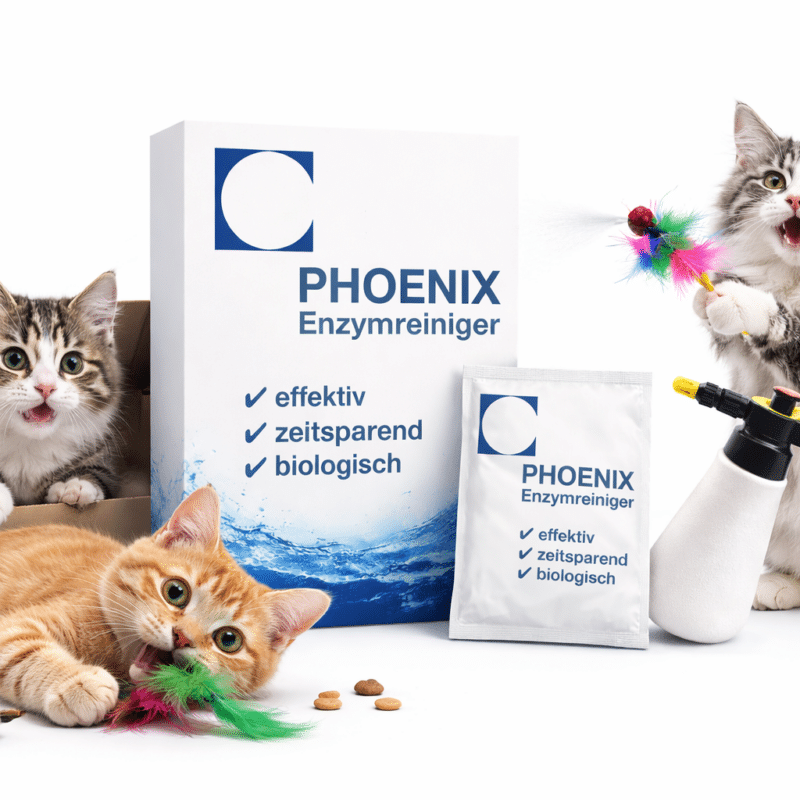
Can you find all the hidden cats? — Get a 10% discount
Join in the living room hidden picture game — whoever finds all the cats immediately receives a personal discount code.
Suitable accessories for maximum effect
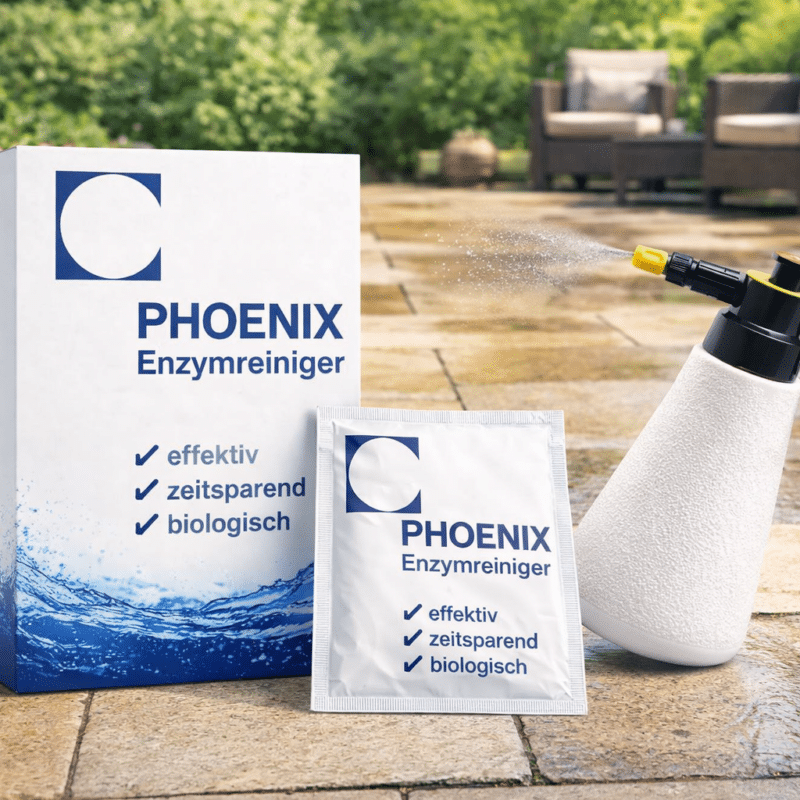
💧 Pressure sprayer (DS)
For leg prosthesis liners and hearing aid earpieces — fine spray mist, even distribution
🧹 Wet vacuum cleaner / Spray extraction (SS)
For orthotic padding and foam interior surfaces — deep cleaning, quick drying
🔦 Urine finder + pacifier bundle (UVSS)
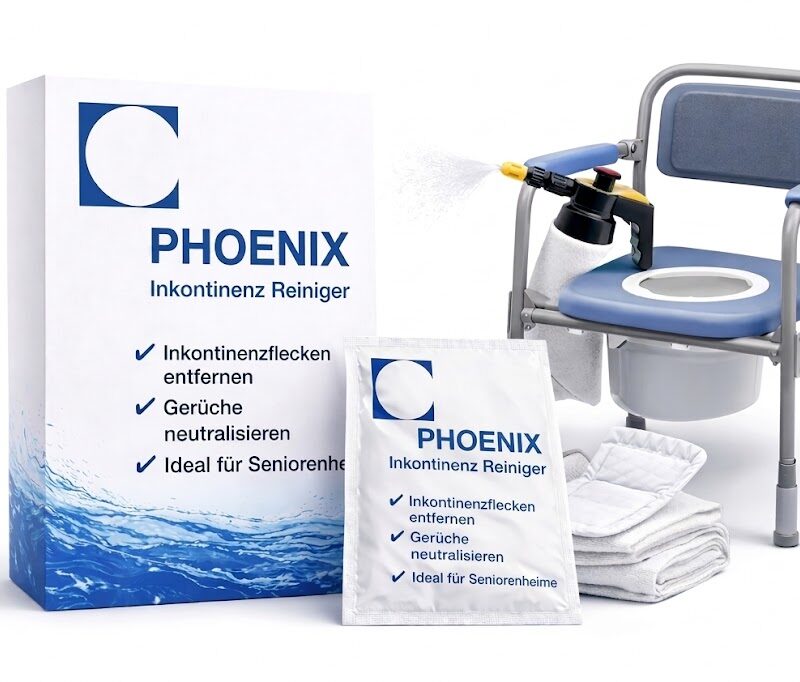
For use in nursing homes — making hidden dirt visible + vacuuming it up directly
Phoenix denture cleaner — Applications
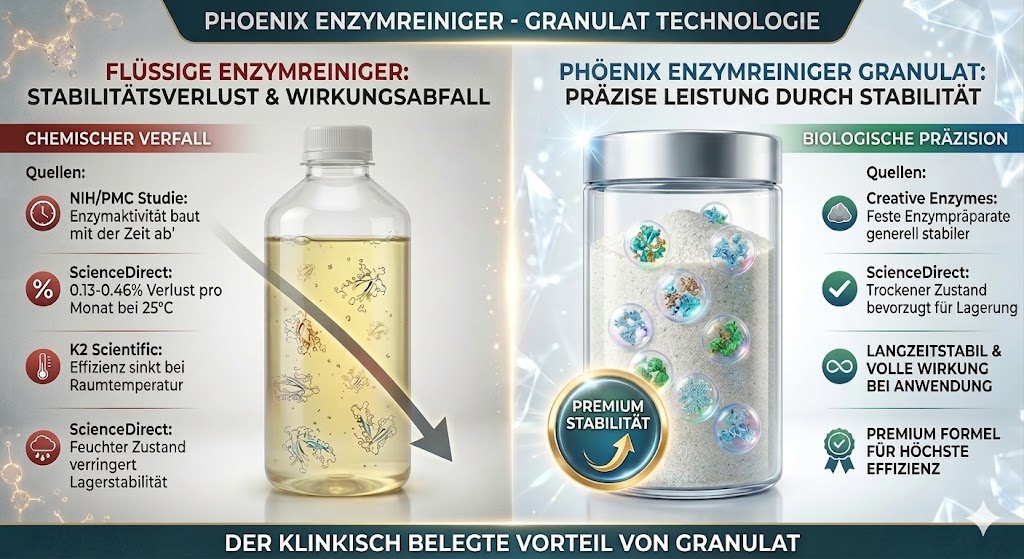
Why granules instead of effervescent tablets?
You determine the dosage.
3g for the splint, 5g for the prosthesis, 10g for the liner — precisely portionable
Fresh = maximum enzyme activity
Full power for 48 hours after mixing, ready for use for up to 20 days.
Long shelf life
Stable for several years when stored dry — enzymes in dormant mode
Substrate removal instead of bleaching
Phoenix breaks down the biofilm — effervescent tablets only bleach it.
One granulate — the complete prosthetics family
Phoenix denture cleaner is not limited to dentures. Its enzymatic action works on all materials used in prosthetics: PMMA-acrylic, silicone, polyurethane, carbon, stainless steel, cushions, and liners. One granule for the entire prosthetic family. The enzymatic cleaning gently removes denture adhesive residue and the organic deposits that yellow and odor clear aligners—from aligners to sports mouthguards. Phoenix does not bleach embedded color pigments; it removes the organic base, not the color itself.
🦷 Dental prosthetics
Full denture, partial denture, clasp denture, bite splint, retainer, braces
🦿 Leg prostheses
Stump-shaped socket, silicone liner, polyurethane liner, gel liner — fresh from sweat in 10 minutes
🦾 Arm prostheses
Myoelectric and mechanical prostheses, leather padding, carbon parts
🎀 Breast prosthesis / epithesis
Clean silicone breast prostheses gently with a diluted solution — no swelling, no embrittlement
🦻 Hearing aid ear molds
Swirl the earmolds in the diluted solution — do not wet the electronics.
🦴 Orthotics & Bandages
Knee brace, back support, splint — enzymatically removing sweat odor from upholstery
⚠️ Safety Notice
Keep out of reach of children and animals. Even if there is no danger, children and animals should not have direct access to the product.
Phoenix is mixed with lukewarm water (max. 30°C). Always rinse thoroughly with clean water after cleaning. If you have very sensitive skin, test on an inconspicuous area first. For medical devices, also follow the manufacturer's care instructions.
Frequently asked questions about denture cleaner
Does Phoenix attack the material of my dental prosthesis?
No. Phoenix works without aggressive bleach and without persulfates — PMMA acrylic, metal staples and suction cups remain intact. Gentle on materials, even with daily use.
Can I use Phoenix for my leg prosthesis?
Yes. Phoenix is compatible with silicone, polyurethane, and gel liners. Spray the liner, let it soak in, rinse thoroughly, and leave to dry overnight.
Does Phoenix also remove denture adhesive residue?
Yes. Denture adhesive contains organic binders, precisely the substrate that the enzymes break down. In the cleaning bath, the adhesive softens and can be wiped off with a soft brush without scrubbing. Rinse thoroughly with clean water afterward before reinserting the dentures.
Is Phoenix skin-friendly?
Yes, if used according to instructions. Phoenix is not a skin irritant. Always rinse thoroughly with clean water after cleaning – then the prosthesis can be worn without any problems.
How does Phoenix differ from effervescent tablets?
Effervescent tablets bleach discolorations but do not break down the biofilm. Phoenix works enzymatically and breaks down the organic components of the biofilm—the odor disappears with the substrate.
Does Phoenix work with silicone breast prostheses?
Yes. Silicone breast prostheses are gently cleaned with diluted Phoenix solution (3g to 200ml), then rinsed thoroughly and allowed to dry completely. Gentle on the material, no swelling or embrittlement.
Can I wear my bite splint overnight?
Yes, soaking overnight in Phoenix solution (3g in 200ml) is no problem — no swelling or embrittlement. Rinse with clean water in the morning and wear.
How much granulate do I need per application?
For a full prosthesis, 3-5g per 100-200ml of water is sufficient. For leg prosthesis liners, 5-10g per 250ml. For breast prostheses, 3g per 200ml. You determine the exact dosage.
Complete instructions for prosthetic care
In the Phoenix Prosthetics Guide you will find detailed applications for every type of prosthesis — from dentures to leg prostheses to breast prostheses and hearing aids.

Reviews
There are no reviews yet