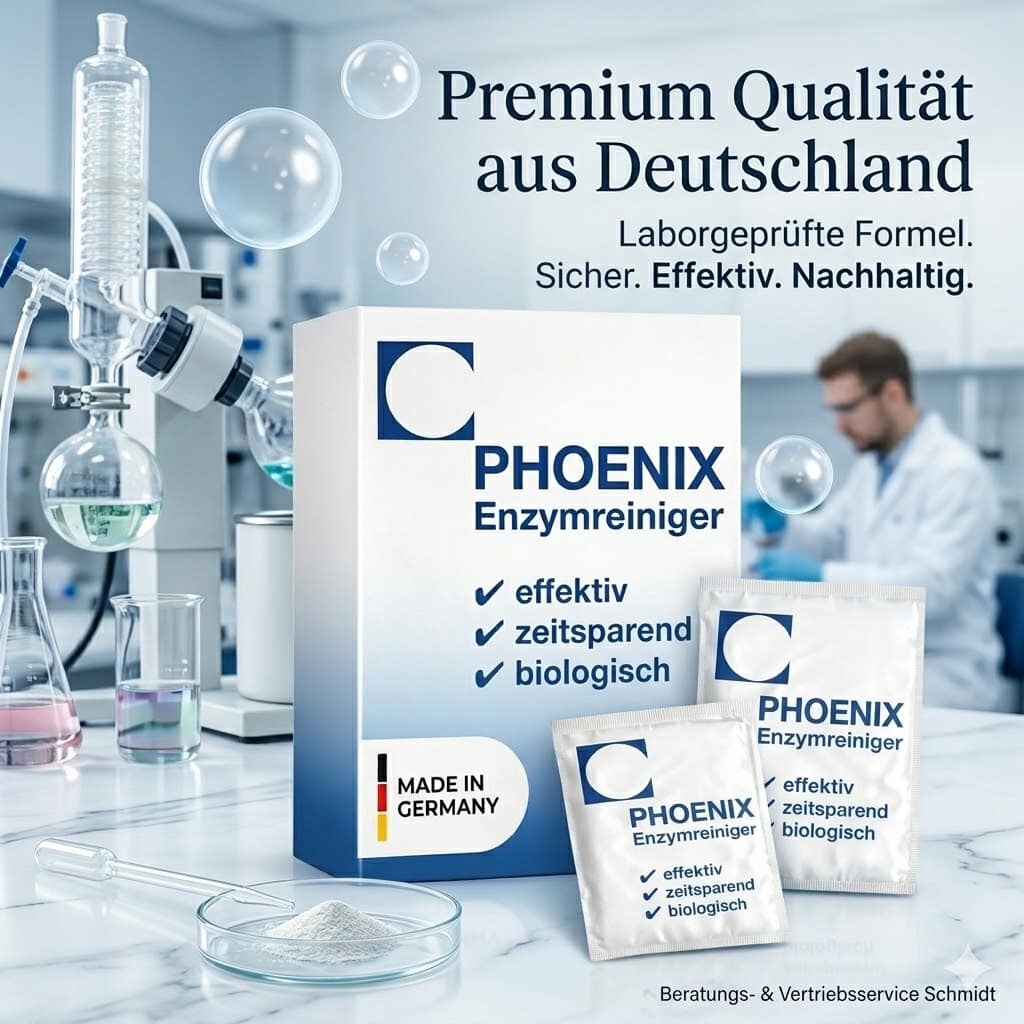
Description
Description
Enzyme cleaner for the garden — enzymatic cleaning for patios, awnings & more
Enzymatic removal of bird droppings, pollen, and organic deposits — gentle on materials such as patios, awnings, garden furniture, ponds, facades, and solar panels. Granular concentrate, freshly mixed, made in Germany.
★
★
★
★
4,9
·
Over 3,000 verified reviews
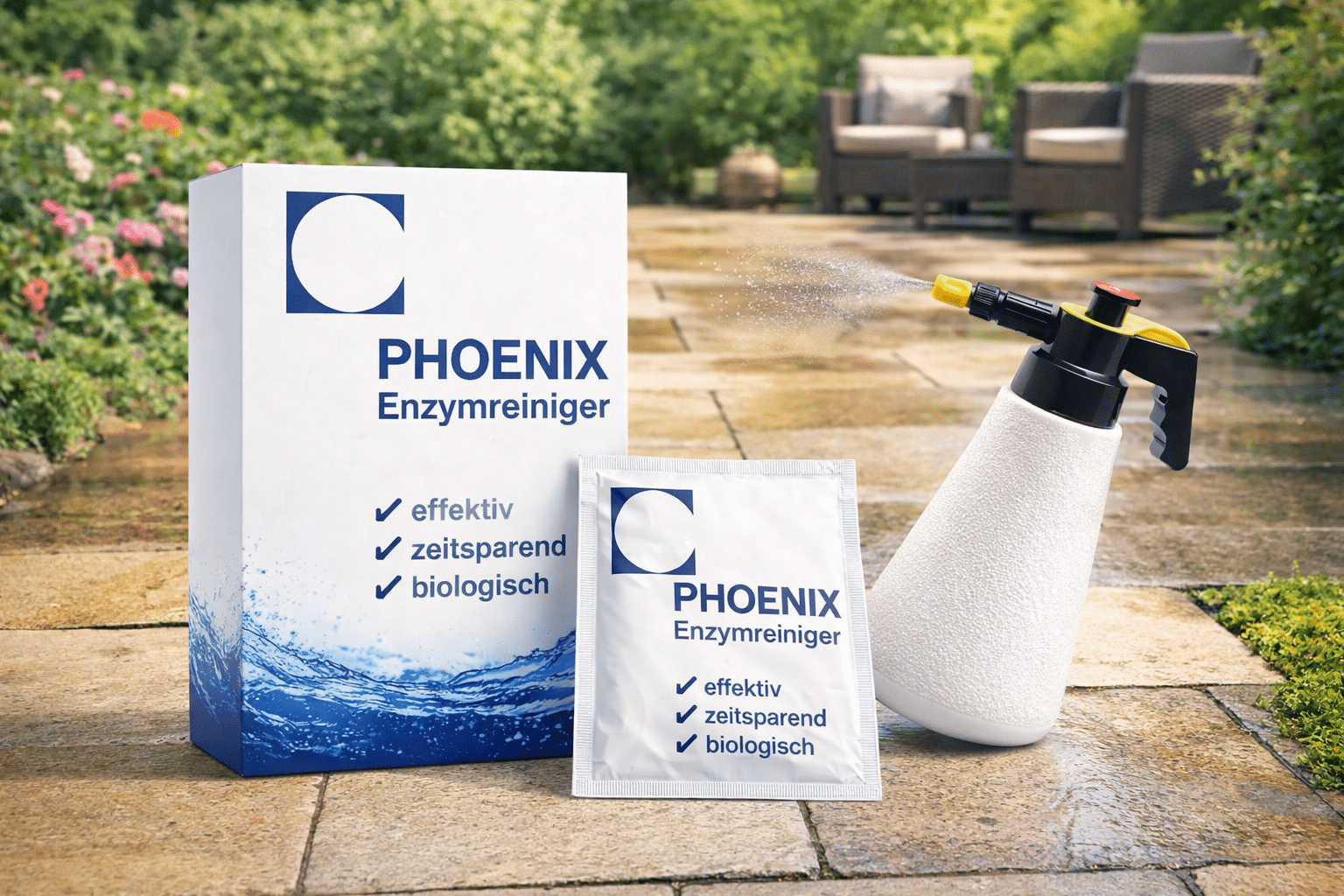
You want your Cleaning the garden — Patio slabs, awnings, garden furniture, pond edging, house facades and solar panels — and all this in a way that is gentle on the materials, without high pressure and without bleach? The Enzyme cleaner for the garden Phoenix does exactly that. Enzymatic breakdown of organic residues directly at the source: bird droppings, pollen, plant sap and organic deposits are enzymatically dissolved from stone, wood, WPC, awning fabric and solar glass — without rinsing out joints, without attacking impregnation.
Phoenix is coming as Granules for fresh mixing. 20 g of powder in 1 liter of water makes the finished product. Enzyme cleaner for the garden. You dose exactly what you need; the enzymes immediately become fully active. Gentle on materials, skin-friendly, made in Germany, with expert opinion from Dr. Mang (2004) for use in the food industry.
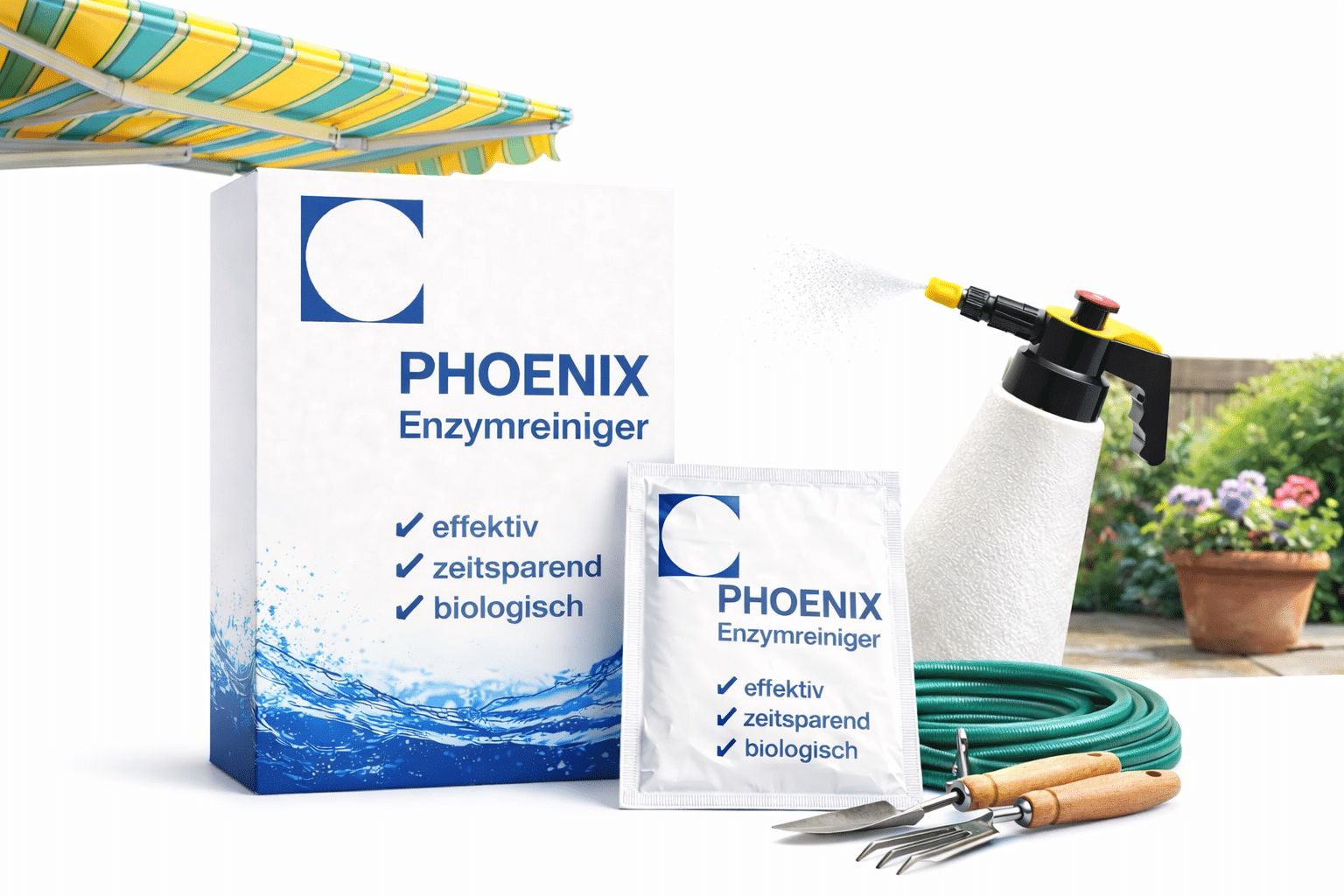
Why Phoenix Enzymreiniger Garden?
Enzymatic instead of mechanical
Proteases and amylases break down bird droppings, pollen and organic deposits, while the surfactants dissolved grease films — gently, instead of using high pressure or bleach.
Gentle on materials
Suitable for wood, WPC, natural stone, aluminum, awning fabric and solar glass. No fiber damage, no paint damage.
Concentrate instead of water
20 g in 1 liter makes a ready-to-use solution. Small package, no water included in the shipment.
Made in Germany
Developed and bottled in Germany. Expert opinion by Dr. Mang (Chemical Laboratory Frankfurt, 2004).
Lowest water hazard class, gentle on materials
Low water hazard. Surfactants are at least 90% biodegradable according to OECD method 301.
Productive & flexible
One can covers several application areas — from awnings to house facades and solar modules.
Why outdoor deposits are so stubborn
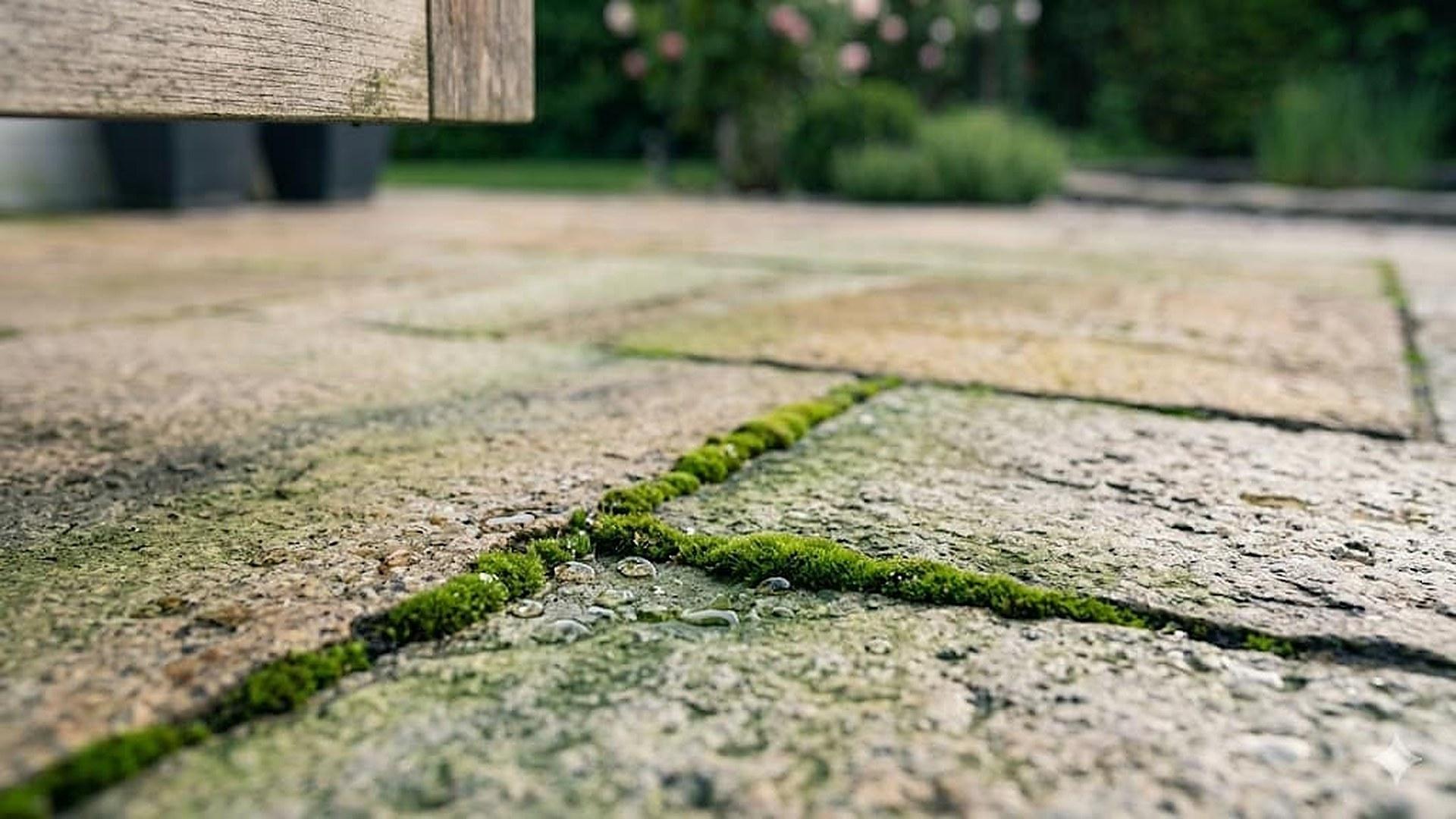
Over the season, the outdoor area accumulates organic depositsBird droppings, pollen, plant sap, soil, and leaf debris. When exposed to moisture, they combine to form a sticky film of proteins and Polysaccharides, which adheres tenaciously to stone, wood, and fabric. A pressure washer only removes the surface – the residue remains in the pores, and the coating quickly reappears.
Bird droppings It's not just unsightly: it contains uric acid and organic acids that can damage paint, sealants, and stone surfaces over time. The longer the feces are exposed, the deeper they penetrate porous materials like awning fabric or natural stone. Mildew stains The same pattern is observed on awning fabric: organic residues in the fabric that can be enzymatically removed from the inside.
How Phoenix Enzymreiniger removes garden bird droppings and organic deposits
The Enzyme cleaner for the garden It uses specific enzymes that break down the organic coating. Proteases break down proteins in bird droppings and insect remains, Amylases They break down starch and sugar compounds from plant juices and pollen, and contain surfactants They dissolve fat and wax films — the enzymes work through targeted action enzymatic hydrolysis.
Unlike bleach or high pressure, Phoenix from inside to outsideThe enzymes penetrate the coating, loosen it from the surface, and the coating can then be rinsed off with clean water or a soft brush. Full power for 48 hours after mixing, followed by a slow degradation of the enzymes. Ready for use for up to 20 days.

Cleaning your garden in 4 steps
Mix
Dissolve 20 g of Phoenix granules in 1 liter of lukewarm water and shake briefly. A pressure sprayer or bucket will work.
Apply
Spray generously onto the soiled area. For vertical surfaces (facades, awnings), spray from bottom to top.
Let absorb
30 minutes to 4 hours, depending on the level of soiling. For stubborn deposits: overnight. Dry weather is preferable.
Rinse or brush
Rinse with clean water or scrub with a soft brush. Repeat for heavily soiled areas.
Enzyme cleaner for the garden — for which areas?
Organic deposits, bird droppings and leaf stains on natural stone, concrete, paving bricks and gravel joints. Gentle on porous stone surfaces.
Removes mildew stains, pollen, and bird droppings from awning acrylic, parasol fabric, and gazebo covers. Protects the waterproofing.
Refreshing teak, poly rattan, aluminium furniture, fabric cushions and hammocks after winter and pollen season.
Enzymatic cleaning of organic deposits is used to remove soil from the pond edges, pond stones, and filter housing. Do not add to the pond water itself.
Remove bird droppings, dirt, and organic deposits from house facades, brickwork, exterior plaster, and masonry foundations. Protects sealants and varnishes.
Clean solar panels and balcony power plant glass streak-free — remove pollen, bird droppings and dirt film without aggressive cleaners, without scrubbing.
Bulk packaging for gardening and landscaping, cemetery gardening and greenkeeping. Gentle routine cleaning of large areas.
Common areas, building entrances, underground parking garage access roads, paths and gardens — for property managers and housing cooperatives.
✨

Can you find all the hidden cats? — Get a 10% discount (%)
Join in the living room hidden picture game — whoever finds all the cats immediately receives a personal discount code.
Material compatibility — which materials is compatible with Phoenix?
An overview of 14 outdoor materials — from natural stone and teak to solar glass and awning acrylic. The mixing ratio is always 20 g to 1 liter of water, even for hard surfaces.
| material | compatibility | Application frequency | Notice |
|---|---|---|---|
| Natural stone (granite, sandstone, slate) | Very good | Suitable for routine use | Protects porous surfaces. Rinse thoroughly after use on heavily grouted materials. |
| Concrete paving stones & paving bricks | Very good | Suitable for routine use | Effective even in deep joints, without washing out the grout. |
| WPC decking board | Very good | High | No fiber damage, no leaching of binders. |
| Teak wood & hardwood | Very good | Medium | Leaves the natural patina untouched. Allow to dry thoroughly after treatment. |
| Painted and varnished wood | Very good | Medium | As long as the paint layer is intact, no problem. Don't leave it standing. |
| Awning acrylic (impregnation) | Very good | Medium | It protects the factory-applied impregnation. Mildew stains dissolve enzymatically. |
| Parasol fabric (polyester) | Very good | Medium | Pollen and bird droppings are broken down without weakening the fibers. |
| Poly rattan & plastic wicker | Very good | High | UV-stable plastics can withstand repeated use. The shine is retained. |
| Aluminum furniture | Very good | High | No oxidation, no streaks. Rub with a soft cloth. |
| Solar glass (modules & BKW) | Very good | High | Dries streak-free. Pollen, bird droppings and dirt film are removed without scrubbing. |
| Brickwork & exterior plaster | Very good | Medium | Suitable for DIY use on house facades up to 2 meters high. For higher areas: professional landscaping contractor with a telescopic sprayer. |
| Copper & Brass | Good | Requirement | It removes bird droppings and dirt. The patina is a change in the metal itself and is permanent. |
| Stainless steel & galvanized metal | Very good | Medium | Pollen and dirt films dissolve without leaving any residue. Protects the passive layer. |
| Pond stones & pond edging | Good (with caution) | Low | Only at the edge of the pond and on pond stones outside Apply to the water. Do not add to the pond water. |
Home remedies vs enzyme cleaners — what really works
Traditional tips for removing soil in the garden often have more disadvantages than benefits. Here's a sober comparison:
Effect: Removes surface coating, leaves residue in the pores.
Risk: Washes out joints, damages the impregnation of wood and WPC, splinters natural stone edges.
Phoenix advantage: It works enzymatically from the inside, without any mechanical action. Joints remain undamaged.
Effect: It bleaches the coating oxidatively, but does not break it down.
Risk: Damages plants in the spray area, attacks awning waterproofing, dangerous for pets.
Phoenix advantage: Gentle on materials, without an aggressive odor.
Effect: Moderately effective against light deposits, fails against bird droppings and mildew stains.
Risk: Leaves white marks on dark stone. Wood becomes discolored through a tannin reaction.
Phoenix advantage: No white edges, gentle on materials.
Effect: It dissolves limescale, but has little effect on organic deposits.
Risk: Strictly prohibited on paved surfaces (Plant Protection Act §12 PflSchG). Attacks calcareous stones.
Phoenix advantage: No acid, does not attack calcareous stones.
Effect: Cleans surfaces, emulsifies fats.
Risk: A greasy soap film remains, attracting new dirt. Stubborn on mildew stains.
Phoenix advantage: It enzymatically breaks down coatings and is rinsed off without leaving any film residue.
Suitable accessories for your outdoor area
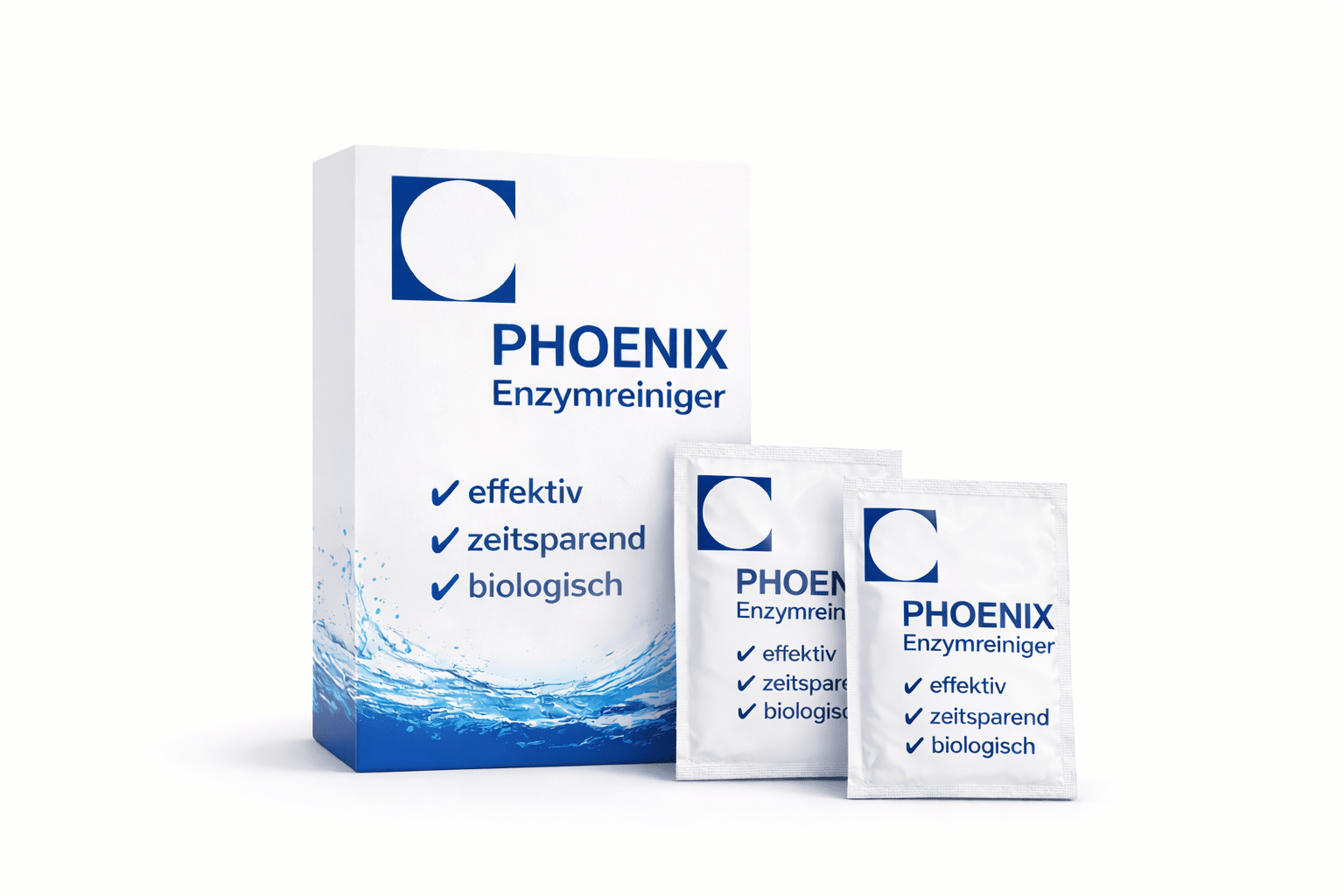
Solo granules
Pure enzyme concentrate — 10 g to 1 kg. You mix it with water and start spraying.
PHOENIX

1L pressure spray bottle
Distribute the solution evenly across the terrace, awning and facade — finely and sparingly.
IN THE BUNDLE

Wet vacuum cleaner set
Vacuums up enzymatically dissolved deposits from garden furniture cushions and large fabric surfaces.
COOPERATION

UV Lamp Bundle
Makes organic residues visible — perfect for checking if all bird droppings are gone from light-colored awnings.
PHOENIX BUNDLE
🌳 Landscaping, property management, or greenkeeping? — Quantity discounts & routine protocol
Do you manage multiple properties, work in garden and landscape design, property management, or greenkeeping? Phoenix Enzymreiniger is suitable for the gentle routine cleaning of large outdoor areas — terraces, paths, facade bases, playground benches, apartment courtyard paving, and entrance areas.
Sign up for the free “Garden Routine Protocol for Landscaping & Property Management”PDF included. Practical instructions with seasonal plan (spring/autumn), quantity calculation per 100 m² and special material tips. Plus: one-time discount code 10% on the corresponding bulk containers.
Request garden routine log as a PDF →
Note: Double opt-in; you can unsubscribe at any time. Practical instructions for routine cleaning of outdoor surfaces.
Where Phoenix Garden helps
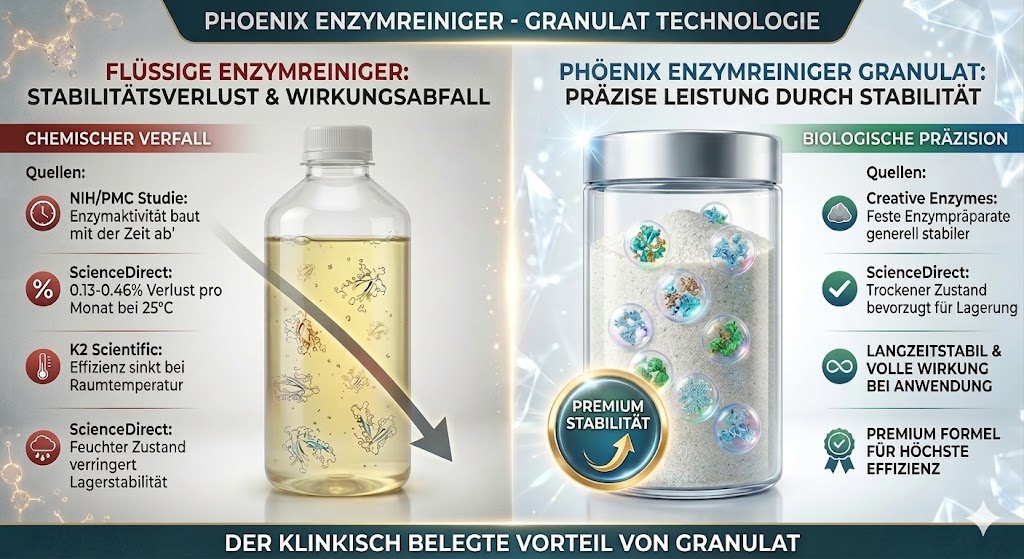
Granules instead of liquid — the crucial difference
Liquid cleaners consist of over 90% water. You pay for the lugging, the storage, and the plastic packaging—and in the end, most of it ends up in the wastewater. Phoenix delivers the powder concentrate: You only add the water at home, in exactly the amount you need.
The result: Highly concentrated granules — one can, many applications. Small package, no water included in the shipment.
Keep out of reach of children and animals. Even if there is no immediate danger, children and animals should not have direct access to the product. Avoid contact with eyes during use. Do not pour into pond water, fish ponds, or plant containers.
Frequently asked questions about the enzyme cleaner for the garden
How long does the enzyme cleaner for the garden need to work?
Depending on the level of soiling, leave for 30 minutes to 4 hours. For stubborn deposits on paving stones or facades, leave overnight. Dry weather is preferable – rain during the application time will wash the solution away.
Is Phoenix Garden safe for plants and the environment?
Phoenix is classified in the lowest water hazard class (low water hazard). Surfactants are at least 90% biodegradable according to OECD Method 301. Do not add to pond water or aquariums – the enzyme activity can affect the water chemistry.
Can I also use Phoenix for solar panels and balcony power plants?
Yes. Phoenix dries streak-free on solar glass and removes pollen, bird droppings, and dirt without harsh cleaners or scrubbing. Important: Modules should be cool (not in direct midday sun) to prevent the enzymes from drying out too quickly.
What is the difference between vinegar cleaner and bleach?
Vinegar (acidic) and bleach (oxidizing) have a chemical effect and can damage joints, awning fabric, and wood. Furthermore, using vinegar on paved surfaces is prohibited under Section 12 of the Plant Protection Act. Phoenix works enzymatically and is gentle on materials, avoiding these risks.
When is the best time to clean the garden?
Dry, mild weather between 10 and 25 °C, no rain during the application period. Spring (March-May) and late summer (August-October) are classic times. Avoid direct midday sun to prevent the solution from drying out too quickly.
Are plants damaged by splashing water?
Phoenix, at the recommended application concentration (20 g per 1 liter), is not harmful to plants when used with occasional splashing. For large-scale application, cover sensitive bedding plants with foil beforehand.
Do I need to scrub after applying it?
For light deposits, clear water is sufficient. For stubborn deposits, a soft brush can be used. DO NOT use a high-pressure jet on joints or WPC decking – the deposits are dissolved enzymatically; mechanical pressure is unnecessary.
Is Phoenix Garden suitable for landscaping and property management?
Yes. Larger containers (1 kg, 2 kg, 5 kg) yield 50 to 250 liters of application solution. Practical instructions with a seasonal plan and quantity calculation per 100 m² can be found in the “Garden Routine Protocol” (free PDF, request it above on the page).
More on this topic: Cleaning the garden step by step
In the garden guide you will find the fact check on home remedies, step-by-step instructions for each surface (stone, wood, WPC, awning, solar) and all 8 sub-clusters: terrace, awning, furniture, pond, facade, solar/CHP, landscaping and property management.


Reviews
There are no reviews yet