
Description
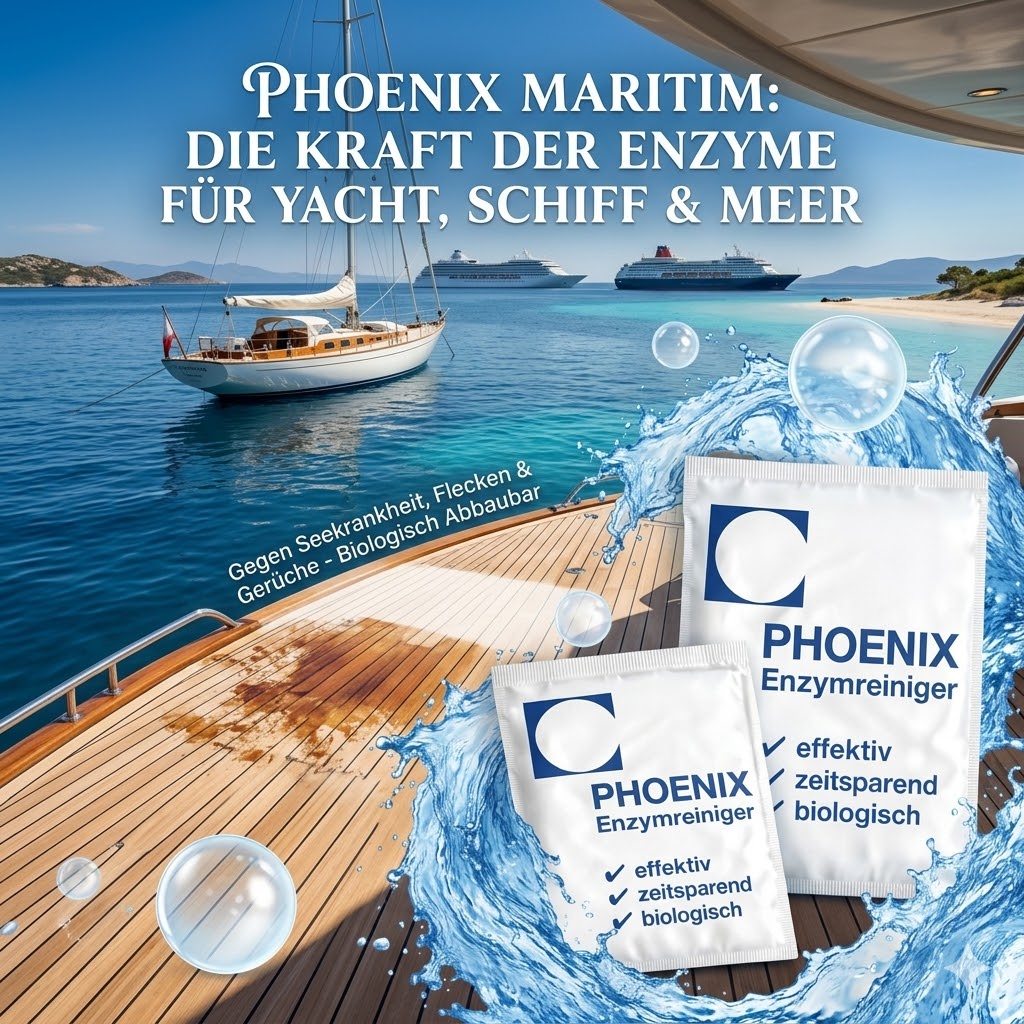
Remove boat odors with Phoenix Boat Cleaner – enzymatic for boats, yachts, and ships. Boat odor removal granules, biocide-free according to EU Regulation 528/2012.
Cleaning the boat — when the cabin mustiness is more stubborn than any storm.
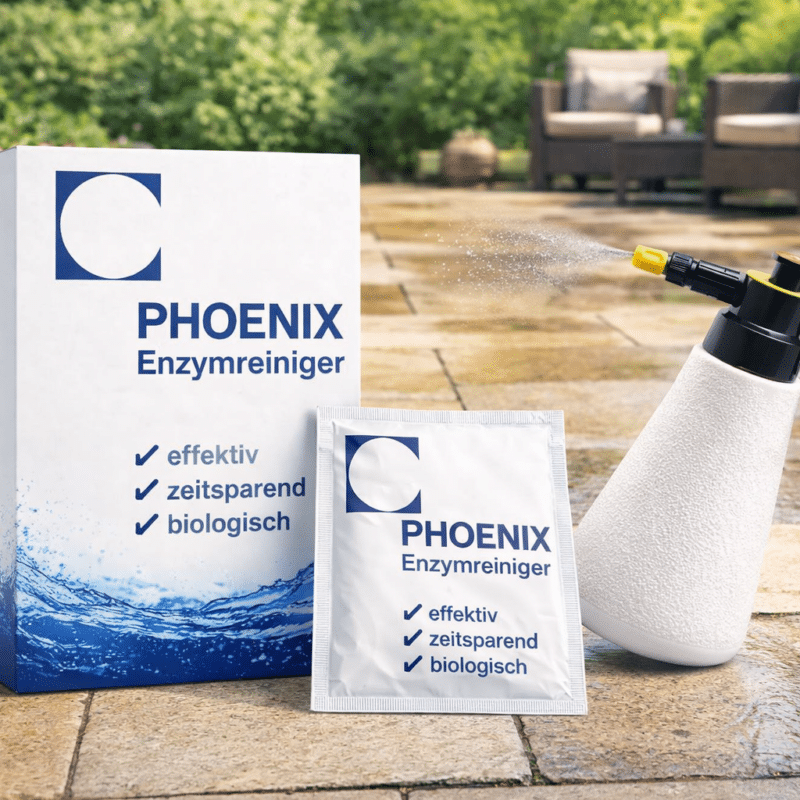
As soon as you open the hatch after winter, you're met with the musty lingering smell of boat maintenance. Removing boat odors permanently only works if the source is eliminated—and that's exactly what Phoenix granules do enzymatically, directly within the material. Just 20 grams to one liter of lukewarm water is all you need for a radical freshening reset.
3,390 verified reviews for Phoenix Enzymreiniger — from getting rid of boat smells to refreshing upholstery, via Trustindex
There are plenty of boat cleaners on the market. What most of them can't do: How to remove boat smells that really don't come back. Not rust. Not antifouling. Not engine problems. But the smell. The typical cabin smell after winter. The fishy smell that has seeped into the upholstery. The bilge mustiness that rises when the hatch is opened. And yes — the smell when a guest has missed the railing. The Phoenix boat cleaner works enzymatically, directly in the material, instead of masking it with chlorine.

Why removing boat smell is so difficult
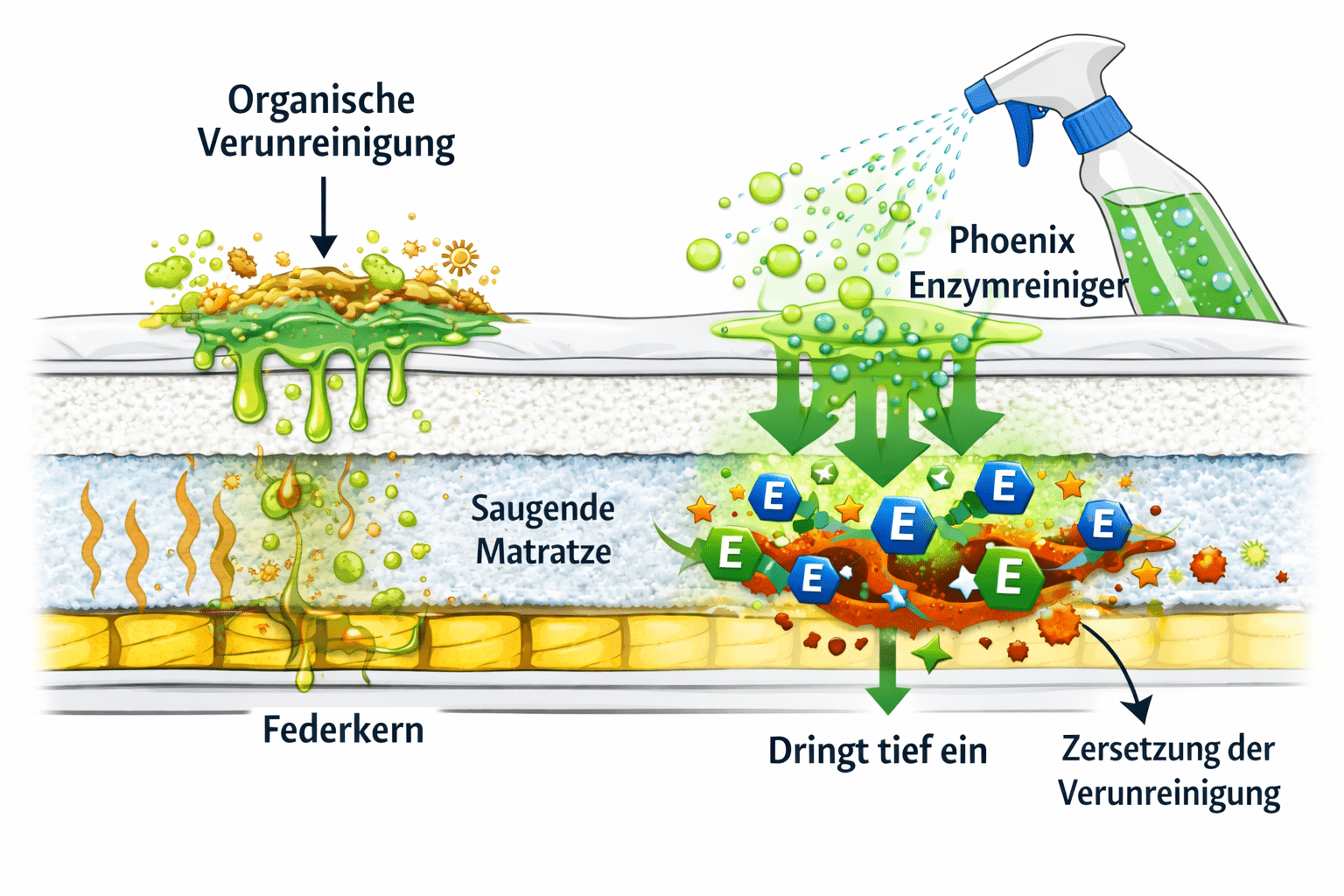
Boats are damp, enclosed environments. Removing boat odors is so difficult because sweat, body oils, food residue, fish blood, saltwater, bilge oil, and vomit are all organic compounds. These substances penetrate deep into upholstery, wood, carpets, and joints. microorganisms They feed on it and produce exactly the typical unpleasant odors.
The real problem: The organic sources are located deep within the material. Everything looks clean on the surface. But as soon as heat, moisture, or friction are present—a closed cabin in the height of summer, for example—the odor reactivates. Stronger than before.
This is how boat odor removal with enzymes works — the Phoenix method
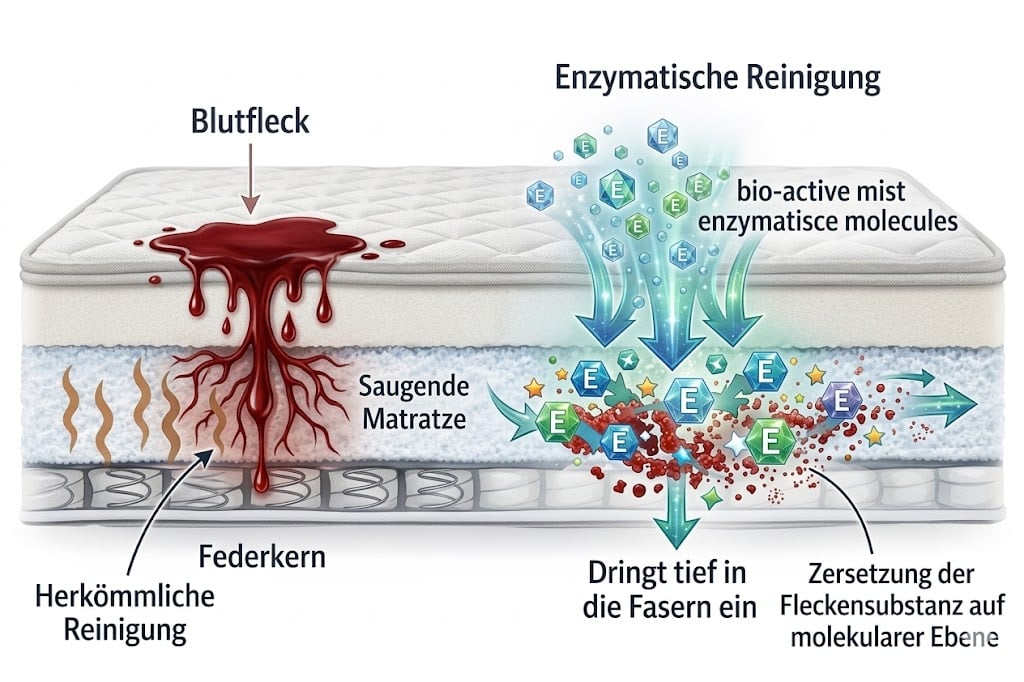
Phoenix uses Enzymes — Katalysatoren, die organische Verbindungen biochemisch zersetzen. Schlüssel-Schloss-Prinzip: Jedes Enzym passt exakt zu seiner Zielstruktur und baut sie auf molekularer Ebene ab. Nicht überdecken. Nicht verdünnen. Tear down.
Removing boat odor — the most common sources on board
Musty cabin air after winter. Moisture and organic residue have been working for months. Enzymes break them down deep within the material—remove the boat smell once, and the hatch opens in spring with fresh air.
If a guest misses the railing: upholstery, carpet, deck. Chlorine bleaches the surface, the smell remains — proteases break down the protein chains deep within the material. This is how boat smells can be eliminated, no matter how warm the cabin gets.
Fish proteins in the padding, on the deck, in the bait box. Proteases biochemically break down fish proteins — no masking with fragrances, genuine elimination at the source.
Der typische “alte Bootsmuff” aus der Bilge: Öl- und Kraftstoffreste, Feuchtigkeit, organische Ablagerungen. Enthaltene Tenside lösen die Ölreste, Proteasen bauen organische Rückstände ab. So kannst du Bootsgerüche beseitigen, die mit Duftspray nie wirklich weggehen.
Polster, Schlafplätze, Sitzbezüge — Schweißgeruch der sich über die Saison aufbaut. Proteasen bauen Schweißrückstände enzymatisch ab, enthaltene Tenside lösen die Körperfette.
Mildew stains on tarpaulins, sails, and wood; musty smell in the cabin—treat enzymatically, leave overnight, then ventilate. No chlorine, no bleach damage to the material, cleanly removes the odor from the boat.

Mode of action on teak and leather upholstery: Phoenix enzymes penetrate porous materials and break down organic residues directly at the source.
How to remove boat smells in 4 steps
Mix 20 g of Phoenix with 1 liter of lukewarm water (max. 40 °C)
Spray the odor source thoroughly — don't just moisten it.
Leave on for at least 30–60 minutes — for deep odors, leave on overnight.
Dab dry, air dry, let dry
Duration of action of the mixed solution: Full power for 48 hours after mixing, followed by a slow degradation of the enzymes. Ready for use for up to 20 days.
🔍 Can you find all the hidden cats? Small game across all Phoenix clusters — number via email, 10% discount on your next Phoenix boat cleaner enzyme cleaner and everything to get rid of boat smells. To the search game →
Suitable accessories for removing boat odors
Removing boat odor — where Phoenix comes into play
GFK-Rumpf · Teak-Deck · Cockpit-Polster · Kunstleder-Polster Yacht · Bilge · Bilgenmuff · Schwarzwassertank-Bereich · Bootsküche · Pantry · Persenning · Sonnensegel · Dacron-Segelstoff · Stockflecken auf Segel · Katamaran-Segel · Acrylglas-Kuppel · Edelstahl-Reling · Aluminium-Mast · PVC-Schlauchboot · Hypalon-Schlauchboot · Salzwasser-Krusten · Schmutzrand Wasserlinie · Fischblut auf Polstern · Köderkasten · Angelboot · Winter-Lagerung · Saisonstart-Erstreinigung · Charter-Übergabe · Hausboot · Yacht
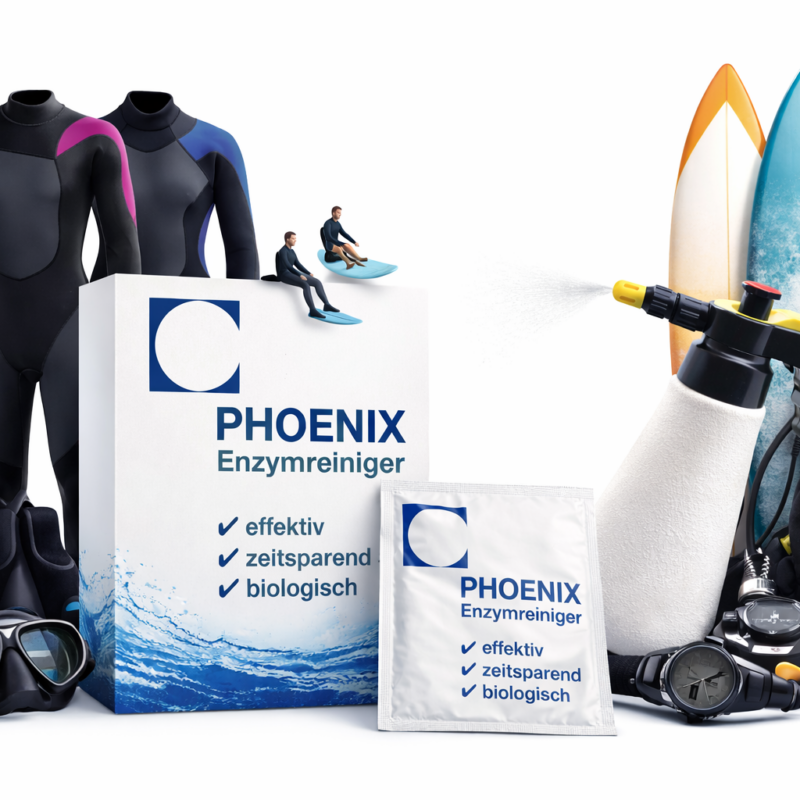
Wet neoprene in the lazarette, a diving suit after a day in saltwater, a surfing suit left on the sun lounger—after a few days, it all stinks like rotten fish. Phoenix works onboard, but for deep cleaning your diving suit or wetsuit itself, use the specialized Phoenix Neoprene Cleaner: To the Phoenix neoprene cleaner →
Granules or ready-to-use cleaner — which is better?

Ready-to-use boat cleaner
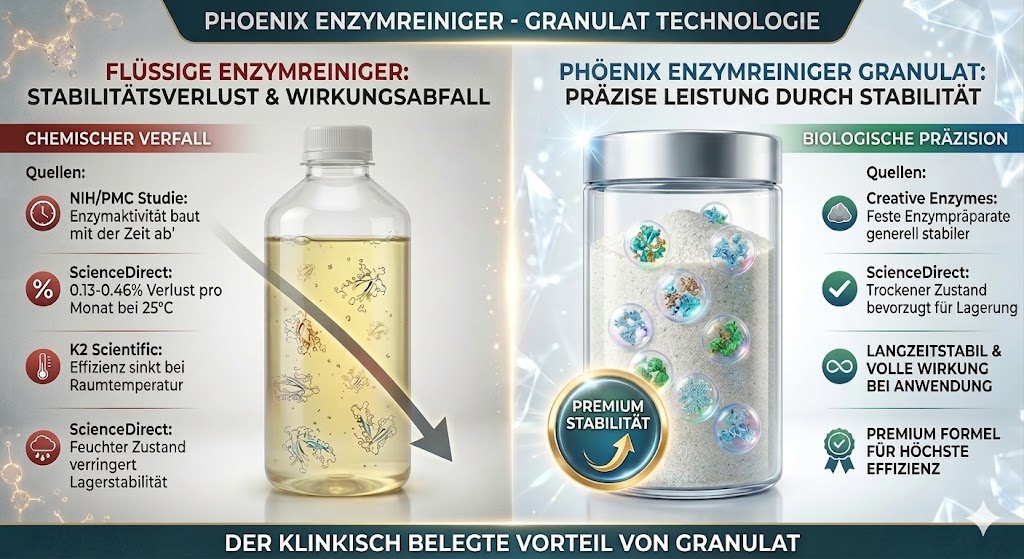
Enzymes degrade in the bottle through hydrolysis. Fragrances mask the odor. Water is shipped with high CO₂.
Phoenix Granules
Freshly mixed — full enzyme power. Compact in a pouch, not classified as hazardous material. Portionable as needed. 1 kg yields up to 75 L of user solution.
⚓ For charter, marina and boatyard
If the previous renter missed the railing and you need to eliminate boat odors before the next crew comes aboard. If the marina basin needs to remain biocide-sensitive. If the shipyard requires large quantities of biocide-free granules for odor removal in boats for season preparation.
Keep out of reach of children and animals. Even if there is no danger, children and animals should not have direct access to the product.
Frequently Asked Questions — Phoenix Boat Cleaner
Why does the boat smell always return after winter?
Because conventional methods only remove boat odors superficially. Organic residues—sweat, body oils, food scraps, moisture—continue to work deep within the material over the winter. Enzymes permanently break down these compounds. Those who treat their boat enzymatically before winter storage will open the hatch in the spring to fresh air.
How do I remove the smell of vomit on a boat?
Remove any solid residue, then generously spray the area with Phoenix. Proteases biochemically break down the protein compounds—deep within the upholstery or carpet, not just on the surface. Leave to work for at least 30–60 minutes, then blot. Do not use hot water, as this denatures the proteins and sets the stain. No chlorine—no bleach damage, no recurring odor.
Does Phoenix also help against bilge mustiness?
Ja. Bilgenöl, Kraftstoffreste und organische Ablagerungen — enthaltene Tenside lösen die Öle, Proteasen bauen organische Rückstände ab. Lösung in die Bilge geben, 1–4 Stunden einwirken lassen, abpumpen. Niedrigste Wassergefährdungsklasse (geringe Wassergefährdung) — kein Eintragsproblem für das umgebende Gewässer bei ordnungsgemäßem Hafenbetrieb.
Does the Phoenix boat cleaner attack antifouling?
Nicht bei kurzer Einwirkzeit. Die Enzyme zerlegen organische Substrate auf der Antifouling-Oberfläche (Salzkrusten, Schmutzrand), die Antifouling-Schicht selbst bleibt intakt. Nicht stundenlang einwirken lassen, mit klarem Wasser gründlich nachspülen.
On which materials can I use Phoenix to remove boat odors?
Suitable for all water-resistant materials: GRP, teak, stainless steel, aluminum, PVC, Hypalon, acrylic glass, synthetic leather upholstery, carbon carpet, tarpaulins, Dacron sailcloth. Test on an inconspicuous area first on genuine leather. Wipe high-gloss surfaces with clean water after treatment.
How much do I need for a 10-meter yacht?
Rule of thumb: 100g of granules for a complete interior and teak deck cleaning of a 10-meter yacht. Add an extra 40-60g for the bilge, depending on its volume. A 250g pack is sufficient for 2-3 complete season cleanings.
📘 Removing boat smells — the complete guide
Guide with all sources of odor, material overview and comparison of home remedies
Further information:
microorganisms ·
Enzymes ·
hydrolysis


Reviews
There are no reviews yet