Description
Description
Neopren Geruch entfernen — Enzymreiniger für Wetsuit, Boots & Zubehör
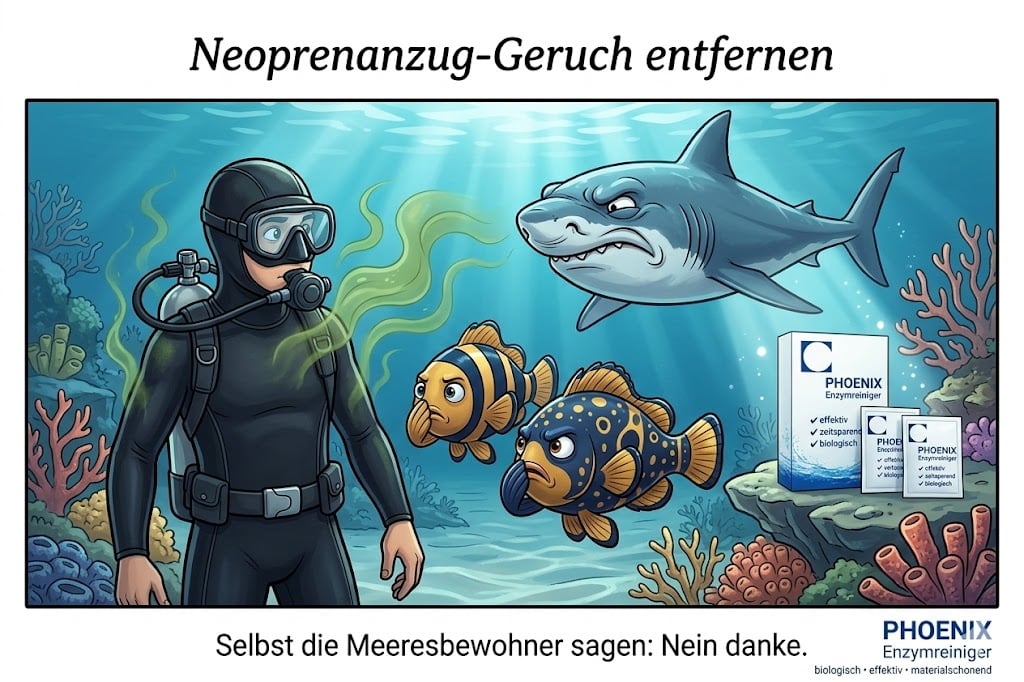
Dein Wetsuit stinkt nach Urin, Schweiß oder Salzwasser? Phoenix spaltet die Geruchsquellen enzymatisch direkt in den Neopren-Poren — materialschonend bei 30°C, ohne Chlor und ohne aggressive Tenside.
You dive, you surf, you paddle — and your wetsuit stinks like a garbage can after three sessions. That's not your fault. Removing neoprene odor It's a matter of materials: uric acid, sweat proteins, and butyric acid precursors become trapped deep within the closed-pore cells and survive any freshwater rinse. Phoenix does it differently—no fragrance masking, but enzymatic breakdown directly in the pores.
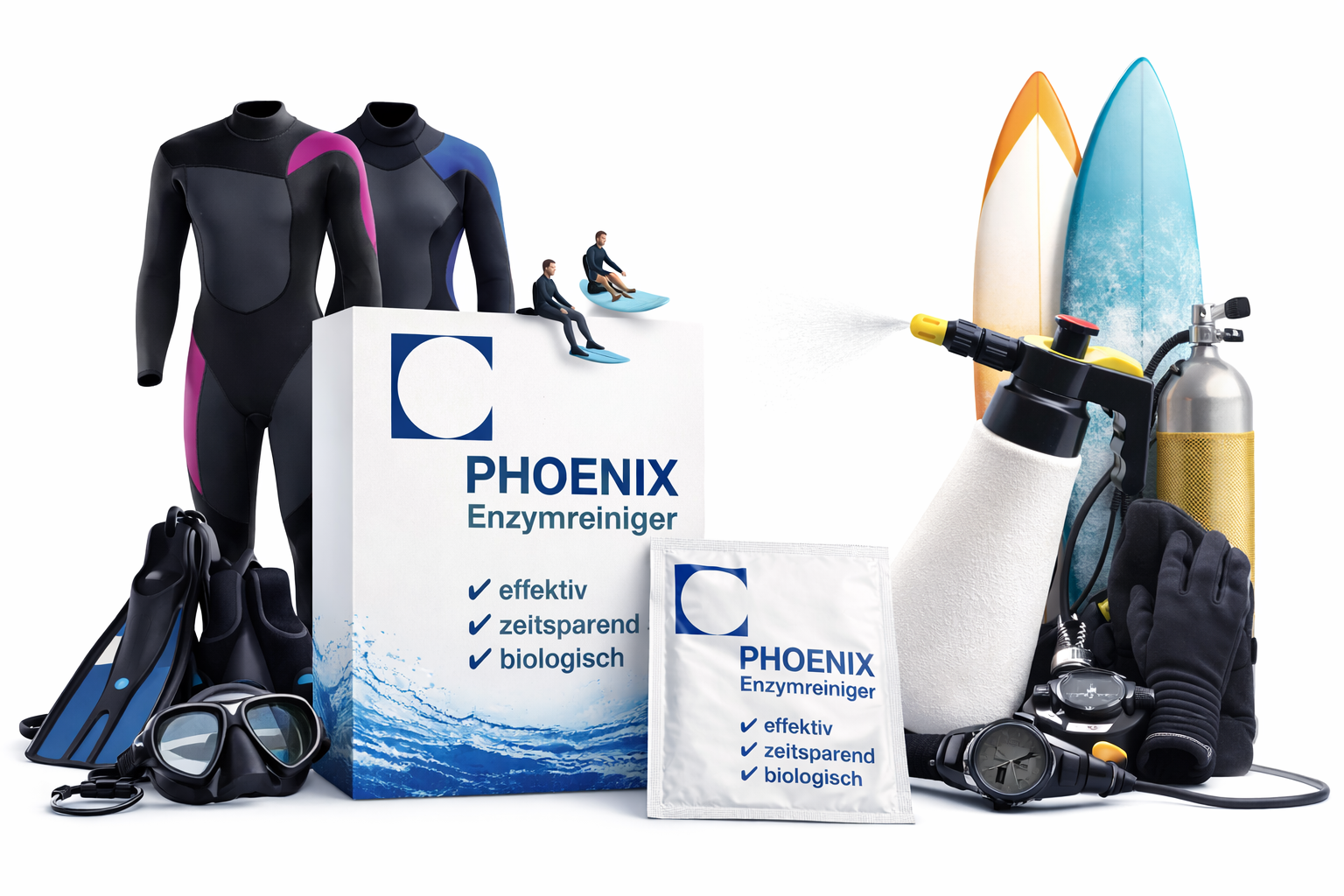
Phoenix is coming as Granules for fresh mixing before each immersion bath. 20 g to 1 liter of lukewarm water (max. 30°C), put the suit in, wait 15–30 minutes, rinse, dry in the shade. Removing neoprene odor Without seam adhesives, smooth skin, or bonding: that's Phoenix. Whether diving suit, surfing suit, triathlon wetsuit, neoprene boots, gloves, or hoods — one formula, all water sports disciplines.
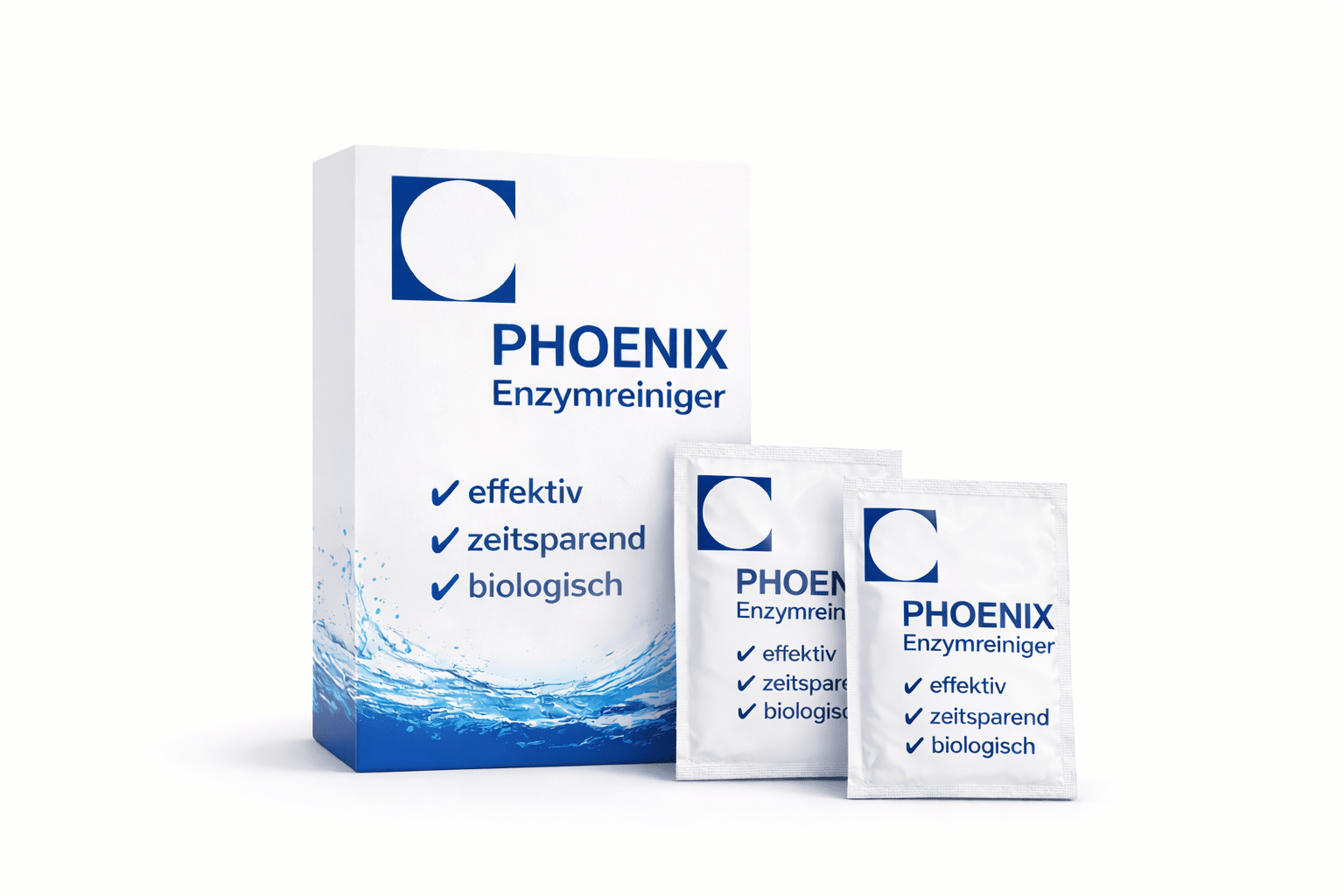
Original packaging with Phoenix-DPMA protection

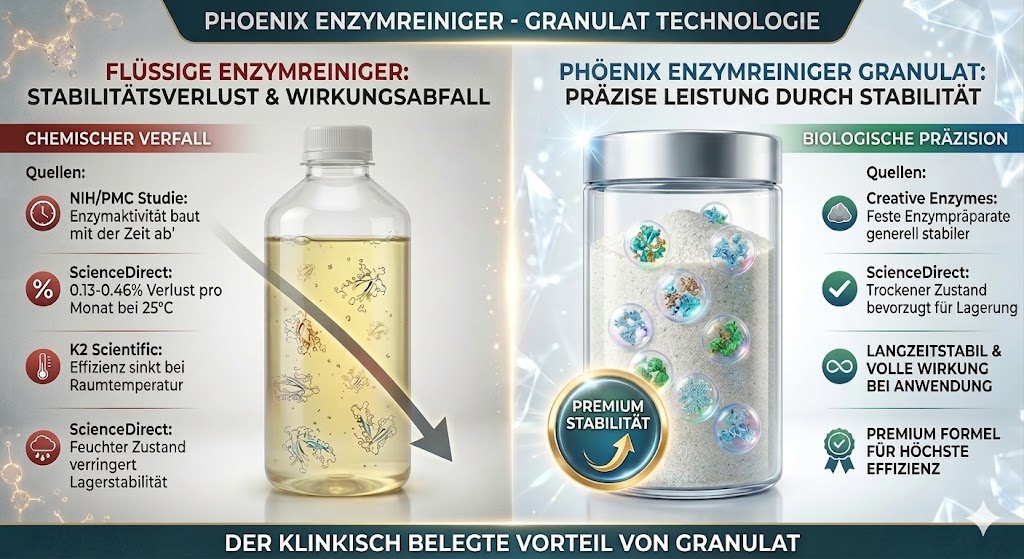
Granules vs. liquid — the difference
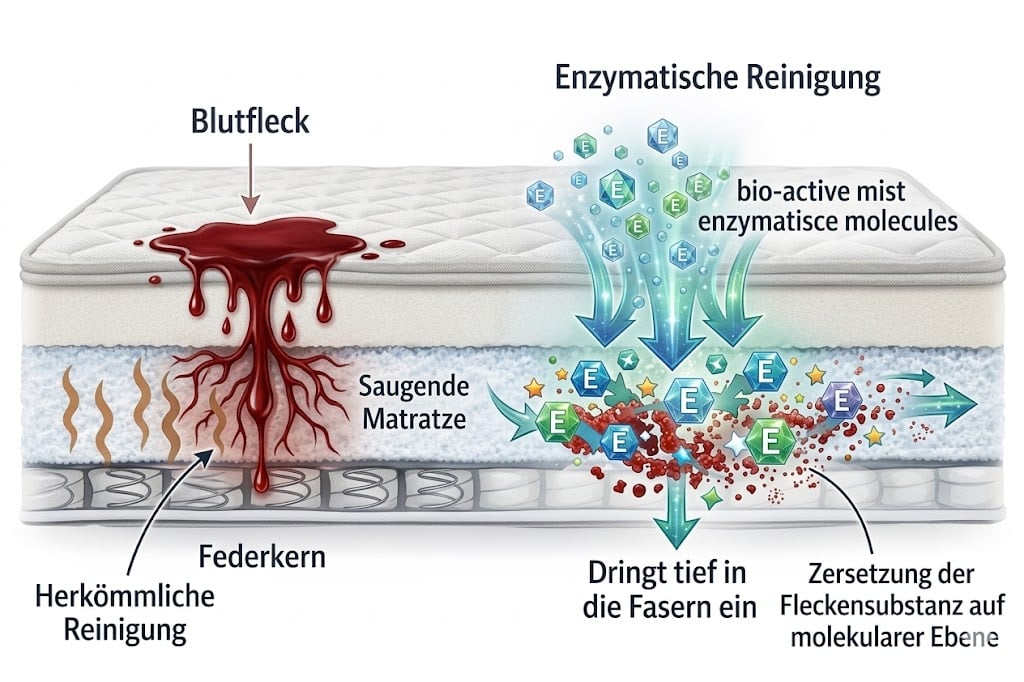
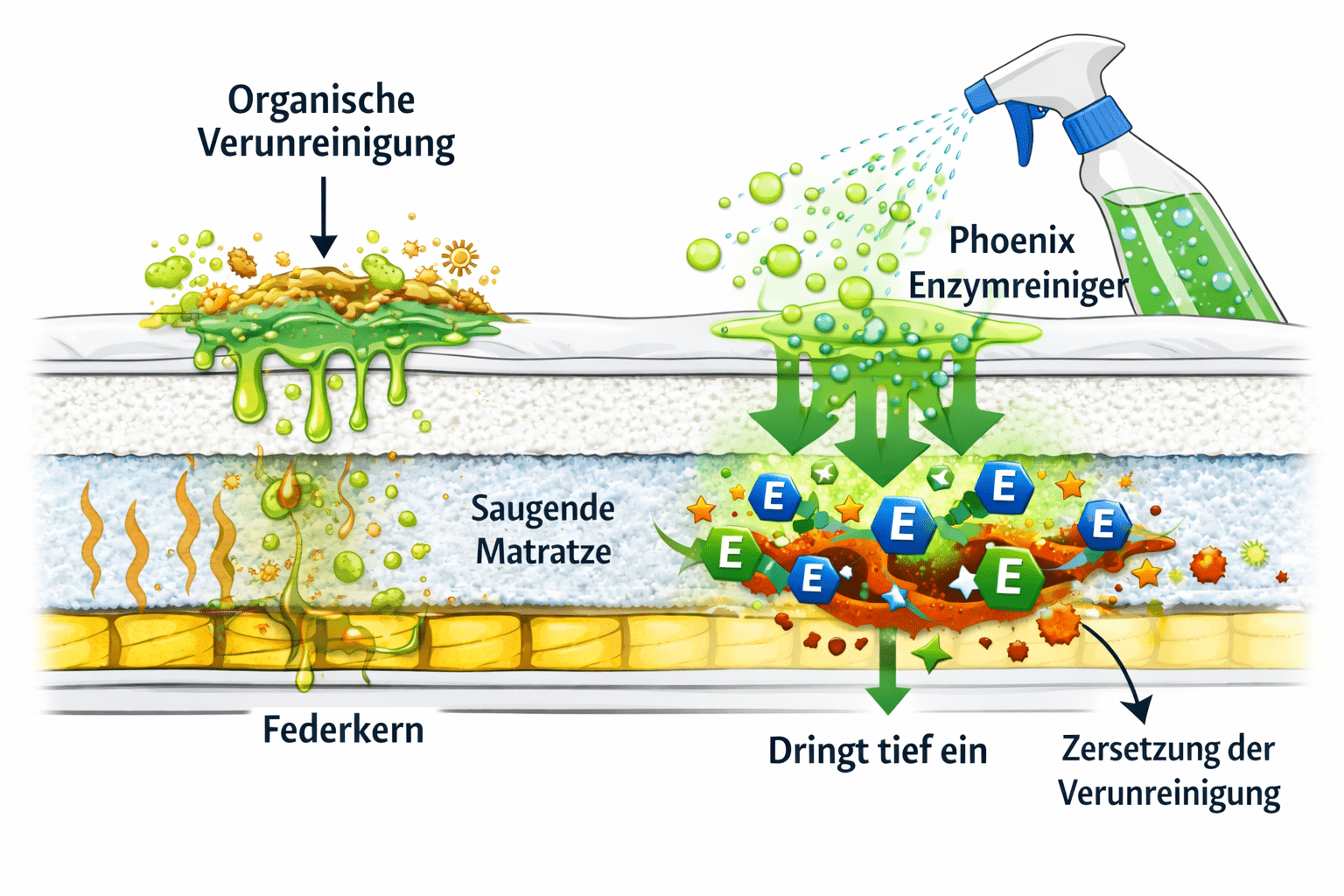
Enzymatic function in the material
Why Phoenix against neoprene odor?
Why neoprene smell is so persistent
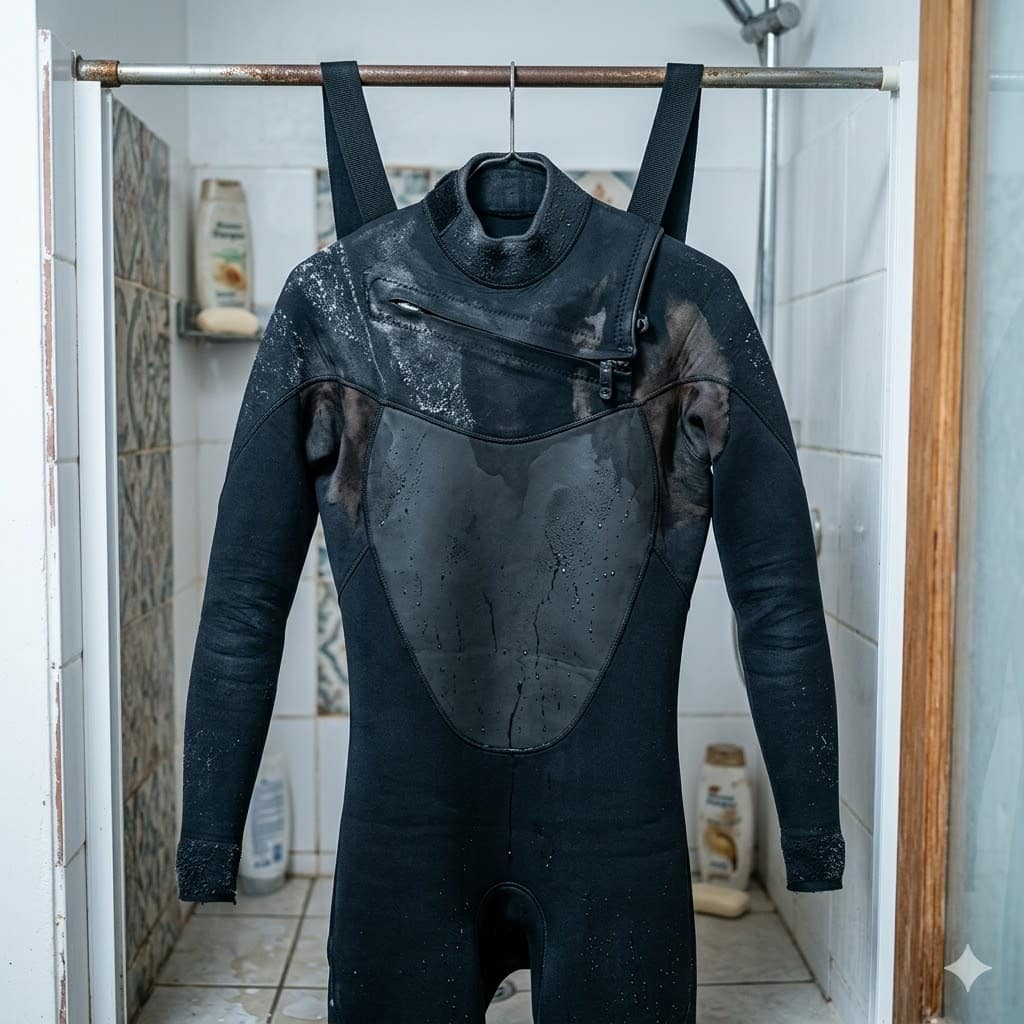
Neoprene is a Chloroprene rubber foam with a closed-pore cell structure. The very property that makes it insulating becomes a problem when it dries: uric acid (typical in the crotch area of a wetsuit), sweat proteins, skin oils, and saltwater minerals migrate into the micropores and crystallize there. During the next dive or surf session, the crystals become moist again—and the odor release starts all over.
In addition, Butyric acid As a typical neoprene marker: organic deposits produce the very short-chain fatty acid that smells like a "rancid wetsuit" when they decompose. Classic surfactants from detergents or dish soaps rinse the surface but don't penetrate the foam cells. This is where Phoenix comes in.
How to remove neoprene odor from Phoenix Enzymreiniger
Phoenix operates in three stages: Protease breaks down proteins from sweat and skin residue, Amylase dissolves carbohydrate compounds from organic biofilm, the contained surfactants They dissolve skin oils and butyric acid precursors. The enzymes work in the dissolved phase — they migrate with the water into the closed-pore neoprene structure and attack organic residues where they are located.
The Phoenix solution (pH 8.5–9.0, slightly alkaline) leaves neoprene foam, seam adhesive, and smooth skin coating unaffected. Hot water is strictly prohibited—it destroys the bonds. Therefore, Phoenix operates at a lukewarm 30°C and compensates for the slower enzyme activity with a longer contact time (15–30 minutes instead of 5–10 as with upholstery or carpet).
How to remove neoprene odor in 4 steps
⏱ Duration of effect of the solution
Full potency for 48 hours after mixing, followed by a slow degradation of the enzymes. Ready for use for up to 20 days. Store any remaining product in a closed bottle or pressure sprayer in a cool place.
✨
✨

Can you find all the hidden cats? — Get a 10% discount
Join in the living room hidden picture game — whoever finds all the cats immediately receives a personal discount code.
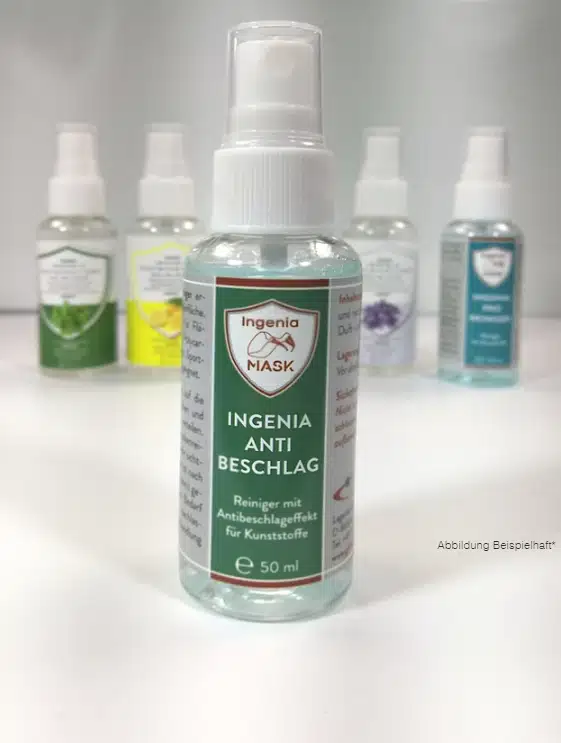
Suitable accessories for maximum depth effect
Phoenix in your watersport discipline
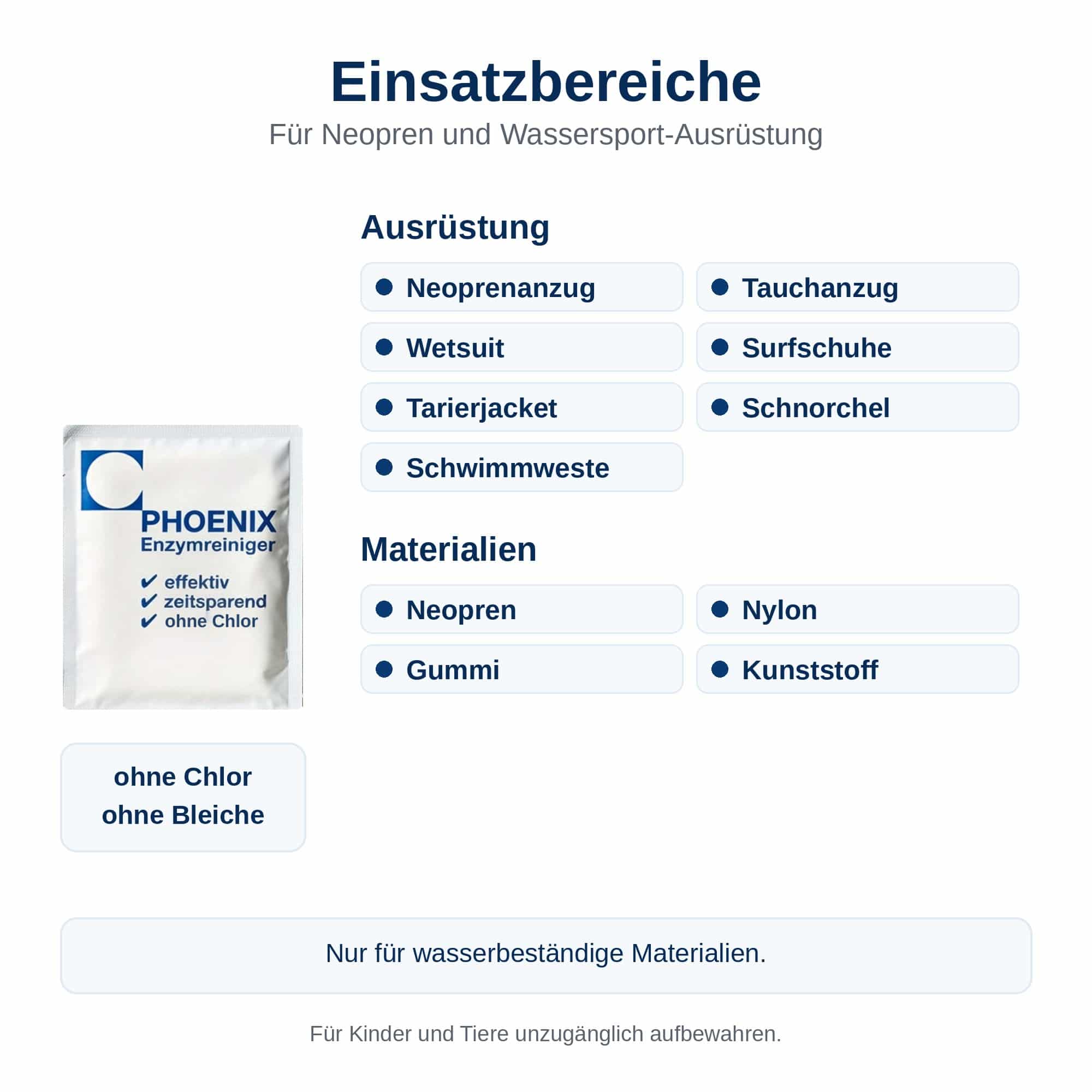
Dive
surfing
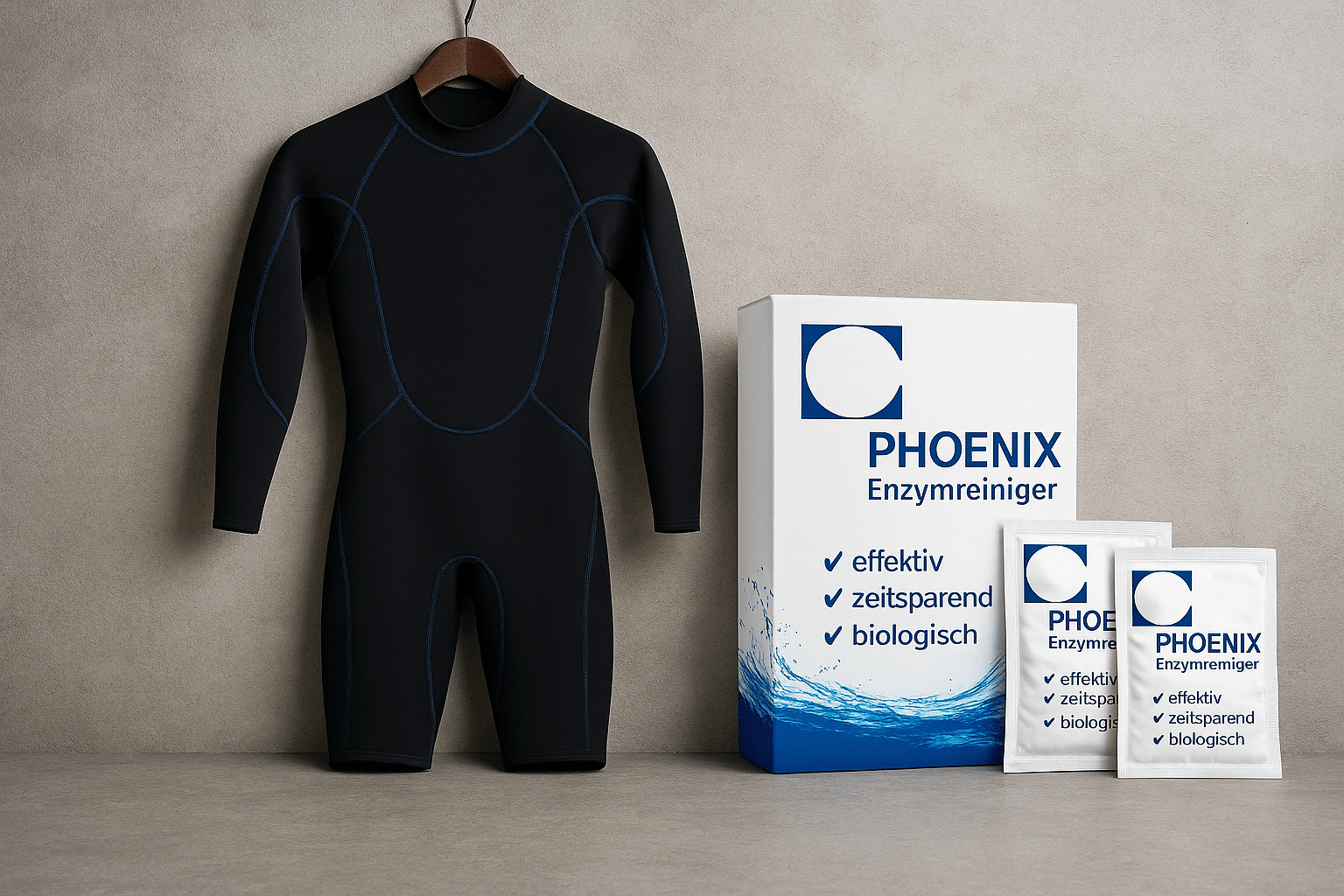
Triathlon
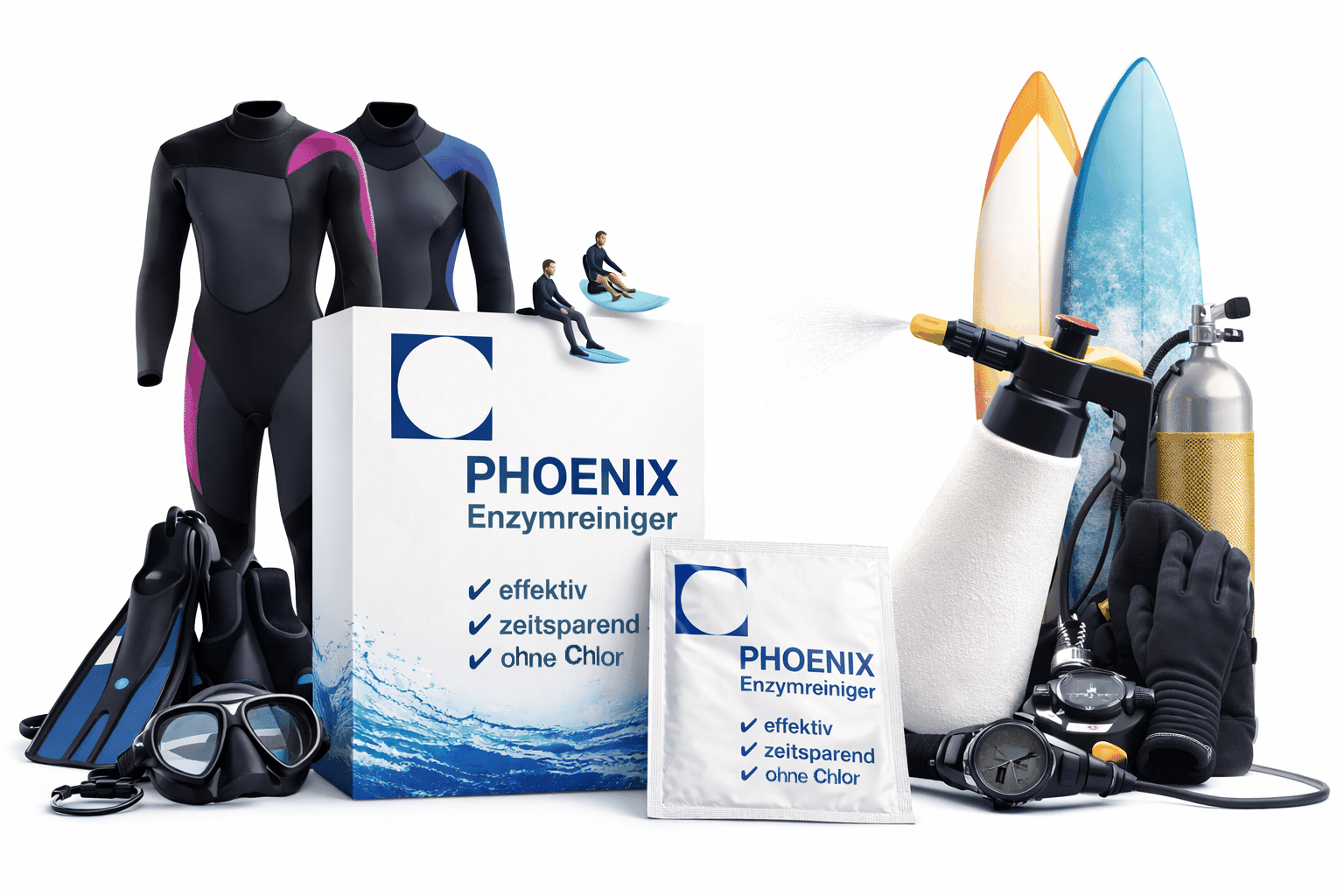
Accesories
B2B professionals
Where Phoenix helps against neoprene odor
One granulate — for all water sports disciplines. Phoenix is effective wherever organic substances have penetrated deep into the closed-cell neoprene foam.
Plus B2B for diving schools, surf schools, DLRG and water rescue services — group immersion baths in 50–100 liter tubs directly after the rental day.
Granules instead of liquid — why Phoenix is different for wetsuits
Premixed wetsuit cleaners sit on the shelf for months — the enzymes break down before you even open the bottle. Phoenix remains as stable granules, until you need it. You mix it fresh before soaking; the enzymes then immediately unleash their full activity directly on the neoprene foam.
After every diving, surfing, or competition session: 100–200 g for a full wetsuit douche, 40–60 g for boots and gloves, 20 g for a spray bottle at local sites. No throwing away half-full plastic bottles, no shipping water ballast.
Diving school, surf school, DLRG (German Life Saving Association): Collective cleaning after rentals
In rental operations, wetsuits change users daily. Phoenix enables professional group immersion baths directly after each rental day—50–100 liters of lukewarm solution in the cleaning tank, 20 g of granules per liter, all suits soaked together for 20–30 minutes. This reliably removes wetsuit urine, sweat, and saltwater residue from previous users, protecting the expensive fleet from premature material fatigue. Bulk container inquiries can be submitted directly via the contact form.
⚠️ Safety Notice
Keep out of reach of children and animals. Even if there is no danger, children and animals should not have direct access to the product.
Frequently asked questions about removing neoprene odor
Can I wash my wetsuit in the washing machine?
No. Drumming and spin cycles destroy seam adhesive, smooth-skin coatings, and blind-stitch seams. A 15–30 minute immersion bath in the tub with 20 g of Phoenix granules per liter is always the safest choice.
What water temperature is ideal for cleaning neoprene?
Maximum 30°C — lukewarm. Hot water destroys the closed-cell neoprene foam and loosens the special adhesives at the seams. Phoenix works reliably at 30°C, but requires 15–30 minutes of contact time instead of 5–10 minutes as with hard surfaces.
How do I dose the granules for my wetsuit?
Phoenix standard is 20 g per 1 liter of water. For a complete suit immersion bath in a tub: 5–10 liters of water, i.e., 100–200 g of granules. For accessories in a bucket: 2–3 liters of water, 40–60 g of granules. For localized treatment with a pressure sprayer: 1 liter of water, 20 g of granules.
Will vinegar, dish soap, or hygiene spray help with wetsuit odor?
Vinegar attacks the smooth skin coating and seam adhesive. Dish soap leaves surfactant residues that act as friction enhancers, making the neoprene more brittle during the next dive. Hygiene sprays only mask the odor. Phoenix directly breaks down the organic odor sources, especially sweat proteins. The surfactants dissolve skin oils.
Why do my neoprene boots always smell the strongest?
Neoprene shoes trap foot sweat and stagnant water due to minimal air circulation. Organic deposits rapidly produce butyric acid and similar short-chain fatty acids there—the typical, pungent boot smell. Solution: Soak the boots in 2–3 liters of lukewarm Phoenix solution in a bucket for 20 minutes, rinse thoroughly, and dry in the shade.
Is Phoenix safe for seams, adhesives, and smooth skin?
Yes. Phoenix works as an enzymatic solution in a slightly alkaline environment (pH 8.5–9.0) and attacks exclusively organic contaminants. Neoprene foam, seam adhesive, blind stitching, and smooth skin coatings are inorganic or cross-linked—the enzymes cannot penetrate them.
How do diving schools or surf schools clean their rental equipment?
Professional stations use large collection tanks containing 50–100 liters of Phoenix solution (20 g/L). After each rental day, all suits are soaked together for 20–30 minutes. This reliably removes traces of previous users (sweat, salt water, wetsuit urine) and extends the lifespan of the expensive equipment.
Do you want the complete instructions with pictures?
In the Phoenix magazine you will find the comprehensive guide for diving, surfing, triathlon, kitesurfing and more — including storage, drying and B2B hygiene.
Reviews
There are no reviews yet