Description
Machine cleaner enzyme cleaner for washing, dishwashing and kitchen appliances
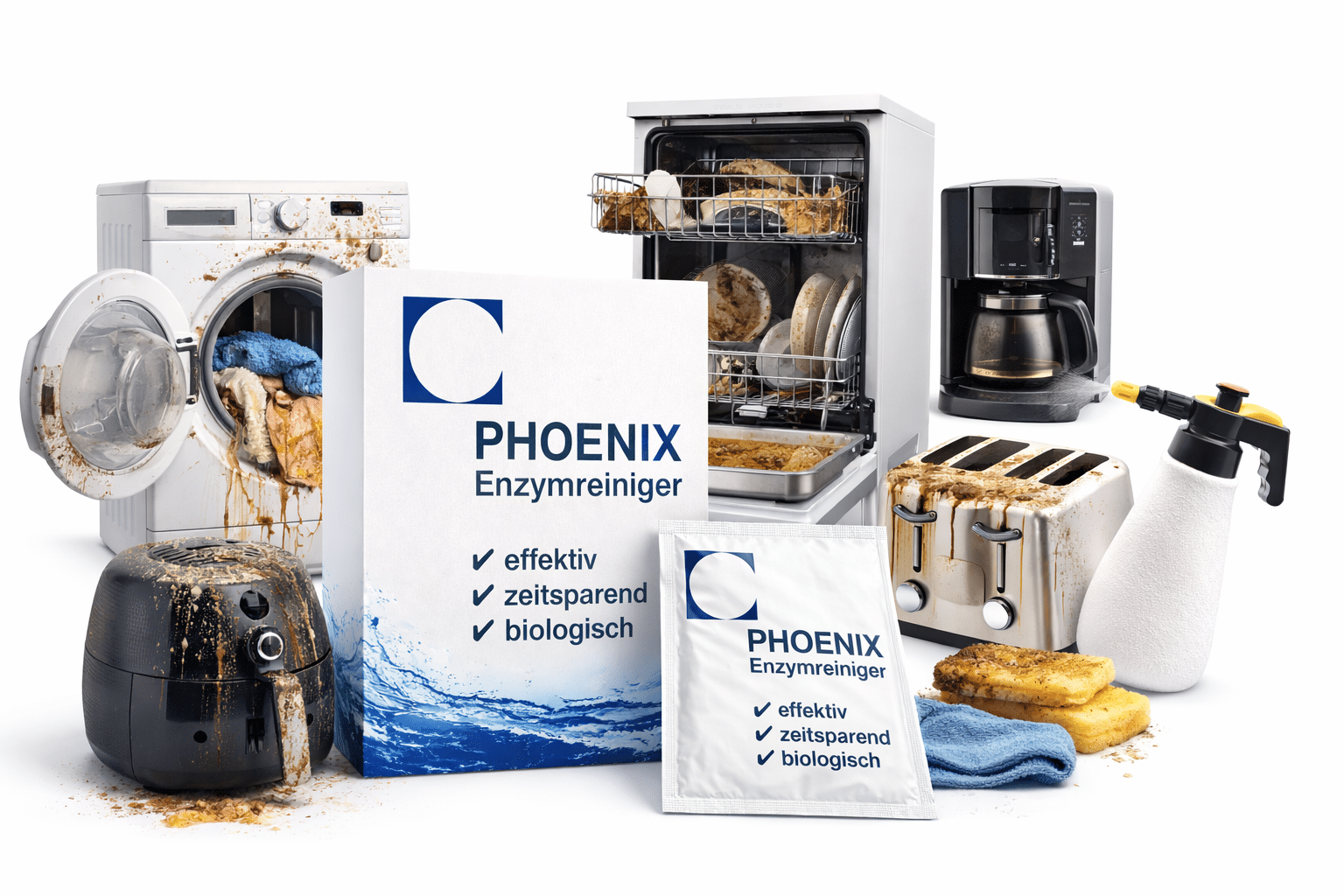
Phoenix Enzymreiniger dissolves biofilm, grease, and protein in washing machines, dishwashers, fully automatic coffee machines, refrigerators, extractor hoods, air fryers, air conditioners, and commercial dishwashers. It removes the source of the odor, rather than masking it.

Does your washing machine smell musty, or is there a greasy film left in your dishwasher? An enzyme-based machine cleaner targets the source of the odor: biofilm, grease, and protein residue. Phoenix Enzymreiniger is the enzyme-based machine cleaner for washing machines, dishwashers, fully automatic coffee machines, refrigerators, extractor hoods, air fryers, and air conditioners. Protease and amylase break down proteins and starches, while the surfactants dissolve the grease. This is how it works. Machine cleaner Enzyme cleaner Gentle on materials and free from aggressive acids and alkalis.
Phoenix machine cleaner enzyme cleaner at a glance
Why do machines still smell despite cleaning?
Musty smells from machines have organic causes: bacterial Biofilm in rubber folds, hardened grease films from skin oils and detergent residues, Egg white crusts in spray arm nozzles, milk mucus in brewing groups and Mold growth in damp water tanks. These layers hold each other together: protein and starch form the framework, fat makes the surface water-repellent.
Conventional cleaners only work superficially. Vinegar attacks seals, baking soda only works through friction, fragrances mask the odor, and after a few days the musty smell returns. Important: Phoenix is not a limescale remover. Mineral limescale still requires a descaler.
How does Phoenix Enzymreiniger work in the machine?
Phoenix Enzymreiniger is a granular concentrate containing the Enzymes Protease and amylase, as well as non-ionic surfactants. The enzymes work by hydrolysisProteases break down proteins into amino acids, and amylases break down starch into sugars. This causes the biofilm structure to disintegrate. Surfactants dissolve the exposed grease and carry it away with the rinse water. The result: The organic source of the odor is removed, not masked.
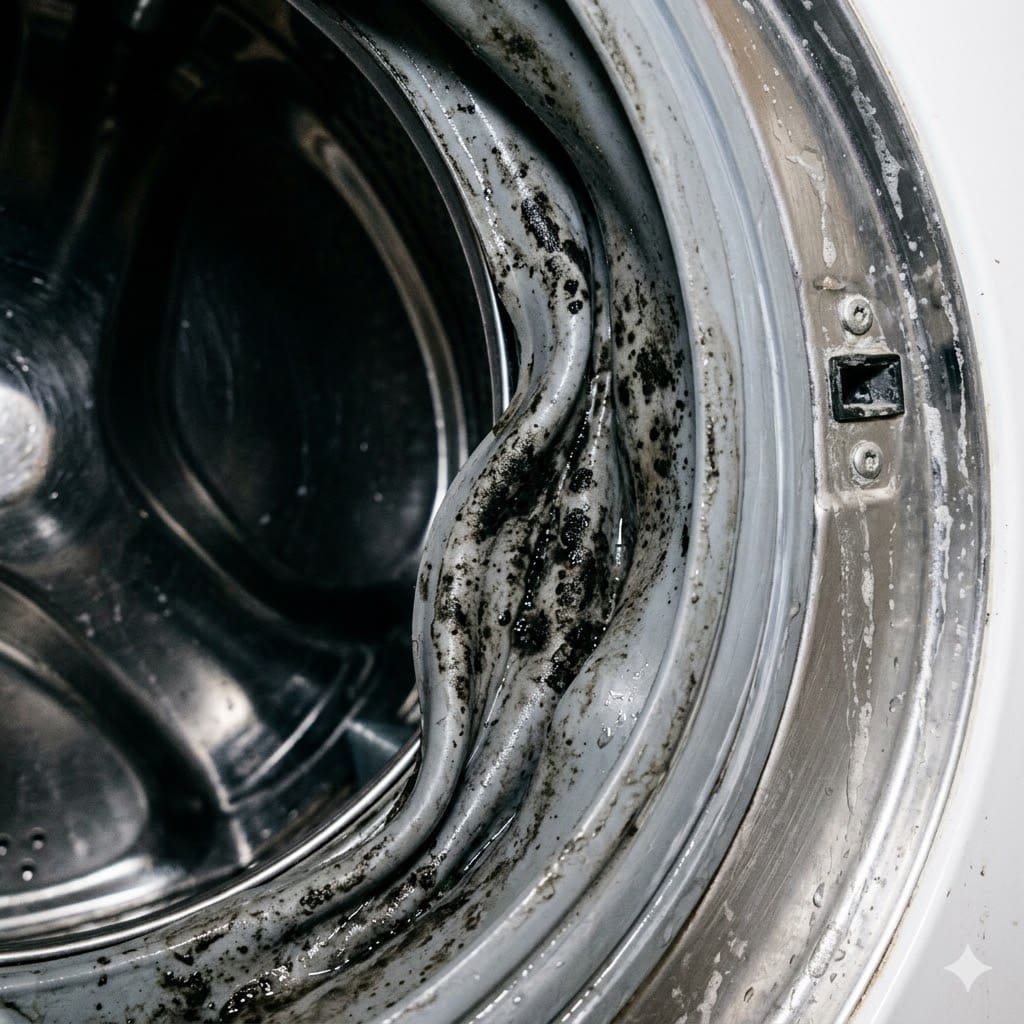
A typical problem: biofilm in the door seal. The protease dissolves the protein-based adhesive matrix, and the surfactants remove the grease.
Using machine cleaner enzyme cleaners: step by step
- Activate: Dissolve 20 g of granules completely in approximately 250 ml of hot water. This activates the enzymes and prevents lumps from forming.
- Refill: Fill with water up to 1 liter. For grease in filters, spray arms or extractor hoods, fill with hot water; otherwise, fill with warm or cold water.
- Pre-cleaning: Remove crumbs, food scraps and lint; remove filters and sieves if possible.
- Apply or insert: Spray the solution into the interior or submerge components such as filters, spray arms, hoses and brewing unit.
- Effects: 5 to 30 minutes for light deposits, 4 to 8 hours for hardened grease filters.
- Rinse and re-lubricate: Rinse with clean water or vacuum. Afterwards, re-lubricate moving parts (see Expert Hacks).
You can find the complete mixing instructions with all variations in the Product Guide.
For gummed-up grease filters, spray arms and extractor grilles, the hot solution is worthwhile: heat dissolves grease much better, the surfactants reach the dirt faster, and the enzymes get to the exposed protein.
⚠️ Important when using a pressure sprayer: Pay attention to the temperature rating of your pressure sprayer. Many standard models are only approved for use up to approximately 30°C, while professional pressure sprayers can handle up to 50°C. Solutions that are too hot can damage seals, nozzles, and the container. If in doubt, allow the solution to cool briefly or apply it with a sponge and cloth.
For which devices is the enzyme cleaner for machines suitable?
The Phoenix machine cleaner enzyme cleaner works wherever organic dirt accumulates in damp, warm areas, both in the home and in commercial settings.
Washing machine, dryer, iron water tank, steam cleaner, vacuum cleaner, robot vacuum cleaner
Dishwasher, refrigerator, freezer, extractor hood, exhaust pipe
Fully automatic coffee machine, microwave, air fryer, blender, toaster, rice cooker, water dispenser, drinking bottles, baby bottles
Air conditioner, humidifier, dehumidifier, ventilation shaft, garbage can, organic waste bin, diaper pail
Commercial dishwashers, industrial washing machines, ironing systems, hotel and nursing home laundry
Bakery kneading machines, cheese dairy tanks, brewery fittings, conveyor belts, suitable for the food industry according to Dr. Mang's expert opinion.
For burnt-on oven grime, use the Oven cleaner, for animal urine the Cat urine remover.
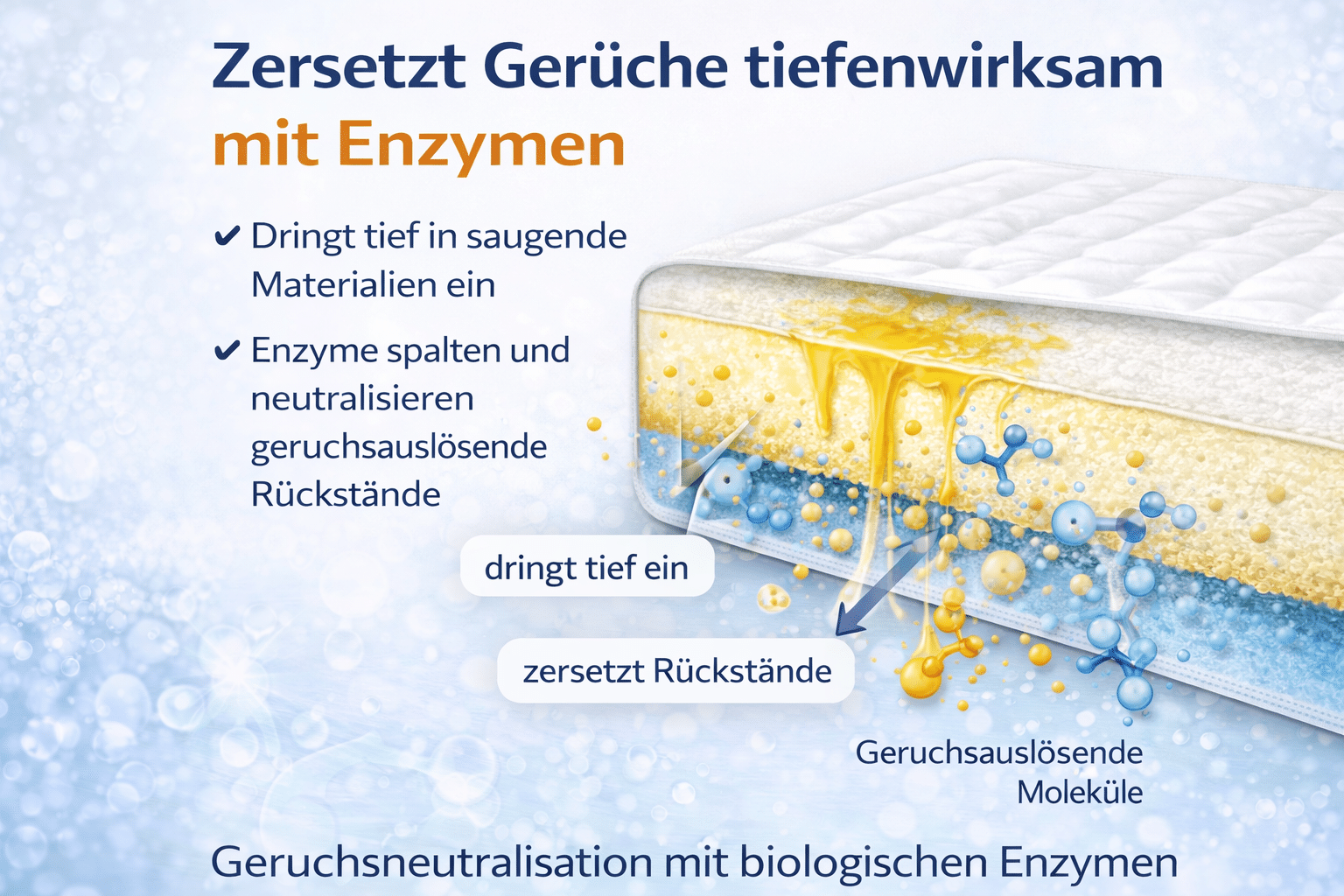
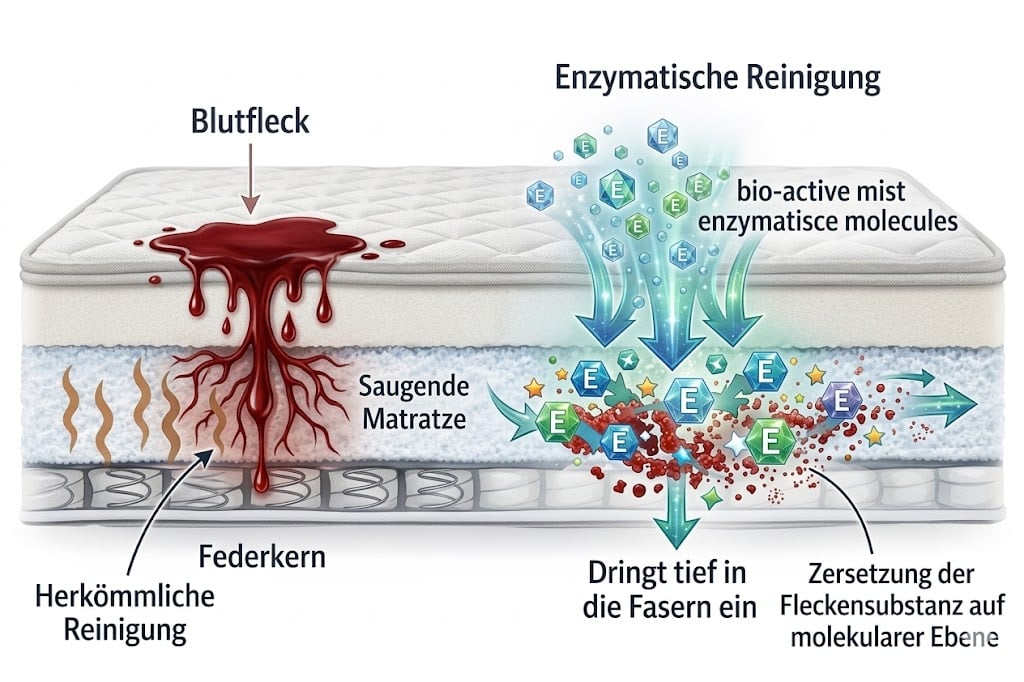
Mechanism of action: Protease and amylase break down protein and starch, while the surfactants dissolve the fat directly at the source.
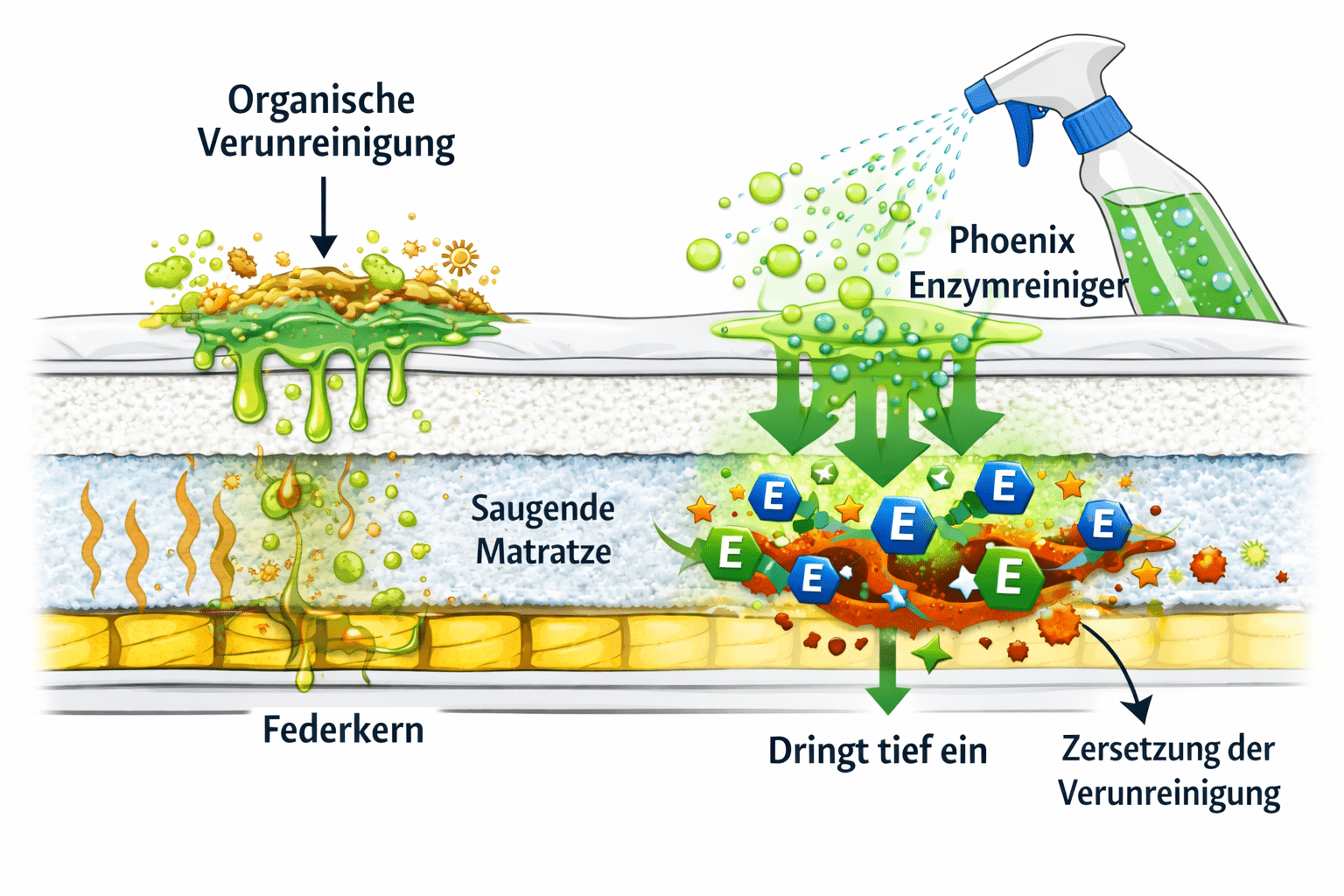
Contaminants are embedded in multiple layers. The solution penetrates and breaks down the contaminants where they are located.
Enzyme cleaner or classic machine cleaner?
| aspect | Phoenix Enzymreiniger | Classic cleaner |
|---|---|---|
| Operating principle | Enzymes break down protein and starch in the biofilm, surfactants dissolve the fat. | Only surfactant solution on the surface |
| Odor treatment | Removes the organic cause | Covered with fragrance |
| Material protection | pH 8.5–9.0, gentle on rubber and stainless steel | Often pH 11+ or acidic, it attacks seals. |
| Environmental profile | Surfactants at least 90% biodegradable (%), WGK 1 | variable |
| reach | 20 g of granules make 1 liter of solution. | Ready-to-use liquid with a high water content |
| storage | Granules remain stable for several years when dry | liquid, usually 6–12 months |
Expert hacks for enzyme cleaners on machines
💡 Tub method for hardened grease filters and spray arms
Completely immerse the extractor hood grease grid, dishwasher spray arms, mixer blades, milk hoses, and brewing unit components in a shallow tray filled with hot Phoenix solution. If there is a hardened layer of old grease, leave to soak for 4 to 8 hours, then rinse thoroughly.
💡 Air conditioner condensate tray without disassembly
Spray the solution over the fins and into the condensate tray behind the evaporator using a pressure sprayer. The solution penetrates the tough bacterial slime and breaks down the organic components. After 30 minutes, run the unit in heating mode for 10 minutes; the condensate will flush away the residue through the drain.
⚙️ Relubrication: Mandatory for moving parts
The surfactants in Phoenix dissolve grease, whether it's dirty grease or functional grease. When cleaning drum bearings, spray arm axles, brew group joints, mixer drive shafts, or fan wheel bearings, re-lubricate with silicone spray, petroleum jelly, or machine grease according to the manufacturer's instructions. For food contact: use food-grade grease.
Phoenix Enzymreiniger cleans organic soilsBiofilm, fat, protein, and starch. What he cannot:
- Remove limescale and rust: Mineral deposits require a descaler.
- Remove discoloration from the material: Black mold stains that have eaten into the rubber of the door seal constitute material damage. Phoenix removes the coating, but the discoloration in the rubber remains.
- Fix technical defects: If the smell is due to a clogged pump, a wrongly laid drain hose, or a siphon problem, only repair will help.
What we promise: Phoenix removes organic contamination enzymatically, gently, without abrasion and without corrosive acids or alkalis. What remains visible afterwards is the material in its current state.
Other possible uses for Phoenix Enzymreiniger
The enzyme machine cleaner uses the same granules as in all Phoenix applications. Here you will find the appropriate instructions for other applications.
✨
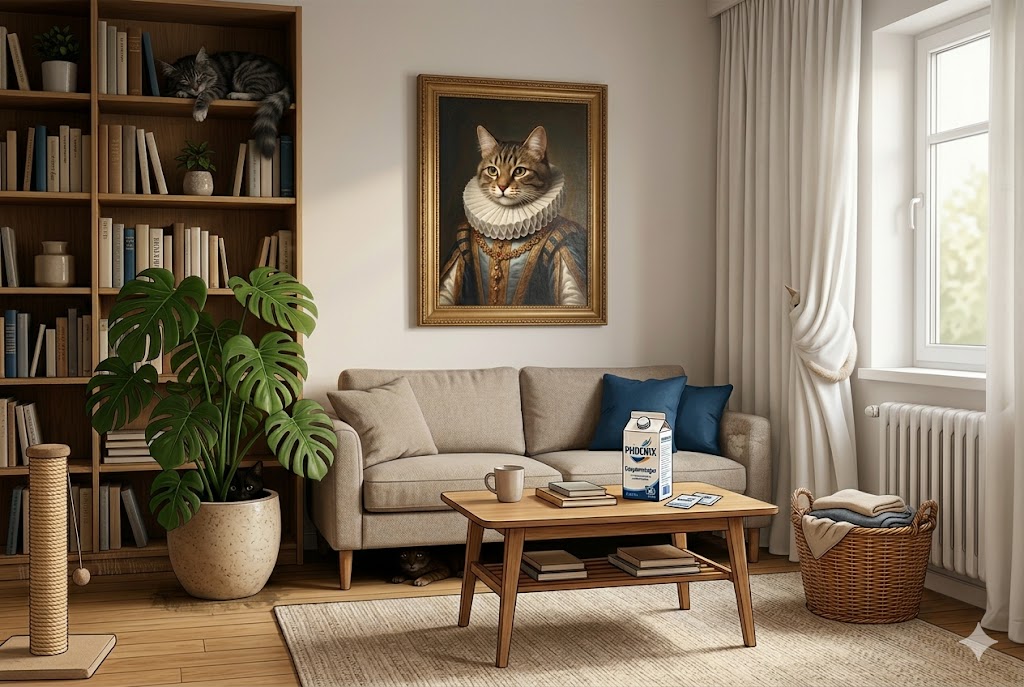
Can you find all the hidden cats? Get a 10% discount (%)
Join in the living room hidden picture game. Whoever finds all the cats immediately receives a personal discount code.
Duration of action of the mixed solution
Full potency for 48 hours after mixing, followed by a slower breakdown of the enzymes. Ready to use for up to 20 days. For gummed-up grease filters or stubborn biofilm in dishwashers, it's best to use a fresh batch.
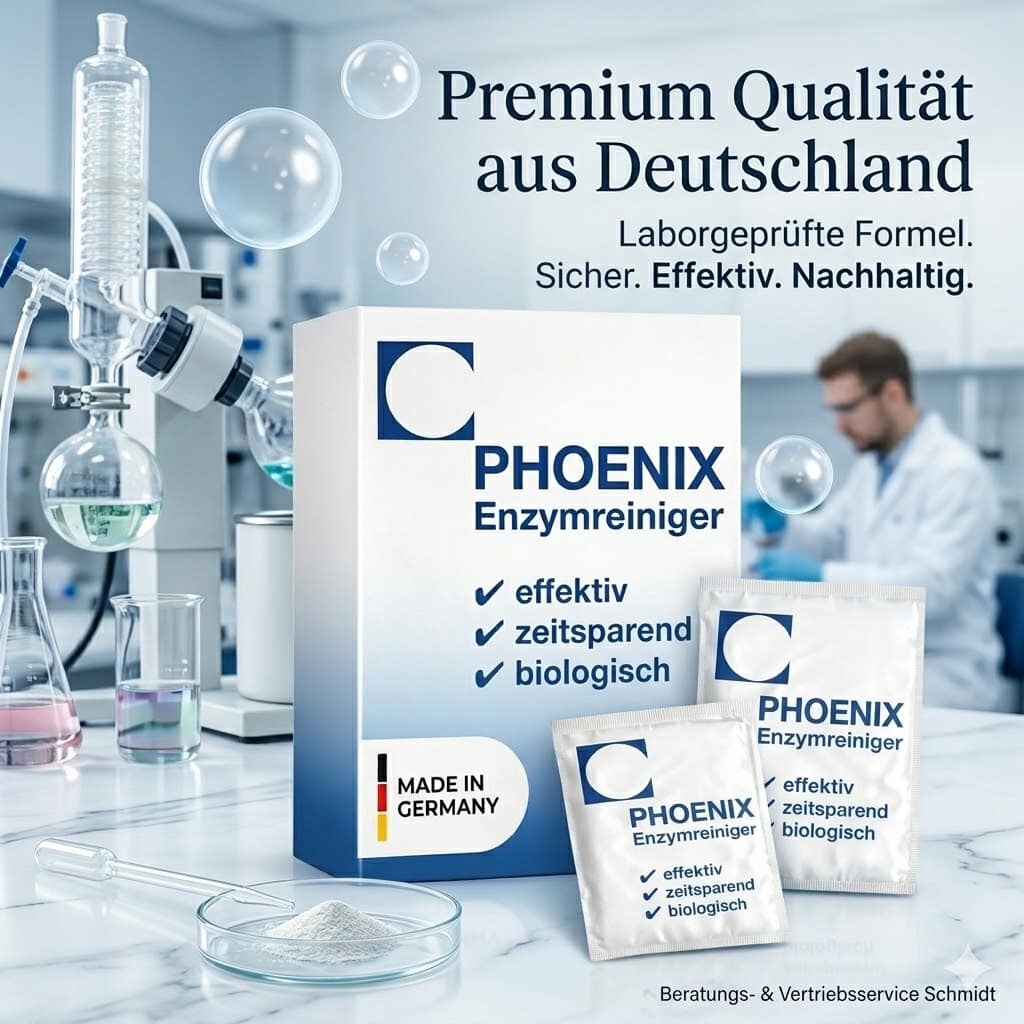
Tested and documented: Expert report and safety data sheet
For restaurants, hotels and nursing homes
Phoenix Enzymreiniger dissolves organic deposits in commercial hood-type, belt, and undercounter dishwashers, as well as in large washing machines. Its suitability for cleaning in the food industry is demonstrated by... Expert opinion by Dr. Mang (Chem. Lab Frankfurt), followed by rinsing.
Safety Data Sheet: Niedrigste Wassergefährdungsklasse · nicht kennzeichnungspflichtig · kein Gefahrgut · phosphatfrei · chlorfrei · bleichmittelfrei · ammoniakfrei · Tenside zu mindestens 90 % biologisch abbaubar.
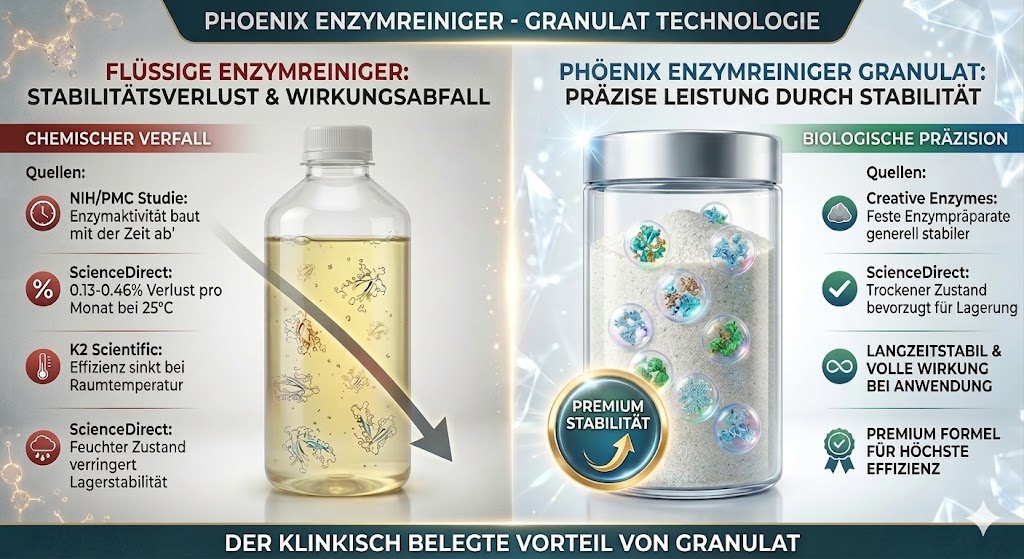
Why granules instead of ready-made solution?

Liquid enzyme cleaners
Enzymes degrade during storage, often even before the product is sold.
Phoenix Granules
The enzymes remain stable until they are mixed. Freshly mixed = full power, only activated when mixing.
Phoenix Enzymreiniger comes as granules, not as a ready-mixed liquid. This has a crucial advantage: Full enzyme activity exactly when you need it.
Ready-mixed enzyme cleaners lose their effectiveness during storage because enzymes in aqueous solution degrade over time. Phoenix granules remain stable when dry until you mix them. For machines with stubborn biofilm or hardened grease, it's best to always use a fresh mixture.
The result: You get the full cleaning power exactly when you need it, and a 20g sachet makes 1 liter of solution.
📘 Here's how to mix it correctly: to the product guide
Frequently asked questions about the machine cleaner enzyme cleaner
For which devices is the enzyme cleaner for machines suitable?
Phoenix Enzymreiniger is suitable for washing machines, dishwashers (including commercial catering equipment), fully automatic coffee machines, refrigerators, extractor hoods, air fryers, air conditioners, water dispensers, and baby bottles. Wherever biofilm, grease, or protein residues accumulate in damp areas, the solution dissolves the organic source of the odor.
How does Phoenix Enzymreiniger work in the machine?
Phoenix Enzymreiniger works with the enzymes protease (protein) and amylase (starch), while the surfactants it contains dissolve the grease. Together, they remove biofilm, grease films, and protein crusts directly at the source. The pH value is between 8.5 and 9.0, and the surfactants are at least 90% biodegradable (%), placing it in the lowest water hazard class.
How do I mix Phoenix Enzymreiniger correctly for machines?
Phoenix Enzymreiniger is activated first: Dissolve 20 g of granules completely in approximately 250 ml of hot water, then top up to 1 liter. For grease in filters, spray arms, or extractor hoods, fill with hot water; otherwise, use warm or cold water. For intensive cleaning, use 40 g per liter. When using a pressure sprayer, observe the manufacturer's temperature instructions.
How long does the mixed solution remain active?
Phoenix Enzymreiniger is only activated upon mixing and is most effective during the first two days. After that, the enzyme activity gradually decreases, but the solution remains usable for a long time. For stubborn biofilm, it's best to use a fresh batch. The dry granules can be stored for several years.
Why should I lubricate moving parts of the device after cleaning?
Phoenix Enzymreiniger contains surfactants that do not distinguish between dirty grease and functional grease. Therefore, drum bearings, spray arm axles, mixer drive shafts, and brewing units should be relubricated after drying with silicone spray, petroleum jelly, or machine grease according to the manufacturer's instructions; for food contact, use food-grade grease.
Why does my washing machine smell musty?
Phoenix Enzymreiniger targets the root cause: the bacterial biofilm in hoses, lint filters, and door seals. Limescale doesn't smell, so a descaler won't help against musty odors. Phoenix isn't a limescale remover; it dissolves the organic buildup that creates the musty smell.
Is Phoenix Enzymreiniger suitable for use in food processing?
According to an expert opinion by Dr. Mang (Chem. Lab Frankfurt), Phoenix Enzymreiniger is suitable for cleaning in the food industry, for example for dishwashers, kneading machines, tanks and conveyor belts. After cleaning, rinsing with clean water is carried out to ensure that no residues remain on food-contact surfaces.
Phoenix Enzymreiniger: further instructions
Keep out of reach of children and animals. Even if there is no danger, children and animals should not have direct access to the product.
Melanie Frey –
I bought the enzyme cleaner to clean my washing machine. With three dogs, a lot of hair gets into the machine, and it starts to smell unpleasant. After cleaning, the unpleasant smell was actually gone, which hadn't been the case with regular washing machine cleaners.
Verified purchase. More information